
Alice Walker’s Strange Boycott

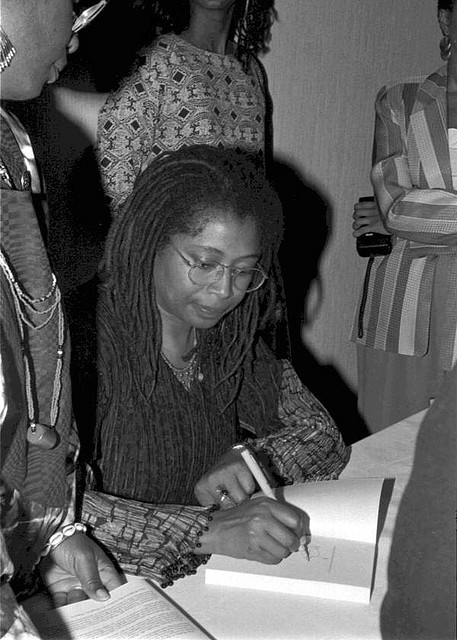
Alice Walker, an American novelist, doesn’t want her novel, The Color Purple, re-issued in Israel. A boycott of some kind to fight against Israel’s mistreatment of Palestinians. I get the fight part. I just don’t see how it’s helpful to prevent people from reading a book that might challenge their perception on social injustice. The Color Purple centers on inequality and oppression. What’s the point in witholding such a book from the very people you accuse of being guilty of those very things? It also just seems a bit weird that an author would put a ban on her own work. She might as well plan a book-burning party of all existing copies of The Color Purple in Israel. What do you think?


Guardian UK on the issue

Image via

Tags: , , , , ,

One Response to “Alice Walker’s Strange Boycott” Subscribe

  1. Alahyo 2012/06/21 at 3:17 pm #

    I emphatically disagree with your “logic”. Godspeed.

Leave a Reply

It’s All Poetry and Pretty Sentences Inside Ben Okri’s Head

What do authors think about when they read their own novels? Follow me inside Ben Okri’s head and see for [...]

#AfricanLitNotes: Chimamanda On What To Read When You Write

  John Williams: You teach writing in your home country. What are two or three principles you think it’s important [...]

Sex in African Novels Pt. 1: “Please, Ona, Don’t Wake the Whole Household.”

The excerpt you about to read is from Buchi Emecheta’s 1980 novel Joys of Motherhood. It’s the debut post in a new [...]

Letter From An Editor To An Author: Books Don’t Sell On Merit Alone

No matter how great a novel is, it will not sell itself. It needs to be peddled! But authors cannot [...]

The Saga Continues: Maja-Pearce Speaks Out On His Quarrel With Soyinka

The most recent episode in what seems like an old quarrel between Wole Soyinka and Adewale Maja-Pearce began with Soyinka’s [...]

“Because There Are No Words”: Noviolet Bulawayo on Her Father’s Silence About Her Writing

I always wondered what my pops, who is 74, thought about my writing coz we’ve never addressed it like that. [...]