

In a recent essay for The New Yorker, Zambian-American novelist and critic Namwali Serpell introduces a new term for thinking about culture. She calls it New Literalism and explains it as a kind of “on the nose, heavy-handed,” way of handling art and storytelling.
For example, In Gladiator II, a warrior is shown the wooden sword he will receive upon earning his freedom. Instead, he stabs his guard with it and shouts, “Wood or steel, a point is still a point!” In Megalopolis, a dying tycoon reveals a golden arrow hidden in his lap, kills his wife, and screams, “You Wall Street slut, this is your closing bell!” In The Apprentice, a young Donald Trump presents a black tower model and, when asked its name, replies (unsurprisingly)“Trump Tower.” Essentially, storytelling that refuses ambiguity, something she says she’s seeing a lot in award-winning films and mainstream culture.
She does say that the issue is not that this works are more lifelike, so realism is not the issue, but a kind of predictability. “Content has been demoted to concept, and and concept has become a banner ad.” Stories are now optimized for the ease of quick, easy consumption and the result is art that aim no deeper than surface-level impact. And were some might think that this kind of frictionless artwork is great because it speaks to a broader range of people, Serpell says that it doesn’t. It assumes people are dumb: “It is, in fact, condescending.”
The argument is good, but it also had us thinking how it tracks in the literary space. Is literature facing the same pressure? Culture is integrative, and if this flattening is happening in film, we should ask whether fiction, memoir, and even poetry are also leaning into the literal. What would literalist literature look like? Would it be a novel that tries to do too much, ticking off trauma, migration, climate change, queerness, grief, all in one plotline, each theme indexed for clarity? Would characters feel engineered for relatability? Would symbolism arrive pre-explained?
************
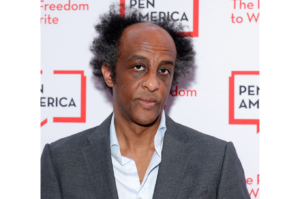
Photo via wikipedia





COMMENTS -
Reader Interactions