
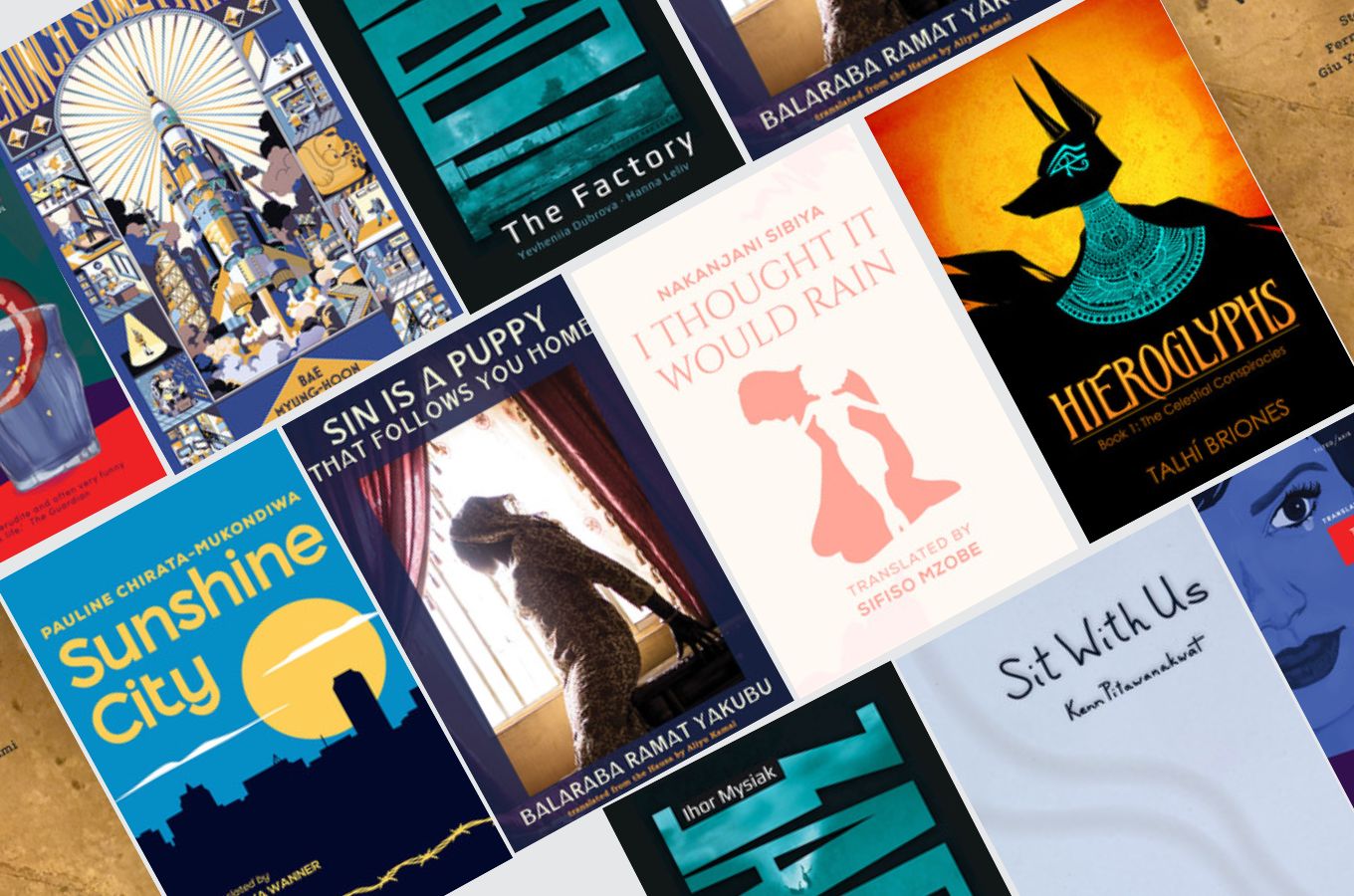
Last week, a Google Drive link stuffed with African literary texts, over 200 novels from the Heinemann African Writers Series, began circulating on social media, accompanied by a familiar argument: African literature is too expensive, access is a right, and sharing is not stealing. The backlash from writers and publishers was swift, pointed, and worth sitting with.
Molara Wood, author and critic, was among the first to name what was happening. The link, she wrote, was “piracy on a grand scale.” What she found surreal was the brazenness of the person offering to share it, and the number of people who openly expressed interest in receiving it; self-described supporters of African writing, cheerfully participating in the violation of the intellectual property of African writers. It was, she said, a “gross violation of IP.”
Lola Shoneyin, novelist, poet, founder of the Aké Arts and Book Festival and publisher at Ouida Books, was equally direct. She directed those seeking free books to Project Gutenberg, which hosts over 75,000 public domain classics available for legal download, and was clear about what the circulation of those files actually represented. “Support African writers, publishers and booksellers,” she wrote. “Stop piracy and IP theft.” She followed with a line in Yoruba, Ẹ ye ja’le mọ! (Stop stealing!), and an acknowledgment that poverty may explain why piracy is widespread on the continent, while firmly refusing to let that explanation become justification. The unauthorised distribution of intellectual property, she said, is theft. Full stop. Executive Producer Funmi Oyatogun went further, drawing a line that many found uncomfortable but few could convincingly argue with: if you will justify taking a writer’s book without permission because you cannot afford it, you are operating on the same moral logic as the senator who loots public funds or the LGA chairman who steals from his community. The righteous reason does not change the category of the act.
Elnathan John, whose own books are routinely pirated, with people boldly requesting and offering soft copies in the comments of his own posts, brought a different, harder register to the conversation. For him, the piracy debate cannot be separated from the broader moral ecology of Nigerian public life. “Nigerians,” he wrote, “live in a poor, low-trust society where people will steal anything you let them steal. Books. Oil. Husbands. Wives. Elections.” His argument was a diagnosis that in a society where lying, stealing, violence and fraud each find their defenders, and no ethical line commands universal agreement, it should surprise no one that book theft finds its advocates too. The person who argues for piracy is not an anomaly. They are a product of a culture in which, as he wrote in his essay Blessed Are the Shameless, “public shame is expensive” and following the rules simply means watching others get served first. His prescription to this rot was moral, but more importantly, structural and commercial: Nigerian publishers cannot operate as if they are in New York or London. They must adapt to the market, the way consumer goods manufacturers adapted through sachetification, the breaking of products into affordable units. The book, he argued, cannot remain the only or final form of literature. There must be a chain of value, or the writer who has not achieved celebrity status is simply condemned to poverty.
And that is the crux of it. Nobody serious disputes that African literature has an access problem. It is established that books are priced out of reach for millions of people across the continent, distribution is broken, libraries are underfunded, and the infrastructure for affordable reading barely exists in many places. Those are real failures, and they deserve serious, structural responses. But the people who absorb the cost of piracy most directly are not the multinational publishers. They are African writers earning royalties on slim margins, small independent publishers like Cassava Republic, Ouida Books, Narrative Landscape Press, Masobe Books and Parrésia among others who took financial risks on manuscripts, and booksellers already operating in hostile economic conditions. Redistributing their work without compensation does not fix the access problem. It just shifts the loss onto the people least equipped to absorb it.
The debate is not new. It will not end here. Shoneyin, Oyatogun, Wood and John are saying the same things in different registers, circling the same insistence: piracy is theft, the access crisis is real, and there must be far more imaginative, structural work done to make African literature genuinely accessible. The second does not excuse the first. Both are true at the same time. The question is whether anyone with the power to build the structural alternatives is paying attention.
In the meantime, here are free and legal platforms where you can read widely, without stealing from anyone. These platforms are free, legal, and accessible across Africa. They are a resource for all book lovers, not just for African titles.
- Project Gutenberg— The original free library. Over 75,000 public domain books available to download in multiple formats. No registration required. A great starting point for classics from around the world.
- Standard Ebooks — A volunteer project that takes public domain texts and produces clean, beautifully formatted ebooks. Small catalogue but consistently high quality. Free, no account needed.
- ManyBooks — Over 50,000 free ebooks in multiple formats including Kindle and ePub. Focuses on public domain classics and independently published work. Free with optional registration.
- LibriVox — Free public domain audiobooks recorded by volunteers. A good option if you prefer to listen, and requires no account or payment whatsoever.
- Open Library — Part of the Internet Archive, Open Library’s public domain collection is free and unambiguously legal. It also offers a digital borrowing system for newer titles, though this has faced some legal disputes with publishers. Stick to the public domain section to be safe.
- AfroStory — A South Africa-based app specifically built for African and Black-authored literature. Its free section draws entirely from the public domain and includes works by Ngũgĩ wa Thiong’o, Es’kia Mphahlele, Solomon Plaatje, Peter Abrahams, and others. Designed to work offline and on low-data connections. Available on Android via Google Play.
- Wattpad — A platform where writers publish their own original work directly to readers for free. It is not a place to find existing published novels, but it has a large and growing community of African writers publishing new fiction here. Entirely legal because the authors themselves have chosen to share their work on the platform.
- BookBub— Not a library, but a free alert service that notifies you when ebooks go on sale or become free on major retailers. Publishers and authors set the prices themselves, so everything offered is legitimate. Worth setting up if you want to catch legal free deals as they come.
- African Storybook — A free platform with hundreds of picture storybooks in African languages, aimed at early readers and literacy education. Supported by international foundations and entirely open access. Particularly useful for parents and educators.
What platforms did we leave out?


COMMENTS -
Reader Interactions