


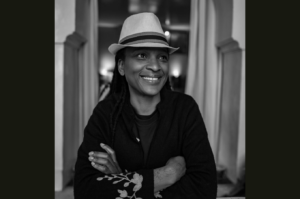
A decade ago, a poem by an unknown Sudanese-American writer doing unusual things with Arabic script and English on the page caught the attention of the Brunel Prize judges, and ours too! Safia Elhillo has been someone we have watched closely ever since: through the Sillerman Prize, The January Children and its excavation of colonial history and diasporic identity, Home Is Not a Country‘s National Book Award longlist, through Girls That Never Die and the fierce community of Muslim girlhood it conjured, and Bright Red Fruit‘s Michael L. Printz honor among many others. Now Wasafiri, the London-based international literary magazine, has named her its International Writer in Residence for April to September 2026 , a recognition of her consistency!
Wasafiri has been a home for writing that moves across borders since its founding in 1984, and the residency sits squarely within that mission. Elhillo, who is Sudanese by way of Washington D.C. and now lives in Los Angeles, is a writer whose entire body of work has refused fixed coordinates, her poetry inhabits the space between Arabic and English, Sudan and America, girlhood remembered and womanhood reckoned with. As part of the residency, she will contribute original writing to the magazine and its digital platform, and lead two online workshops in September built around the theme of solidarities, a word that carries particular weight at a moment when questions of global community and collective witness feel especially urgent. The residency project is supported by a grant from the Open Society Foundations.
Elhillo joins a cohort that includes Cara Thompson as Writer in Residence, Juana Adcock as Translator in Residence, and Simone Khanyi Hadebe as Illustrator in Residence. Details for the September workshops will be announced later this summer. For now, Elhillo has said she is grateful for the appointment and for what she describes as the space it offers to think through global solidarities: ‘I’m so grateful to have been appointed as Wasafiri’s International Writer in Residence and to have the space to reflect on the theme of global solidarities. Every day it seems this theme becomes more relevant to us, as our need to band together with our neighbours and our relatives across the globe becomes stronger. Thank you to Wasafiri for giving me this opportunity to explore a path forward!’


COMMENTS -
Reader Interactions