

“I am not your sister.” The words spilled out of my mouth before I could stop them, sharp as a stone kicked down a quiet alley. I hadn’t meant to say it like that. I hadn’t meant to say it at all. But the words were already out there, trembling in the warm air between us.
When I left the house that morning, the sun was still low enough that the streets of Tangier felt gentle, almost forgiving. I had wrapped myself in the soft illusion that today would be ordinary: a morning class, a late lunch, maybe a stroll through the medina to lose myself among spices and the clothes I would love to buy. I had tried to convince myself that I could slip through the day unnoticed, untouched. But living in this city has a way of rearranging your thoughts, as if the country keeps whispering, “Look again.” This place is not only what you want it to be. So, I looked. I always looked. Even when I pretended I didn’t see.
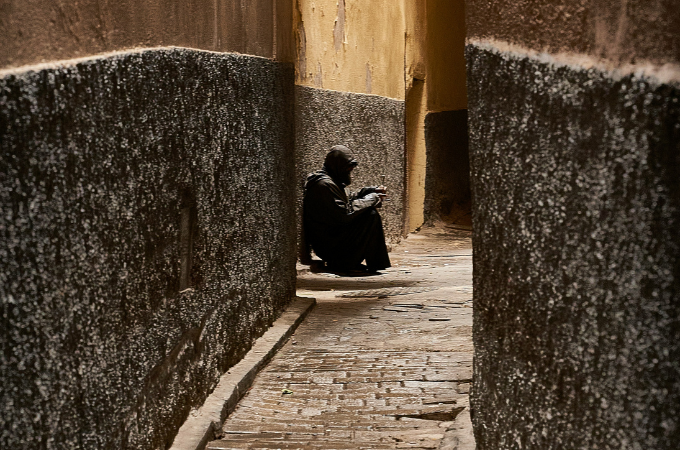
The man was sitting near the bus stop. His body folded into itself the way people sit when they have learned to make themselves small. His clothes were dusty, his eyes bright with that strange mix of exhaustion and insistence I had come to recognize. When he saw me, he straightened, smiled, and called out as if we shared a childhood,
“Ma sœur! Ma soeur!”
I looked up. He was a tall man with deep-set eyes and a face that would have been handsome if it weren’t so worn down by sleepless nights. His shoes were fraying at the edges. He had the look of someone who had been here too long, and also not long enough to find stability. When he saw me look at him, his face lit with something that resembled relief.
“Ma sœur!” he said again, stepping closer.
Everything inside me tensed. I felt seen in a way I didn’t want to be seen, as one of them, as someone who belonged in their struggle, as someone who shared their desperation. I opened my mouth to speak, hoping something diplomatic would come out. Instead, the words escaped like a slap. “I am not your sister.”
Although I had learnt to speak French, I replied coldly in English, and he understood me. I can still see the flicker in his eyes, surprise first, then something like disappointment settling into a familiar place. He swallowed, nodded slightly, as though he had been prepared for rejection but had hoped my answer would be different. He tried again, his voice softer.
“My English not good. I have need help. Anything you have. S’il-vous-plait.” He cleared his throat. “You from Cameroon, yes?”
I stiffened. How had he guessed? Was it my accent? Still, he asked softly in French if I knew a place he could stay. A room. A corner. A floor. Just somewhere that wasn’t the pavement he had slept on the night before.
“No,” I said carefully. “I cannot help. I’m sorry.”
His shoulders fell. He nodded again, slower this time. He stepped back, his eyes darting toward the ground. And even though I had denied the title, he offered it again as resignation, “It’s okay, ma sœur.”
And all I could do was shake my head. “Désolée,” I mumbled and walked away.
I walked away too quickly, my heart thudding against my ribs, the words scraping inside me. I am not your sister. It felt wrong the moment it left my lips. He had called me sister out of longing. Because my skin matched his in a land where it marked us both, but him more painfully.
As I continued down the street, I thought of others like him. Men who had crossed deserts chasing the promise of a better life, now trapped in a frantic limbo, praying they could evade the police long enough to scrape together passage on a boat to Spain. Some days, I observe women with their infants strapped on their backs, begging on the streets just to survive. Sometimes, when I allowed myself to feel, the sight of those innocent children who never chose this made my blood boil. How could they have brought life into such a void? Did they lack protection, or was the pregnancy a consequence of the journey? I had read the harrowing accounts of women abused in the desert, women held as sex slaves in Libya, exploited in Algeria, and degraded even here. That thought made the encounters on the road sting with a new bitter clarity. Once, a man had stopped me to ask, “Mon amie, c’est combien?” with a disgusting smile — asking the price of a night. I finally understood exactly what he assumed I was selling.
I hated that seeing them made me feel heavy. I hated that I could return to my apartment, to my books, to my degree, while they returned to uncertainty. I hated that my privilege felt like a betrayal I hadn’t chosen but still benefited from. But most of all, I hated the truth behind my own words.
The truth was that I was his sister, in the way that mattered but terrified me. Maybe I was bound to him by history, by skin, by movement, by the simple fact that the world treated us as two versions of the same story, even if we lived on different pages. Yet I had denied him. Out of fear. Out of pride. Out of the selfish desire to protect the small life I had built here, the illusion that I was separate from him, from them.
That evening, I sat at my desk and tried to write it all down. The encounter, the shame, the strange tenderness of being seen by someone I wanted to hide from. I wrote about Morocco, a place that had welcomed me and also unsettled me, a country beautiful enough to distract you from the suffering it quietly absorbs. I wrote about the young people who wander its streets with no documents, no guarantees, only an unwavering belief that tomorrow might be kinder. And I wrote about that moment. His voice calling me sister, my voice rejecting him, and how the echo of it still clung to me. Maybe I couldn’t give him what he needed. Maybe I couldn’t save anyone. But writing it felt like a small promise to stop looking away, to stop pretending I belonged here more than they did. I ended the page with the sentence I wish I had spoken instead.
“My brother.”
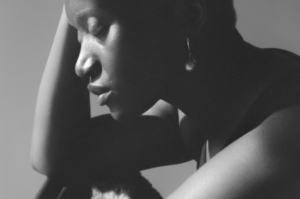
Photo by zafer inkaya on Unsplash



Payge July 06, 2026 18:32
I can totally relate to this...great story Mo! I must applaud your ability to immerse the reader.