

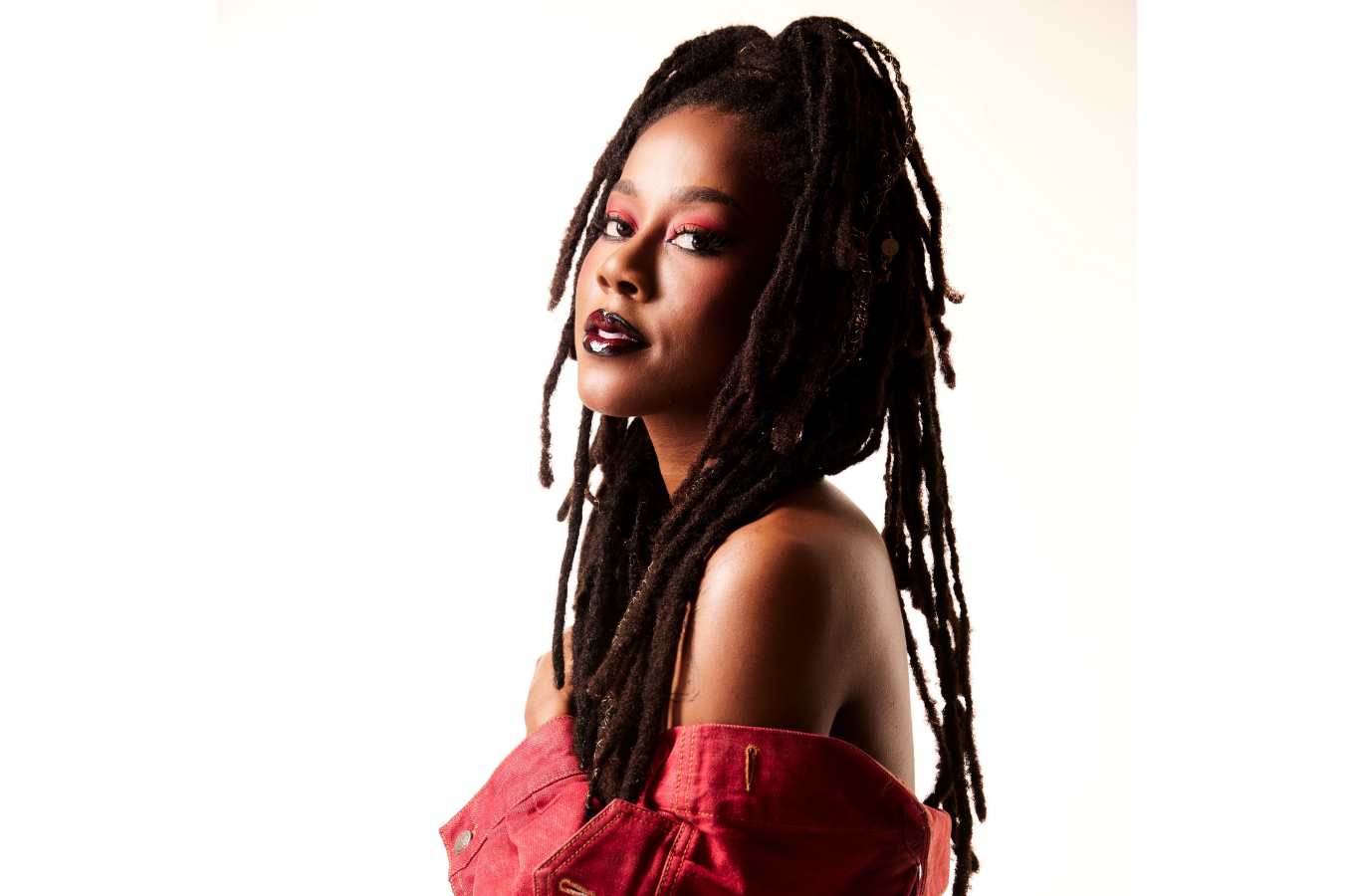
When Nigerian-American writer Tomi Adeyemi landed a million-dollar book and movie deal in 2017, before her debut novel had even been published, we covered it here on Brittle Paper as the genuinely historic news that it was. She was 23, a Harvard graduate, and had written a YA fantasy so rooted in Yoruba mythology and pre-colonial Nigerian imagination that comparisons to J. K. Rowling, however well-intentioned, missed the point entirely. Children of Blood and Bone tells the story of Zélie Adebola, a girl living in the fictional West African kingdom of Orïsha where magic has been brutally suppressed by a tyrannical king, and her quest to restore it. It debuted at number one on the New York Times bestseller list in March 2018, spent over 25 consecutive weeks on the chart, and went on to win the 2018 Andre Norton Award, the 2019 Hugo Lodestar Award, and the 2019 Waterstones Children’s Book Prize. The trilogy concluded with Children of Anguish and Anarchy in 2024. For a certain generation of readers, and for African literary culture broadly, this series was a statement that stories rooted in Black and specifically Nigerian spiritual life could conquer mainstream publishing at the highest level.
The film rights to Children of Blood and Bone were optioned by Fox 2000 Pictures and Temple Hill Entertainment in March 2017, before the book was even in bookshops. When Disney completed its acquisition of 21st Century Fox in 2019 and shuttered Fox 2000, the project was transferred to Lucasfilm, marking what would have been the studio’s first original live-action project outside Star Wars and Indiana Jones. Director Rick Famuyiwa was briefly attached. Screenwriter Kay Oyegun (This Is Us) was brought on to write the script. Then nothing. Lucasfilm, focused on its own franchises, let the rights lapse. During this period, Adeyemi had asked to write the screenplay herself, a request Lucasfilm declined.
When the rights came back to market in late 2021, Paramount Pictures won a competitive bidding war and acquired them in January 2022. This time, the terms were different. Adeyemi was guaranteed a seven-figure screenwriting deal and attached as executive producer, the creative control she had been denied under Lucasfilm was now a non-negotiable condition of the arrangement. In December 2023, Gina Prince-Bythewood, director of The Woman King, The Old Guard, and Love & Basketball, signed on to direct, with a mandate to develop the screenplay alongside Adeyemi. A three-film deal covering the entire Legacy of Orïsha trilogy was on the table. On paper, this was everything: the book, the author, the director, the studio, the deal structure. The pieces seemed, finally, to be in place.
The first tremors arrived with the January 2025 casting announcement. The lead roles went to Thuso Mbedu as Zélie, Tosin Cole as her brother Tzain, Amandla Stenberg as Princess Amari, and Damson Idris as Prince Inan. The broader ensemble, Viola Davis as Mama Agba, Cynthia Erivo as Admiral Kaea, Idris Elba as Lekan, Regina King as Queen Nehanda, Chiwetel Ejiofor as King Saran, Lashana Lynch, was, by any measure, a formidable gathering of Black acting talent. Nollywood veteran Richard Mofe-Damijo and Afrobeats star Ayra Starr were also announced, bringing additional texture to the movie.
But the Stenberg casting immediately reignited a debate that has followed the novel’s adaptation since the beginning. Amari is described in the book as having dark copper skin, and colorism is not a background theme in the story, it is structurally central to it; Amari’s own mother, Queen Nehanda, pressures her to lighten her complexion. The casting of a biracial actress in the role struck many fans as a contradiction the film could not talk its way out of. There were also louder complaints from Nigerian readers and critics that, despite an open casting call for actors living in Nigeria, which Prince-Bythewood had announced in November 2024 and which Adeyemi had publicly championed, specifically urging Nigerian actors to submit because the book was “based on Nigerian spirituality and mythology”, the final results yielded only a handful of Nigerian names in a cast otherwise drawn from Hollywood and its immediate orbit.
Adeyemi initially defended the Stenberg casting publicly, pointing fans toward the ongoing open call as evidence of the production’s commitment to Nigerian representation. Stenberg addressed the controversy herself, saying in a since-deleted TikTok that she thinks about her skin tone with every role she takes, that she believes her presence in the film supports the allegory of colorism the story is exploring, and that she had received Adeyemi’s blessing. The production began shooting in South Africa in February 2025 and wrapped in early June 2025. Shortly after filming began, Adeyemi posted an image from the set to her Instagram. It would be among her last public gestures of enthusiasm for the project.
A screenshot Adeyemi later shared, dated February 28, 2025, showed her sending a message that read: “Do not ever use my name in an interview or video again. Do not text me. Do not call me.” The recipient, Amandla Stenberg, was blocked. The real cause of the rupture has not been publicly confirmed by either party. What is known is that Stenberg posted and then deleted a TikTok in which she claimed Adeyemi had personally told her she was the right person for the role, given the private exchange, the timing of the claim only deepened the ambiguity.
Following the wrap, the cast and Prince-Bythewood attended CinemaCon in April 2026, where Paramount screened footage for an audience of theater owners. Adeyemi was not in the room and reports from the screening were not as enthusiastic. However, the film had already been slotted for a January 15, 2027 release.
In June 2026, Adeyemi addressed her followers in her private Instagram community group, writing: “There is a reason I will not post anything about the adaptation of my work. That’s all.” She then went further in a TikTok posted on July 4, sharing the screenshots of the exchange with Stenberg and a longer statement to her community. “I have not seen the film, and I will not watch it,” she wrote. “It’s been painful holding this back from you all.” In a comment, she added: “I wrote this for us. I fought for us. I’m just laying down my sword and officially separating my name because I can’t keep being hurt and attacked behind the scenes.” She has since urged fans who want to support her to buy any edition of the trilogy from their local independent bookstore.
Public reaction to Tomi Adeyemi’s withdrawal from the Children of Blood and Bone movie is all over the place. Many fans feel it highlights Hollywood’s tendency to sideline original creators, while others point to a history of public conflicts. Most people agree that the situation is deeply complicated. The exact truth of what actually happened behind the scenes between Adeyemi, star Amandla Stenberg, and the production team likely goes far deeper than any social media post has revealed so far. Neither Paramount, Prince-Bythewood, nor Stenberg has responded publicly to Adeyemi’s statements.
Despite the turbulence, the film is moving forward. Paramount released the first official images last week, the production photos offer the clearest look yet at the world of Orïsha as it has been rendered on screen. The images show Thuso Mbedu as Zélie, Damson Idris as Inan, Viola Davis as Mama Agba, and glimpses of the film’s visual language including its scope, costuming, and its attempt to build an African fantasy world at Hollywood scale. Whether a trailer follows soon is unclear, but with a January 2027 release and a cast of this magnitude, the promotional machinery will need to begin turning in earnest.

COMMENTS -
Reader Interactions