


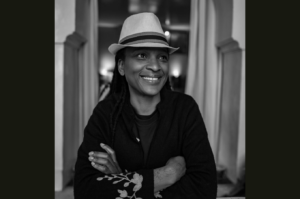
Ethiopian American writer Maaza Mengiste is a recipient of the 2026 MacArthur Fellowship, one of the literary world’s most significant unrestricted awards. Mengiste is among 20 artists, writers, scholars, and scientists selected for this year’s fellowship and will receive $800,000, paid in quarterly installments over five years, with no restrictions on how the funds are used.
Born in Ethiopia and now based in the United States, Mengiste is a professor of English at Wesleyan University. She is the author of Beneath the Lion’s Gaze (2010) and The Shadow King (2019), novels that draw on Ethiopian history to examine political violence, resistance, memory, and the lives of people caught in periods of upheaval. The Shadow King, which centers Ethiopian women who participated in the resistance to Italy’s 1935 invasion, was shortlisted for the 2020 Booker Prize.
The MacArthur Foundation describes Mengiste as a fiction writer who reveals “the human costs of political violence” through a combination of history, memory, and imagination. Her work has been particularly important to the ongoing expansion of African historical fiction, bringing lesser-known histories of Ethiopia and the continent’s encounters with European colonialism into international literary conversations.
The fellowship could also have implications beyond Mengiste’s own writing. According to USA Today, Mengiste hopes to use part of the grant to support initiatives that promote the translation of African literary fiction into English. She also plans to continue developing a database of photographic archives related to the 1935 Italian invasion of Ethiopia.
That interest in translation is particularly significant within the African literary ecosystem, where the movement of literature between African languages—and between African writers and international readerships—remains an important part of how the continent’s literary histories are preserved, circulated, and discovered. For Mengiste, the MacArthur Fellowship therefore offers not only resources for her own creative work but an opportunity to invest in the wider infrastructure through which African stories reach new readers.
Mengiste is currently working on a novel set in interwar Berlin that explores the rise of Nazism through the experiences of Black Germans, including people who served as models for German Expressionist artists.
The 2026 MacArthur Fellowship is the latest recognition for a writer whose work has consistently brought questions of history, memory, colonialism, and violence into conversation with contemporary African literature. With its unrestricted $800,000 award, the fellowship may extend that work beyond the pages of her own books.
Congratulations, Maaza Mengiste!






COMMENTS -
Reader Interactions