

The Caine Prize for African Writing has concluded its review of The Blue Fighter and confirmed that Simbarashe Steyn Kundizeza remains the winner of the 2026 prize. The Board of Trustees announced the decision in London today, November 11, saying the review found no evidence that the story was produced using generative AI. The Board considers the matter closed.
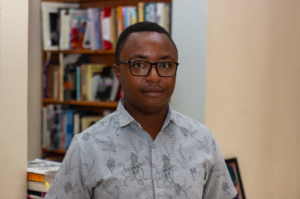
For readers catching up, Kundizeza, a Zimbabwean writer based in Harare, was announced as the winner of the £10,000 prize at a ceremony in London on October 6. His story first appeared in The Shallow Tales Review, and it follows Tinashe, a young boy whose family falls into financial hardship after his father leaves his profession to pursue his dream of building fish tanks. In September, we reported on the 2026 shortlist, which included Gladwell Pamba of Kenya, Melara Mvogdobo of Cameroon, Akinwande Jordan of Nigeria, and Yasmine Zohdi of Egypt, alongside Kundizeza. The prize drew a record 407 submissions from 27 African countries this year.
Five days after the win, on October 11, The Atlantic published an article by Vauhini Vara titled “Yet Another Literary Prizewinner Seems To Be AI.” It reported that Pangram, an AI-detection tool, had flagged almost the entire story as AI-generated. It also reported that Kundizeza’s literary agency was confident the story was his own work. The Caine Prize announced the same day that it was opening a review.
The literary community responded quickly. In our report on the pushback, we noted that Pangram had rated all 25 previous Caine Prize-winning stories, along with Kundizeza’s 2021 story “The Whistleblower,” as fully human-written. The 2013 winner Tope Folarin told Vara that many writers from the global South feel pressure to write toward Western expectations, and that chatbots have latched onto that pressure. Caine Prize chair Ellah Wakatama rejected the use of an AI detector as a measure of AI involvement, and said she wished The Atlantic had carried out a human investigation before going public. The case also followed a similar episode in June, when the Commonwealth Foundation completed a month-long review of regional winners of the Commonwealth Short Story Prize after AI allegations and cleared all of them. Folarin later discussed the wider debate in a podcast.
On October 14, Kundizeza released a statement. He said it was not an explanation or a defense, because he did not believe the article warranted either. He objected that The Atlantic seemed to question the story’s authorship by comparing its style to his other writing, and he pointed out that the decision to submit the piece for the prize was made by The Shallow Tales Review’s editor months after publication, so he had no motive to write it to win. He has maintained that the story draws on his own family’s experience.
The Board’s review was led by Interim Director Susi Owusu using a risk management framework. It included interviews with the author, the 2026 judging panel, and The Shallow Tales Review, as well as a metadata analysis of the author’s drafts carried out by an independent cyber security and digital forensic investigator. According to the Prize, the author created four separate Word documents as drafts before final submission, representing up to 27 hours of writing and editing. The author and publisher also provided documentation showing the story’s development, which began with ideation in April 2025 and was completed in June 2025 after extensive communication with the poet who inspired the piece. The Prize also stated plainly that AI detection tools alone are not a reliable basis for determining authorship.
Wakatama said the Prize chose a human-centred approach because writers, judges, readers, and publishers are at the center of the award. She said that when concerns are raised, the organization has a duty to look at them carefully and fairly, and that the evidence from the investigation is clear. She added that the Prize looks forward to awarding and celebrating with Kundizeza in Zimbabwe before the end of the year, and that the questions raised by AI will not go away.
The Prize is also introducing new measures for 2027, when submissions open on November 23. Publishers will be required to submit an AI declaration for every story they put forward, and shortlisted writers will have to make one as well. Judges will receive guidance on assessing and raising concerns about AI use, the Prize will publish its process for reviewing future concerns, and it has released an AI Use Policy. The full statement is on the Caine Prize press page, and you can read the winning story on the 2026 winner page.

COMMENTS -
Reader Interactions