

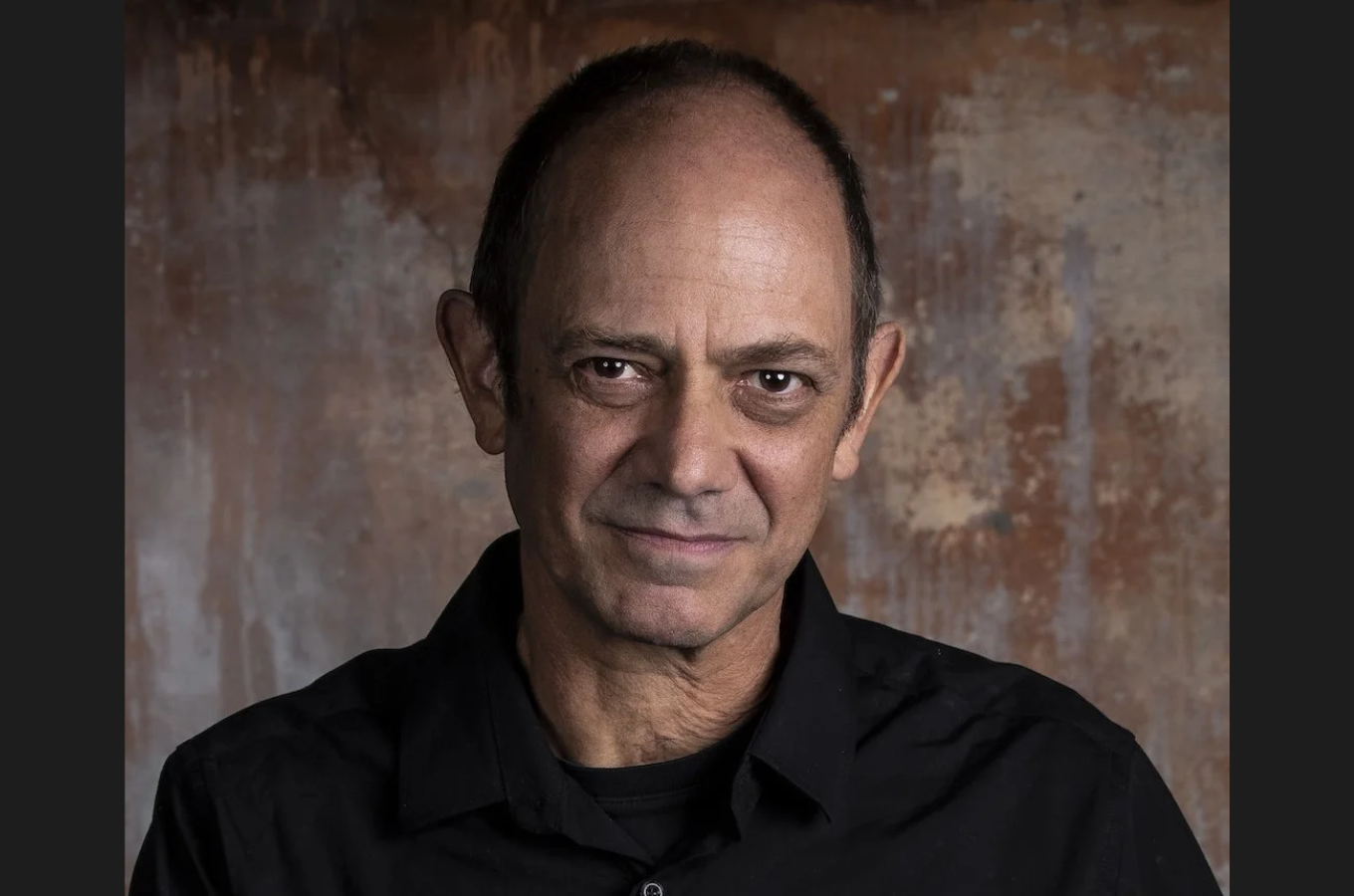
Damon Galgut, the South African novelist who won the Booker Prize in 2021 for The Promise, made his first visit to Korea last week for the 2026 Seoul International Writers’ Festival, organized by the Literature Translation Institute of Korea. Speaking to the press at the Ara Art Center in Seoul, Galgut opened up about the long road to that win, his craft choices, and where he sees African literature standing in the world today, in an interview first published by The Hankyoreh.
Galgut has been part of the conversation around South African letters for decades. He wrote his first novel while still in high school, after his English teacher sent the manuscript off to a publisher, and went on to build a body of work that includes The Quarry (later adapted into a film), The Good Doctor, and In a Strange Room, the latter two both Booker-shortlisted before The Promise finally won it. That win made him the third South African author to take the prize, following two Nobel laureates: Nadine Gordimer, who won the Booker in 1974 and the Nobel in 1991, and J.M. Coetzee, a two-time Booker winner who also went on to win the Nobel. Even with that pedigree, Galgut was candid about the years before the recognition arrived. “I struggled for many years to make a living from writing,” he said. “Most writers I know are struggling in that way.”
The Promise itself follows the Afrikaner Swart family across four decades and four funerals, anchored by a broken promise: a dying mother’s wish to leave a small piece of property to Salome, the family’s Black domestic worker, a wish her husband and children spend the novel quietly failing to honor. Galgut made a deliberate, and at the time controversial, choice in how he told that story, withholding a voice from Salome herself, leaving her presence in the novel largely wordless. “It was quite a controversial choice,” he acknowledged. “Some people were very critical of me for doing that.” But he saw the silence as its own kind of honesty. “If you come to South Africa now you will see millions of women exactly like Salome whose voice is completely unheard,” he said. “I want that to be uncomfortable for readers.”
Asked to weigh the two biggest moments of his career, his first Booker shortlisting versus the eventual win, Galgut pointed to the earlier one as the real turning point. “The moment I saw my name on the short list the first time, I felt my life jump from one track to another track,” he said. “I went from feeling unknown and invisible to feeling like I’m doing something that has a point.”
He closed with a reflection on how African writers position themselves relative to the rest of the literary world, one that doubles as a statement of purpose. Where writers of his generation once felt pressure to translate themselves for outside readers to understand, Galgut said he now believes the opposite direction makes more sense: let the world come to South Africa. As he put it, it helps a writer to think of themselves as being at the center of things, rather than at the periphery of someone else’s.





COMMENTS -
Reader Interactions