

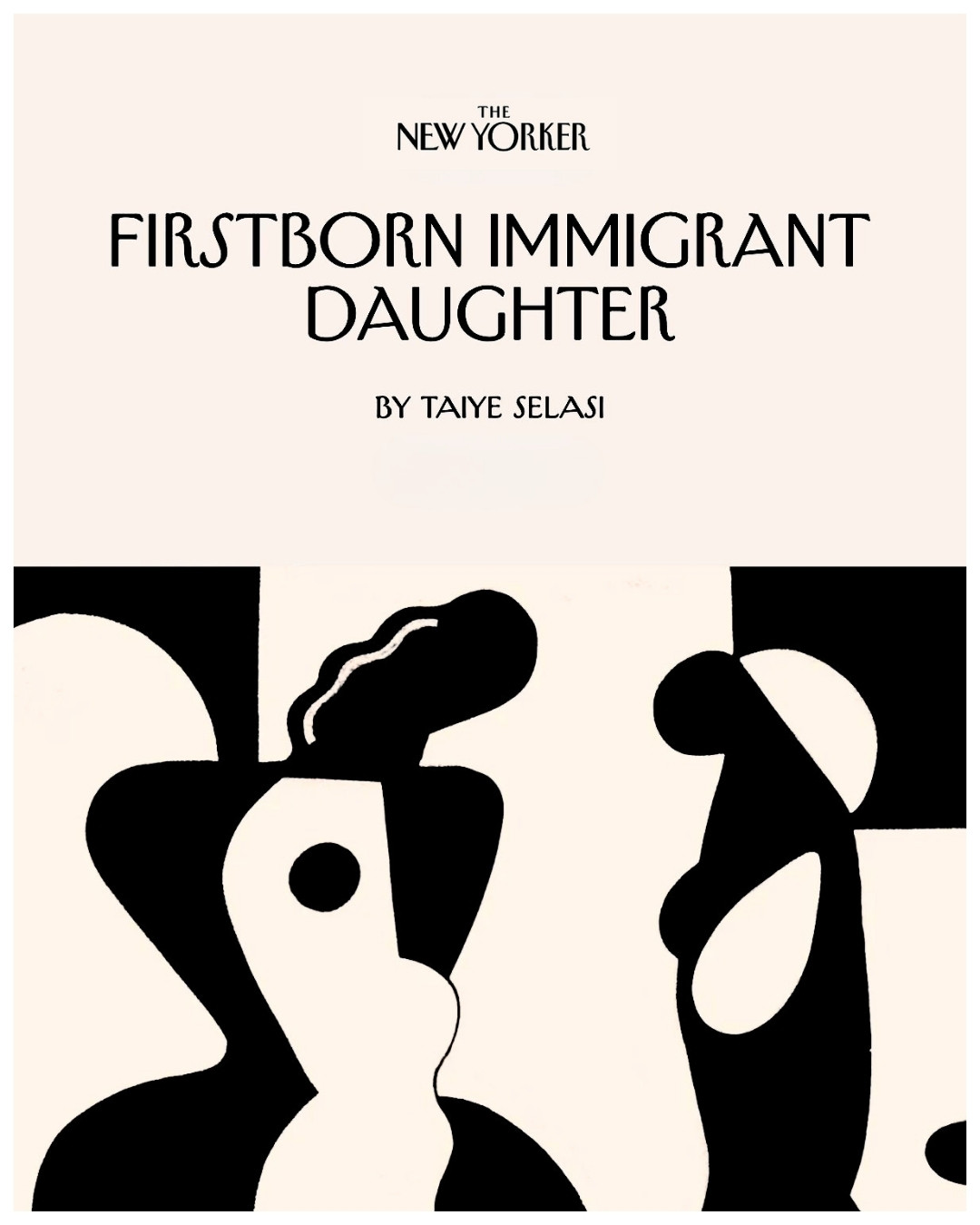
Taiye Selasi has a new story in The New Yorker, and it reads more like a letter than fiction, one woman writing to another who already understands what’s coming. “Dear Firstborn Immigrant Daughter” is addressed directly to “you,” to the F.I.D., the firstborn immigrant daughter. It opens by sorting out the difference between immigrants, migrants, and expats, a difference that has nothing to do with movement and everything to do with class and race. From there it gets to its real subject: a mother who was once owned herself, and the daughter she claims as the one thing she gets to own.
This isn’t new territory for Selasi. Born in London to Nigerian and Ghanaian parents and raised in Massachusetts, she wrote Ghana Must Go (2013), one of the most acclaimed debut novels of its decade, praised widely by critics and nominated for an NAACP Image Award. She’s also the writer behind “Bye-Bye, Barbar (Or: What Is an Afropolitan?),” the 2005 essay that named and shaped a whole generation of cosmopolitan young Africans moving between homes, a term still in use two decades later. Educated at Yale and Oxford, she’s spent her career writing about family, migration, and what gets passed down. This piece fits right into that body of work, and it cuts even sharper than usual.
The essay doesn’t soften what a mother’s love can look like when it’s been shaped by scarcity and by her own history of being claimed by someone else. Selasi lays out the difference plainly: a son is allowed to leave, expected to leave even, while a daughter belongs to everyone, family, village, culture, church, the old country, everyone except herself. She traces that logic back to the mother’s own girlhood, when she too was owned, and was told what girls in that position are so often told, that a woman without an owner is a woman without love. The essay focuses on inheritance, particularly a mother handing down the only framework she was ever given, and a daughter left to figure out what to do with it.
Announcing the news on Instagram, Selasi called it “a childhood dream come true,” thanking her New Yorker editor Cressida Leyshon, the fact-checking and copy-editing teams, and novelist Chigozie Obioma, who she said called the story forth. She also thanked the people who held her up while she wrote it: a friend who kept her soft enough to do hard work, her husband of 27 years, the sisters who believed in her voice before she did, and her father, whose hug, she wrote, has met every last line she’s ever written.
The piece landed this May, not far off from Eldest Daughters’ Day, the informal but widely marked August 26 tradition of honoring firstborn daughters across diaspora communities online. Read “Dear Firstborn Immigrant Daughter” in full via The New Yorker.




COMMENTS -
Reader Interactions