

I finished the first draft of my debut novel sitting alone in Kampala. No editor waiting. No agent. No publishing house to call. Just the manuscript on my screen and a question I hadn’t fully prepared for. Now what?
That question is where many African writers get stuck. Not because they lack talent. Not because the story isn’t worth telling. But because the infrastructure between a finished manuscript and a reader’s hands was never built with us in mind. So, I decided to build it myself.
Self-publishing is still a controversial word in African literary circles. People hear it and think vanity press. They think desperation. They think the work wasn’t good enough to be picked up elsewhere. I understand that instinct. But I have watched it cost writers years. Years of waiting for permission that was never coming. Years of sending manuscripts to publishing houses in London or New York that would never read past the cover letter from a Ugandan address. And I am not interested in waiting for permission.
My novel, My Fifteenth Husband, follows a Ugandan woman named Lucy. She married fifteen times. Not because she was foolish or reckless, but because she kept choosing to try again — after betrayal, after loss, after the kind of grief that makes people stop believing in anything. The book is about resilience. It is about faith and what it costs. It is about Ugandan women who build businesses with their own hands and still come home to silence. This is not a story that needs a foreign publisher to validate it. It never did.
When I began the self-publishing process, I was doing everything at once. Writing the book. Formatting the interior. Designing the cover. Researching KDP — Amazon’s Kindle Direct Publishing platform — learning what an ISBN is, what royalty structures look like, what metadata means for discover ability. Nobody sat me down and walked me through it. I built the knowledge piece by piece, the way you build anything in Uganda when there is no one to hand it to you.
There is something clarifying about that process, even when it is exhausting. You understand your book differently when you have to think about every element of how it will reach a reader. The font. The margins. The back cover copy. The categories you file it under so that the right person finds it on a search. Every decision is yours. But it is also lonely in ways I did not anticipate.
African literary culture has been generous to certain kinds of stories. Stories about war and displacement. Stories of the diaspora, looking back at the continent from a distance. Stories that confirm what Western readers already believe about Africa. There is a market for suffering, told at just the right remove.
But I am writing something different. Commercial fiction rooted in Ugandan life as it actually is. Textured, complicated, sometimes funny, sometimes devastating. Stories where the politics are local, the language has Ugandan rhythms, and the characters are not performing their culture for an outside eye. I am writing for the reader in Kampala who has never seen herself in a novel. I am also writing for the reader anywhere in the world who is ready to look.
Self-publishing lets me do that without compromise. I have now published multiple titles. The Inherited Curse. The Mother’s Final Path. The Calculator Protocol — a political thriller set in Uganda, about a man imprisoned by a corrupt minister and the quiet people who fight for justice when the system will not. Each book has been researched, formatted, and released on my own terms. None of them exist because a publisher in another country decided they were worth the risk.
That matters to me. It matters because when a Ugandan reader picks up one of these books, they are not holding something that was filtered through a foreign gaze before it reached them. They are holding something that came directly from here. From this soil, this air, this specific weight of life in this country.
I am not arguing that traditional publishing is wrong. I am saying it was not built to serve everyone, and waiting for it to change is a choice with a cost. Some writers can afford that cost. Many cannot. I decided I would rather spend that energy building something of my own.
The road is not simple. Distribution remains a genuine challenge. Getting African self-published work into the hands of African readers on the continent — not just through Amazon’s global reach, but physically, locally, accessibly — that infrastructure is still being built, and I am part of the generation building it.
But the manuscript exists. The books are out. The readers are finding them. That is where it begins.
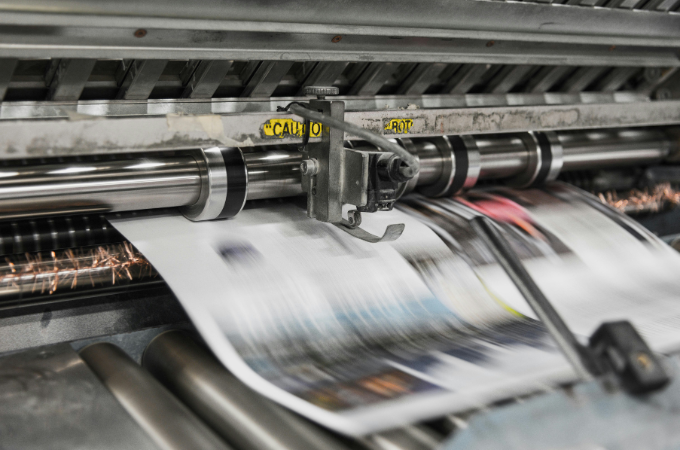
Photo by Bank Phrom on Unsplash





COMMENTS -
Reader Interactions