

The first time someone laughs at your name, you realise that a name isn’t just a quiet thing.
It enters the room ahead of you with a certain presence. It shakes hands on your behalf. It tries to explain who you are. It apologises for any confusion. And sometimes, it even reveals more about you than you want it to.
“You’re Mr. who?”
“Edward.”
“No, your surname.”
“Black Edward.”
Then comes the pause. Always the pause. Sometimes there is a smile that tries not to become a laugh. Sometimes suspicion. Sometimes fascination. Sometimes that soft, careful tone.
“Munobva kupi?” Where do you come from?
I used to answer defensively. Now I answer like a man handling an old wound. Carefully. Almost tenderly. Because the truth is that my name is not a name. It is a crime scene.
Everything is still there if you know how to look. The fingerprints of missionaries. The muddy boots of colonial clerks. The exhausted compromises of African families trying to survive history with their dignity half intact. My name carries all of them. Some people inherit land. Some inherit cattle. I inherited confusion written in blue ink.
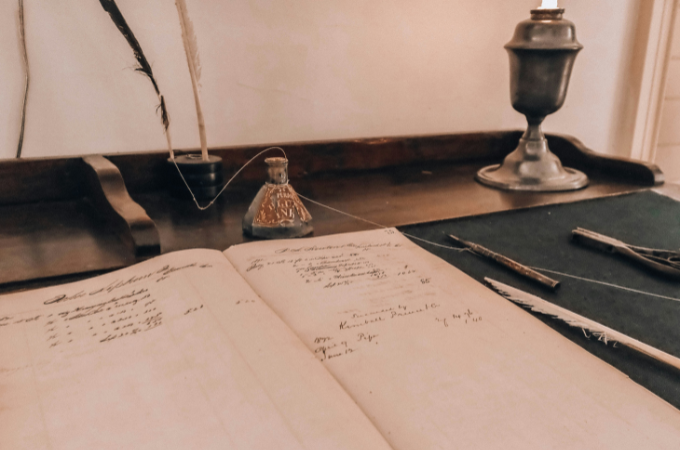
It began long before me, before my mother ironed my school shirt with trembling hands, before my uncle walked through the drizzle to the Births and Deaths Registry at Market Square, before some bored official rearranged my bloodline with the flick of a wrist.
It began with my grandfather. To the world that made him, he was Chipande.
A name with soil under its fingernails. A name that belonged beside cattle bells and riverbanks and the smell of rain hitting dry earth. A name that knew where it came from.
Then the missionaries arrived carrying the Bible in one hand and replacement names in the other.
I have often wondered how it happened. Did my grandfather stand in front of them nervously, hat in hand, while they frowned at the architecture of his African syllables? Did they attempt it once or twice before surrendering?
“Chi… Chip… Chip-end… ah, no!”
Perhaps they smiled kindly while erasing him.
“You shall be Edward.”
And just like that, a man became easier to pronounce. While some Africans adopted these names voluntarily to aid in professional advancement or education, many, like my grandfather, were forced to adopt them.
This is how colonisation survived. Not only through guns or stolen land, but through tiny edits to human beings. Through baptisms that behave like burials. Through paperwork. Through classrooms. Through making Africans carry foreign sounds in their mouths until they begin to answer to them instinctively. My grandfather became Edward because somewhere a white man’s tongue failed him.
Years later, when I needed a birth certificate to begin grade one, that failure reached me too.
My father could not go to the registry office that morning. Even now, the family tells that part of the story with lowered voices and unfinished sentences. Absence has its own privacy. So, my uncle went in his place because in those days official things belonged to men. Governments preferred speaking to men. Paperwork trusted men more than mothers, mothers who had never been to school.
My mother stayed home, anxious and hopeful, smoothing my tiny shirt over and over as if neatness itself could secure my future.
The registry office stood like a tired colonial memory. People called it KwaMudzviti. The place of the registrar. The place where the state decided who existed.
I imagine the room smelled of wet coats and old paper. Iron cabinets swollen with forgotten lives. Carbon paper staining fingers blue. Cars hooting somewhere in the distance while clerks drank cold tea and misspelled destinies.
When my uncle reached the counter, the official asked the necessary questions with the boredom of a man who had stopped seeing people and only saw forms.
“Child’s name?”
“Edward.”
“Father’s name?”
“Barack.”
“Grandfather’s name?”
“Edward.”
The official did not ask for a surname because he assumed he already understood. Grandfathers, after all, carried the family name. And my grandfather’s name, as far as colonial paperwork was concerned, was Edward.
So, he wrote it twice.
Edward Edward.
A human echo.
A clerical shrug that became my identity.
Bureaucracy has always had an imagination more dangerous than poetry.
My uncle came home carrying the document triumphantly. My mother held it like salvation because to poor African families, paperwork often means survival before dignity. The certificate was a small piece of paper, yes, but size did not matter. I could go to school now. I could enter the world of uniforms and exercise books and assembly prayers.
No one had the luxury to argue with the state over names. So, I became Edward Edward.
Children can smell weakness in each other. At school, my name became entertainment. Teachers repeated it with amusement during marking of the class register. Classmates giggled openly. “Edward Edward?”
It sounded like a stutter. Like an unfinished thought.
For years, I carried the embarrassment silently. A birth certificate feels heavier when you are ashamed of it. Mine sat folded among school reports and church cards like evidence of a joke everyone understood except me.
Then I turned seventeen and decided I would reclaim myself. Teenagers are beautiful in their foolish courage. They still believe the world can be corrected if spoken to firmly enough.
I remember that morning clearly. Zimbabwean skies have a kind of blue that can make even poverty look temporary. I wore my best shirt, buttoned all the way up. I walked into the registry office with the seriousness of a young revolutionary. I thought I was going to repair history.
The official behind the desk was old enough to mistake his position for wisdom. He examined my birth certificate with irritation.
“Who did this?” he muttered.
I felt vindicated immediately. At last, another adult could see the absurdity.
He turned to the shelves where old records slept inside dusty ledgers. I waited there, imagining my restoration. I would finally become who I was supposed to be. Edward Chipande. A proper name. A complete inheritance.
When the man turned to look at me, he adjusted his spectacles.
“Your father’s name is Barack?”
“Yes.”
His pen paused. He frowned as though the problem had deepened. Then suddenly his face brightened with bureaucratic inspiration.
“Balack. No,” he said. “Black.”
Even now, I think about how casually it happened. One movement of ink. One assumption. One colonial aftershock disguised as a correction.
He scratched out my father’s name and replaced it. Barack became Black. Then he shifted the pieces around until they satisfied his logic. He handed me a new birth certificate while the ink was still wet.
Black Edward. Problem solved.
I had entered the office as Edward Edward and emerged as Black Edward, as though I were a comic-book vigilante invented by Rhodesian paperwork. I walked to the bus terminus, stunned.
There are moments when you realise the state is not a machine but a storyteller. It invents people all the time. It decides what belongs on paper and what disappears. A clerk can become an accidental author of human lives.
At home, nobody knew whether to laugh or despair. And perhaps that is the truest African response to suffering. Laughter and grief share the same chair.
Years later, at college, I encountered Frantz Fanon. Reading him felt like somebody switching on a light inside a room. Suddenly, I understood that colonisation does not end when flags change. It lingers in language. In beauty standards. In religion. In memory. In names. Especially names.
I began to look at mine differently. Not as a private embarrassment but as evidence. Evidence of how Africa was translated badly. Evidence of what happens when entire peoples are processed through foreign systems that neither understand nor care to understand them.
I considered hiring a lawyer. I imagined reclaiming Chipande officially. Resurrecting my grandfather properly. Correcting the archive. Killing “Black Edward” once and for all. But somewhere along the way, I stopped wanting erasure. Because the truth is that these names, however broken, are also records. They tell the story of what happened to us.
Edward Edward speaks of confusion, yes, but also of a family trying desperately to educate a child in a world built against them.
Black Edward speaks of colonial hangovers still wandering through independent offices decades later.
Chipande speaks of what existed before all of it.
And perhaps identity is not about choosing one version over another. Perhaps it is about learning to live honestly among the ruins.
Sometimes I spread both birth certificates on my table and stare at them side by side. The original and the “correction.” Two official lies, arguing with each other. The papers make me think about how fragile identity really is. How easily a life can be rearranged by tired clerks and careless assumptions. How many Africans are carrying names that arrived through misunderstanding?
How many Mkandawires were renamed Jacob?
How many Chimombes became something else?
How many people inherited surnames that began as missionary convenience?
How many family trees were quietly interrupted by the inability of the empire to pronounce us?
Indigenous names were sometimes replaced with English words like Friday, Sixpence, or Tickey, but despite these changes, we continued to live fully. We loved, named our children, built homes, planted maize, and sang at funerals, holding onto our traditions and spirit every step of the way.
History wounded us, but it did not entirely stop us from becoming human beings. That matters.
What also matters is this: I cannot fully reject Edward because that name, however foreign, was spoken lovingly by my mother. It was whispered over my fevered childhood body. It travelled through generations before reaching me. Colonisation may have delivered it, but my family softened it with affection. Even our wounds become intimate after enough time.
And Chipande remains beneath everything like buried roots. This surname is common in central and southern Africa, such as in Malawi, Zambia, and Mozambique. It often highlights family history or past roles, adding a sense of shared heritage.
I have since learned that the word carries many meanings across this region. In some places, it refers to the first leaf that pushes through the soil during germination. In others, it refers to healing, to fontanels. In Zimbabwean slang, it can also mean debt.
Debt. I think of that often. Because perhaps I truly am living on borrowed names. Borrowed histories. Borrowed languages. Borrowed gods. Most Africans are.
That is the uncomfortable inheritance of colonialism. It left us speaking in tongues that are not entirely ours, praying under names we did not originally own, introducing ourselves through administrative accidents.
Yet inside all that borrowing, something stubborn survives. A hidden self. A Chipande beneath the Edward.
So, when you meet a black African carrying a European name, do not mistake that name for the whole story. Look closer. Listen longer. There is usually another person standing behind the paperwork. There is usually a grandmother who still remembers the original clan name. A grandfather who answered to two identities depending on who was calling him. A history of adaptation disguised as acceptance.
Yes, my official name is Black Edward. But, my first name is Edward. My father’s name is Barack. My family name is Chipande. All of them are true. I am also, depending on who you ask, three entirely different people.
Ask my relatives or the guys from the hood, and they’ll tell you about Edward Chipande, a solid, respectable name, the kind that carries the weight of ancestors and Sunday afternoons drinking maheu under a tree. Ask anyone from primary or secondary school, and they’ll furrow their brow and say, “You mean Edward Edward? Skinny guy? Always had a pen and pencil in his shirt pocket?” And ask my college friends, and they’ll laugh before they even finish saying the name, Black Edward, the man, the legend, the one who once argued with a lecturer for forty minutes about Fanon and walked out looking like he’d won.
Same person. Three names. Zero overlap. This isn’t merely a curiosity. It is a logistical crisis.
Consider what happened when my cousin Cephus, who knows me exclusively as Edward Chipande, came to visit me at my former college hostel. He asked around for me using the only name he knew. “Edward Chipande? Does anyone know Edward Chipande?”
Blank stares. Shaking heads. A guard told him, helpfully, that no Chipande had ever lived in that building, not in living memory. A student suggested he might have the wrong institution entirely. Another offered him a mazoe drink, which was kind, but unhelpful. Meanwhile, I was sitting in my room, thirty metres away, completely unaware that my own blood relative was being treated like a lost tourist.
It took forty-five minutes and luck to find me. Cephus arrived at my door looking like a man who had crossed a desert. “Why,” he said, breathing hard, “does nobody here know you?”
“They do know me,” I said. “Just not that name.”
He sat down. We did not fully resolve the matter.
Then there was the time a former schoolmate, Ben, a good fellow, still owes me twenty dollars, came looking for me in the hood. He asked the guys at Maynard’s tuckshop for Edward Edward.
Now, in the hood, “Edward Edward” does not sound like a person’s name. It sounds fake. The guys looked at Ben with deep suspicion. One of them, Jimmy, who has lived on that street for many years and knows everyone, said he had never, in all his time, heard of anyone called Edward Edward, and that frankly the name sounded like something a person would make up if they were not from around here or a conman.
Ben, to his credit, persisted, “He went to Nyandoro Primary. Skinny. Liked books too much.”
“Oh!” said Jimmy, lighting up immediately. “You mean…?”
This is how deeply the three worlds do not communicate.
I can’t talk about the experience of a high school girlfriend. It will be improper because we’re both married now, and not to each other.
However, it is, I must say, a good thing I have never been on the wrong side of the law. Because if the police were ever trying to find me, they would have a genuinely terrible time of it. Picture the scene:
A detective, let’s call him Inspector Sanudi, a serious man, a thorough man, a man who prides himself on closing cases, is trying to trace my movements. He has three witnesses. He interviews them separately.
Witness One, my aunt: His name is Edward Chipande. Very well-behaved young man. Always respectful.
Witness Two, my old classmate: Edward Edward, yes. Strange name, we used to tease him. Haven’t seen him in years.
Witness Three, my college friend: Black Edward? Oh, everyone knows Black Edward. Wait, why are you looking for him?
Inspector Sanudi stares at his notepad. He has three names, zero matches, and a headache that will last until retirement. He begins to wonder if he is, in fact, looking for three separate men, possibly a small gang operating under a sophisticated alias system, rather than one moderately sized man who simply had an unusual registration experience in 1967.
The case goes cold. I remain free. Not because I am clever, but because the colonial bureaucracy was, in its arrogance, accidentally perfect protection.
The deeper truth, though, and here the laughter settles into something quieter, is that each name carries its own world inside it.
Edward Chipande is the child who ran barefoot in the dust, who belongs to a family, a clan, a lineage that goes back further than any government certificate.
Edward Edward is the schoolboy, wide-eyed and earnest, who learned to read and write and discovered, slowly, that the world was more complicated than his textbooks suggested.
And Black Edward is the man who went to college, read Fanon, and understood, with a clarity that was equal parts painful and liberating, exactly what had been done to his grandfather’s name, and why.
Three names. Three lives, stacked inside one body like chapters in a book that nobody asked to be written quite this way.
I have stopped trying to explain it at introductions. It takes too long, and people’s eyes glaze over somewhere around the second “Edward.” Now I simply say, “Call me whatever you like. Just don’t call me late for food.”
And if someone writes “Mr Black” on my form, well, by now, I have learnt to smile.
All of the names are incomplete. And perhaps that is what it means to be African in the long shadow of empire: to become a crowd inside your own name.



COMMENTS -
Reader Interactions