

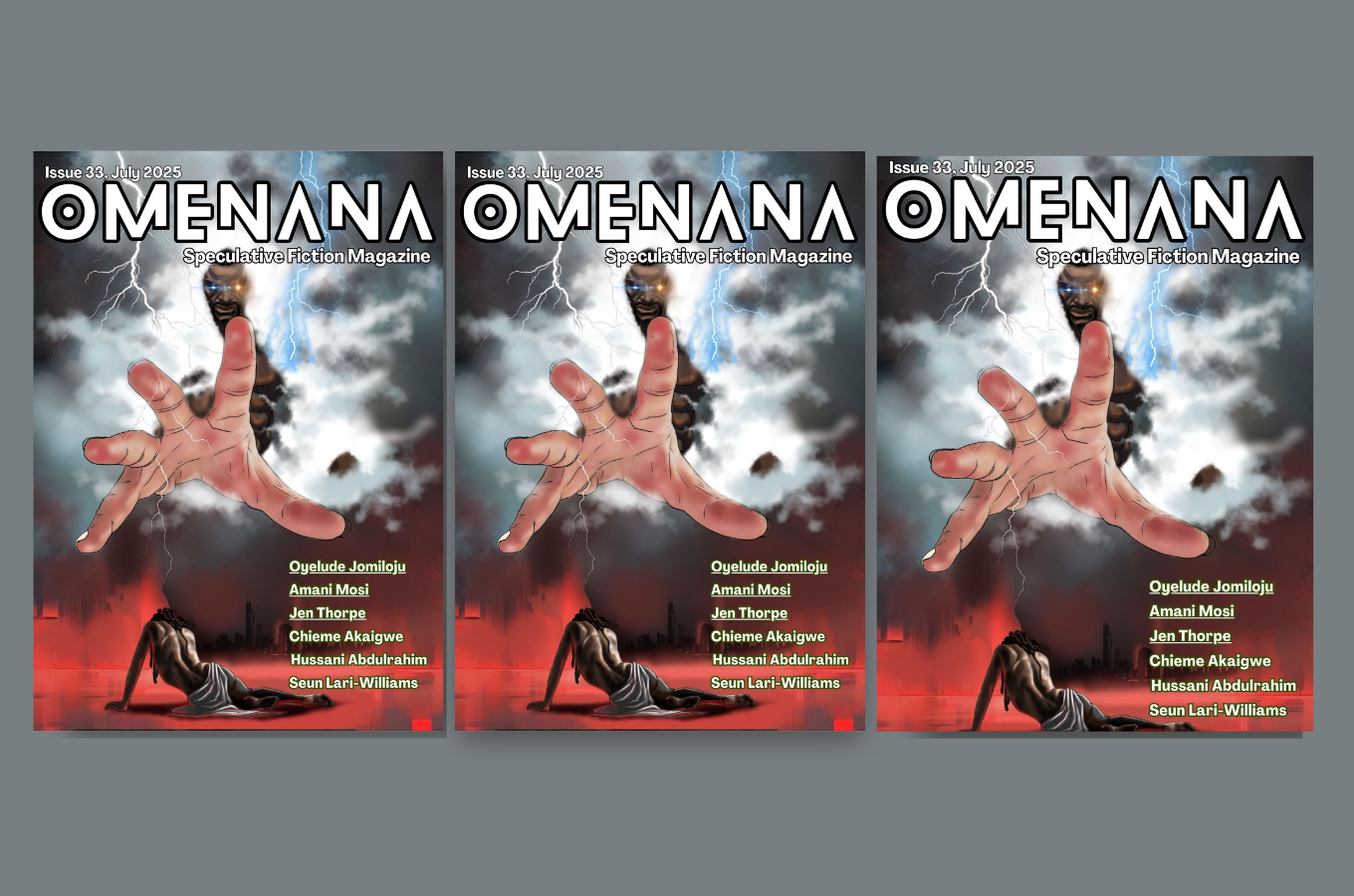
Omenana Speculative Fiction Magazine’s 33rd issue arrives with stories that blur timelines, and reshape memory through boldly African visions. True to its mission, the magazine continues to champion African narratives that push boundaries and explore the truths found at the edges of reality.
In the introduction, editor Mazi Nwonwu reflects on the magazine’s enduring mission: “With every issue of Omenana, we recommit ourselves to the task of holding space for African imaginations that bend time, twist memory, and summon futures. In this 33rd edition, our contributors once again challenge form, embrace myth, and confront the complex realities that live at the edge of the known.”
The issue presents speculative fiction as more than escapism, it serves as a tool for confrontation, re-imagination, and healing. “We are proud to showcase writers who understand that speculative fiction is not just the means to escape reality, but one for confrontation, re-imagination, and healing. It is, in many ways, our most urgent form.”
This thematic exploration, of speculative fiction as both mirror and lamp for African experiences, runs through every story in the issue, whether dealing with post-apocalyptic worlds, ancient myths, or supernatural transformations.
The fiction section features a diverse array of contributors exploring everything from robot-mediated relationships to ancestral reckonings. Jen Thorpe opens the issue with “The Return”, a post-apocalyptic story where a couple attempts to recreate ancient family life with robotic assistance, only to discover that humanity’s selfishness persists even in manufactured futures.
Oyelude Jomiloju’s “The Things They Buried With the First Wife” excavates the tension between tradition and modernity as a young widow must open her husband’s first wife’s grave for burial rites that no longer quite fit contemporary anxieties. Seun Lari-Williams revisits the haunting Yoruba mythology of the Abiku child in “Drum Call”, exploring cycles of life, death, and return.
Chiemeka Akaigwe’s “Metempsukhōsis” offers a sharp critique of digital-age narcissism through the story of a Gen Z influencer who faces supernatural consequences for her technological manipulations. Amani Mosi contributes “Dust and Echoes”, described as “a story that reads like a ceremony, pulsing with grief and resistance,” following an ancient griot’s mission to restore stolen African dreams and songs.
The issue concludes with Hussani Abdulrahim’s “Gecko Girl”, a body-horror transformation tale that begins as childhood play and evolves into something “wild, primal, and irreversible.”
These stories collectively demonstrate what Nwonwu calls the magazine’s mission to showcase “stories that defy category and resist erasure.” From ancient myths to futuristic nightmares, each piece offers what the editor hopes readers will find: “something here that lingers in your bones.”
Founded in 2014, Omenana has established itself as a premier platform for African speculative fiction. As a tri-monthly publication, the magazine continues to provide vital space for writers exploring the intersections of African storytelling traditions with science fiction, fantasy, and horror narratives.
Read Omenana Speculative Fiction Magazine Issue 33 in full here and explore the magazine’s archive here.





COMMENTS -
Reader Interactions