

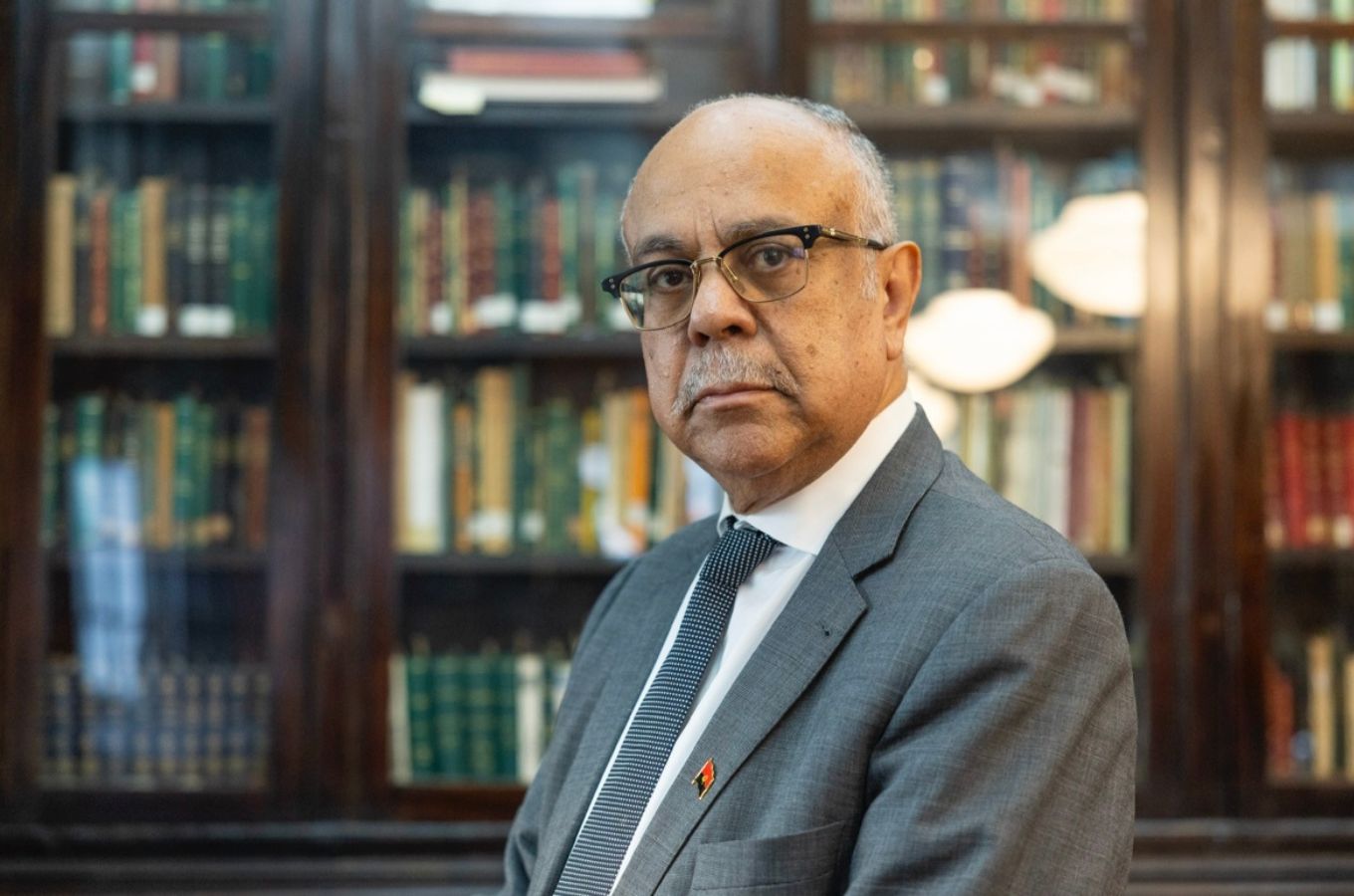
Angolan writer João Melo continues his remarkable global literary journey with the upcoming Chinese publication of his novel “Será este livro um romance?” (Is this book a novel?). The work, originally published by Portuguese publisher Caminho in 2022, will be released this October in mainland China and Macau through a joint edition by Lijiang and Macanese publishers as part of their Portuguese-Speaking Countries Series.
This Chinese publication marks another significant milestone in Melo’s international reach. The award-winning author, who has been writing for over 50 years, has already seen his works published across multiple continents including Cuba, Spain, France, Italy, the United Kingdom, the United States, and Tunisia, in addition to Angola, Brazil, and Portugal. His global presence is set to expand further with anticipated publications in India and Poland this year.
“Será este livro um romance?” challenges conventional expectations of African literature, a quality that has drawn praise from British professor and translator David Brookshaw, who recently became Africa editor at Dedalus. Brookshaw observes that the novel’s title reflects its unconventional nature: “it is not a prototypical African novel such as those that western readers (and of course publishers) are accustomed to expect. And yet, in its own way, it is precisely about the thematic straitjacket and constraints that the reading public outside Africa have determined should constitute literature from that continent.”
The novel employs sophisticated literary techniques, playing with concepts of author authenticity, narrator reliability, and perspectivity while introducing elements of magical realism, including a memorable scene featuring Leonardo da Vinci in conversation at a Luanda café. Beyond its experimental form, the work engages with contemporary Angolan politics, commenting on the country’s transition following President José Eduardo dos Santos’s withdrawal from political life in 2018 and his replacement by João Lourenço, whose mandate focused on addressing corruption.
The global pandemic serves as both chronological marker and contextual backdrop for the story, demonstrating how Melo weaves universal experiences into his distinctly Angolan narrative. This blend of local specificity and global relevance may explain the novel’s appeal to international publishers and readers.
Melo’s literary career spans poetry, short stories, and extensive contributions to Angolan and Portuguese-language journalism. His recognition by Chinese publishers reflects the growing international appreciation for African literature that transcends traditional boundaries and expectations, offering readers complex, nuanced perspectives that resist easy categorization.






COMMENTS -
Reader Interactions