

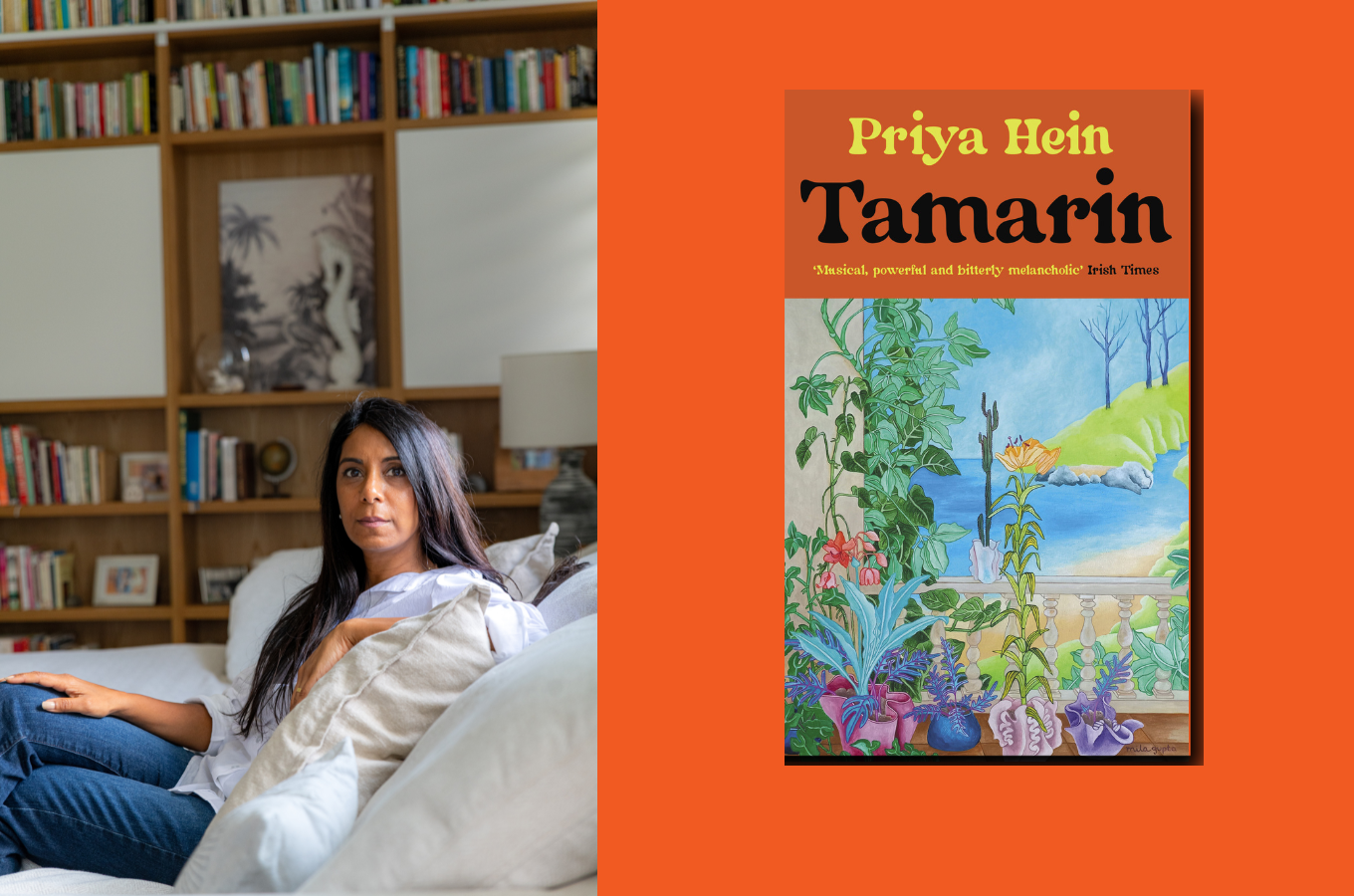
 Priya Hein’s Tamarin is a small book about big feelings. When I started reading, I thought, it’s only 168 pages, I’ll finish it in one sitting. And I did. But by the end, I was gutted. And I think it has something to do with the way the book presents “home” as one of the most powerful things we long for, and why it’s not always available to everyone, especially women caught in the crosshairs of patriarchy and loss.
The novel starts with a haunting scene: a woman in London bangs on the locked door of a travel agency and says, “I need a ticket to Mauritius, leaving as soon as possible.” No one answers. A little down the street, she buys a bottle of whiskey. She gets home, she drinks a bit more than she should, lights a vanilla candle, runs a bath, and sinks into the water. As she slips under, her mind drifts to Tamarin: “that little piece of paradise.”
Then we meet Anita Ram, a woman from Mauritius who has just come back from London. Hein never fully tells us how she’s connected to the first woman, but that’s part of what makes the story so haunting. You can feel something dark and unresolved, maybe twisted, links them.
When Anita returns home, her mother is shocked to see her. The homecoming is awkward and heavy. Anita is asleep most of the time, partly from jet lag, and partly from what is clearly depression. Something happened in London, and this return home is an attempt at possibly starting over. Hein doesn’t rush to explain what Anita has been through. Instead, she focuses on her slowly coming back to her body, her family, and the sea that raised her.
Hein’s writing about Mauritius is gorgeous. It really does transport you to another world. Even as she avoids glossy travel-brochure version of Mauritius, she gives you the beauty of the Island, its beaches, the blue water, and rich culture, all this while also showing the colonial history underneath it all. You feel the weight of the past everywhere Anita goes.
There’s this one scene I can’t stop thinking about. Anita wanders into a temple at the foot of the mountains. The floor is covered in incense sticks and marigolds. The air smells like sandalwood. Then she sees a funeral pyre being built outside. “A thrill of repulsion went through Anita as the strong stench of burning flesh hit her,” Hein writes. It’s one of those moments that feels real, the way death is presented as this sensory experience awareness that connects life to loss and the otherworldly. There are softer moments too. Anita befriends a young girl named Maya. Their daily time at the beach and the girl’s innocent curiosity are small spark of joy in Anita’s grief. But Tamarin never really turns sweet. You don’t really shake off the sense that London was an unraveling experience for Anita. Hein gives us pieces of Anita’s life in London in cautious little bits, letting us fill in the blanks. And when the ending comes, it will shake everything you thought you knew.
There is one scene at the beginning on the novel when Anita holds a conch shell to her ear and listens to “the murmurings of the ocean.” I took me a while to figure out why I kept returning to the scene, that it is because the scene encapsulates what reading this book feels like: holding something small that somehow carries the sound of an entire world. Tamarin is a small book, but it carries the weight of what women struggle to survive.




COMMENTS -
Reader Interactions