
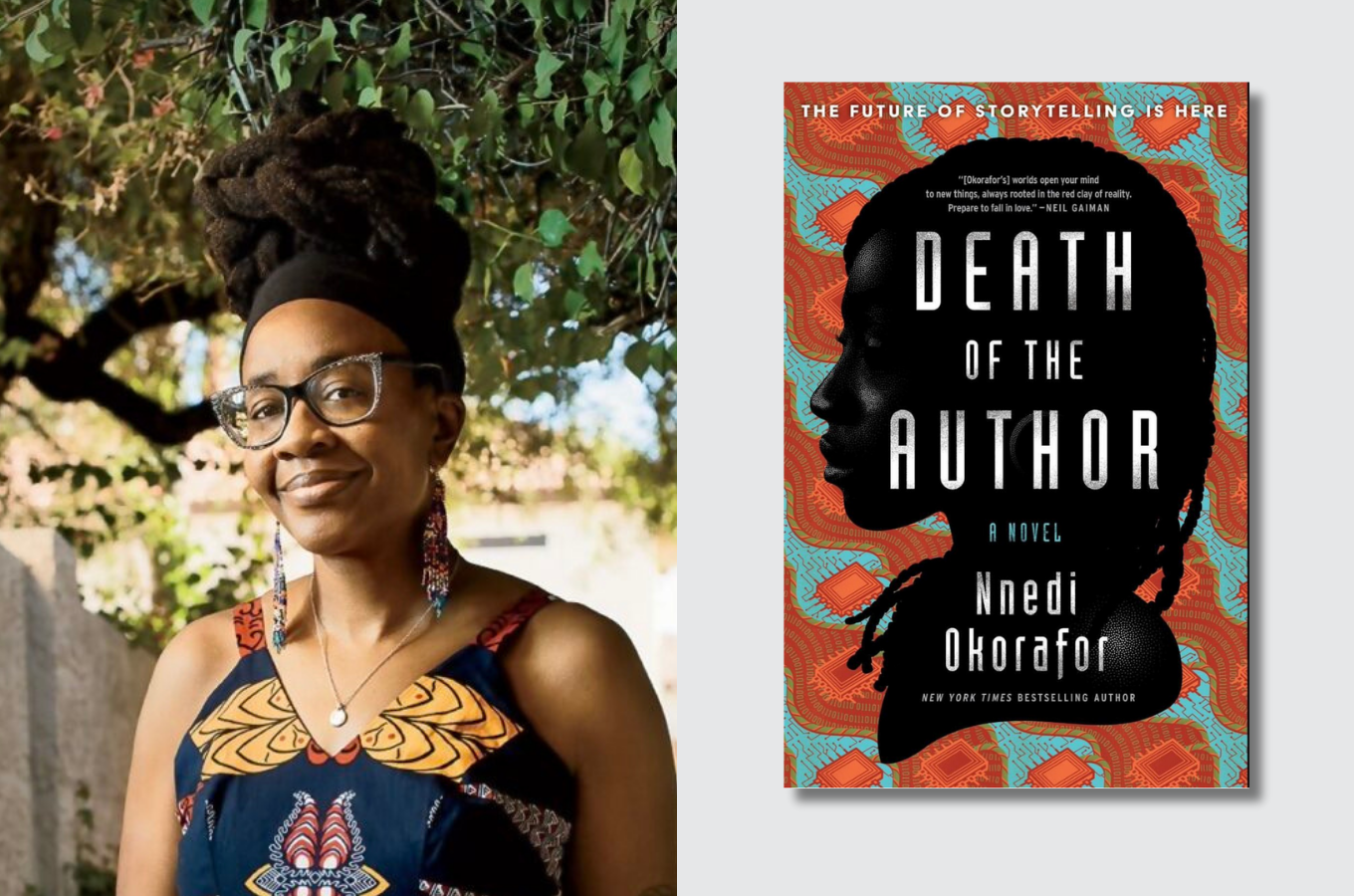
 Nnedi Okorafor’s latest novel Death of the Author has been selected as one of TIME Magazine’s 100 Must-Read Books of 2025, adding another major recognition to Okorafor’s growing list of honors. The metafictional work, which Okorafor describes as containing “multitudes,” has also gained significant reader traction: it’s one of the most popular science fiction books of the year so far and has advanced to the first round of nominations for Goodreads Readers’ Favorite Science Fiction in the Goodreads Choice Awards.
In TIME’s review, critic Cate Matthews highlights the novel’s genre-defying structure: “One half of the book follows an ascendant writer on an earth not too dissimilar from our own, and the other is populated by sentient, warring robots.” Matthews notes that while the genre is “hard to pin down,” Okorafor “more than delivers” on science fiction’s promise of “being different, seeing more, examining human nature, and imagining tomorrow.” For Okorafor, who has won multiple Hugo Awards, this acknowledgment of the novel’s genre fluidity is particularly satisfying. Responding to the recognition on social media, she remarked: “I’m pleased that they at least said the genre is ‘hard to pin down’ (that’s an understatement because the novel contains multitudes).”
That comment amplifies what we all know about Okorafor’s artistic vision. Throughout her career, she has resisted narrow categorizations, coining the term “Africanfuturism” to describe speculative work that centers African culture and perspectives rather than simply placing Black characters in Western futurist frameworks. Death of the Author represents what Matthews calls “a new chapter” for Okorafor, “one that doubles down on her vision for Africanfuturist literature while incorporating moments of significant realism.” The novel’s dual structure allows Okorafor to explore both the life of a writer and the worlds that writer creates, blurring the boundaries between reality and imagination, creator and creation.
The recognition from TIME places Death of the Author in conversation with the year’s most significant literary works across all genres. For a novel that refuses easy classification, combining metafiction, Africanfuturism, realism, and speculative elements, this mainstream acknowledgment is significant. It suggests that major literary gatekeepers are beginning to recognize that genre boundaries are artificial constraints, and that the most interesting contemporary literature often exists in the spaces between categories.
As Okorafor has proven throughout her career, from Who Fears Death to the Binti trilogy and now Death of the Author, the future of African speculative fiction is as vast and uncategorizable as the imagination itself. Cop a copy of Death of an Author here.







COMMENTS -
Reader Interactions