

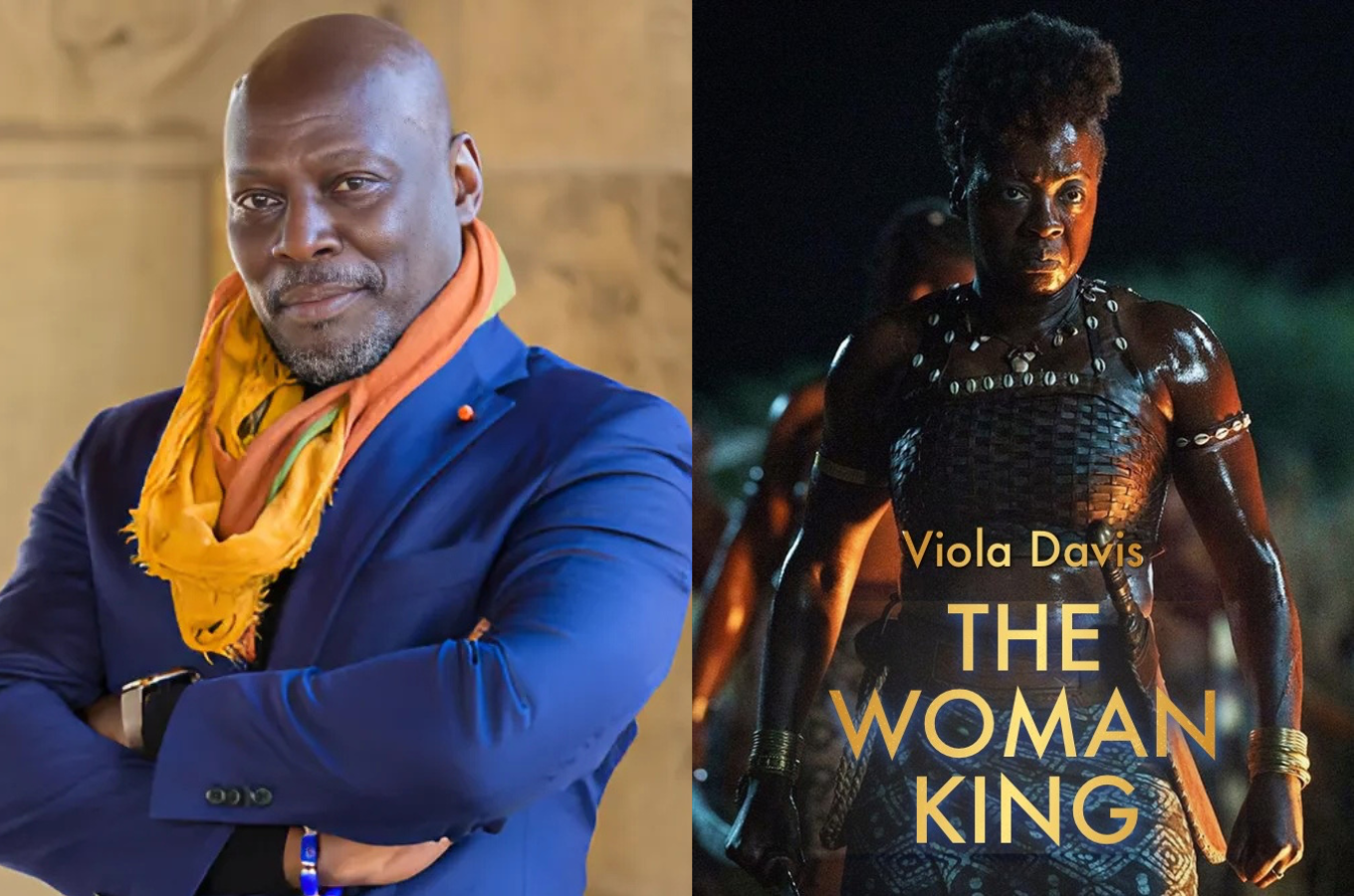
Professor Ato Quayson is back with another episode of his YouTube series Critic.Reading.Writing, and this time he’s diving into the history behind The Woman King. If you watched Viola Davis command the screen in Gina Prince-Bythewood’s 2022 film and wondered what was real and what was Hollywood magic, this fifteen-minute video is for you.
Quayson starts with a truth we all know but rarely say out loud: asking Hollywood to be historically accurate is like asking a fish to ride a bicycle. Still, despite its distortions, The Woman King got something important right about the Kingdom of Dahomey during King Ghezo’s reign in the 1820s, it was a kingdom caught between worlds, trying to figure out its future as the slave trade was ending. The Stanford professor walks us through the messy reality of that moment. Why were Portuguese slave traders still operating at Ouidah in 1823, years after Britain abolished the slave trade? Turns out, Britain and Portugal had signed a sneaky treaty back in 1810 that let the Portuguese keep trading slaves at certain ports, including Ouidah. Politics, as always, was complicated.
But Quayson doesn’t just focus on treaties and politics. He explains how palm oil became the new economic engine after slavery, fueling the Industrial Revolution, and how locally woven fabrics would eventually lose out to factory-made cotton. The professor also tackles the Agojie themselves, tracing their origins back to the 1600s as elephant hunters, through Queen Hangbe’s creation of an all-female bodyguard in the early 1700s, to their expansion into thousands of fierce warriors by Ghezo’s time. He doesn’t sugarcoat the uncomfortable truth that some Agojie were enslaved women, complicating the film’s neat narrative.
One of the most interesting bits is Quayson’s explanation of why the Oyo soldiers wear turbans and ride horses in the film. Parts of Yorubaland had been Islamicized by then, bringing new military styles south. He also reveals how the French finally defeated Dahomey in 1900, by adding longer bayonets to their guns, which gave them an edge in close combat against the legendary Agojie. And in a neat connection to today’s debates, he mentions that the famous Benin Bronzes were looted during France’s invasion, linking that old kingdom to current conversations about returning stolen African art.
This episode is Quayson doing what he does best: taking a popular film and showing us the fascinating, messy, human history behind it. Whether you loved The Woman King, had questions about it, or just want to understand West African history better, give this a watch. It’s the kind of smart, accessible storytelling that makes you see both the film and the history in a whole new light.



COMMENTS -
Reader Interactions