

You may rebuff the question by pointing at all world languages that also call an electronic mail, email. Yet we still must find words in most African languages, not only for email, but also for video, for printer, for smartphone, for computer. This in fact is a never-ending problem. as a child during the seventies, I remember asking my sister how you call a matchstick in Medumba, our mother tongue, and she said it is matchit. Today still, we need African words for a few thousand common things of our daily lives. This is a task that Scale Boy has given itself.
Scale Boy is a media tryptic. It is first my childhood memoir, then it is a business, a limited liability company that flips its narrative dispositive, and then it is an app with multiple capacities – radio, television, streaming, ebook, chat, marketplace – all in African languages. We have started with ten African languages, plus English and French.
This is a must; otherwise, with the pace of the digital world, we run the risk of leaving our children’s conversations incomplete, empty of words to describe our time. The same way our parents left us without words for car or telephone, and for the signs of the industrial revolution and new professional life (they called it colonialism) their time faced. And yet, never have people written and read as much as younger people do, Africans in Africa included. In front of us, indeed, we have a generation of Africans, of people that are hooked on their smartphones, a generation that is truly addicted to writing and reading; but the challenge is, we offer them a vocabulary system that, in African languages, lack the basic, truly mundane words to narrate their lived experience.
Just imagine. a friend of mine who is Kikuyu and a university professor in the United States, who like most Africans have yet to see a dashboard (how do you say dashboard in your mother tongue, by the way?), on which everything is written in the language they call their own. In 2026, we are still like Okonkwo yet having to see an African-made car. Amharic and Kiswahili are exceptions here, but Igbo and Wolof share the fate of Yoruba and Fulfulde. And these are the major African languages, with more than a dozen million speakers for each. Medumba’s, Edo’s, or Twi’s fate is far worse, as is the fate of all the minority languages of the African continent.
They must still mostly unburden themselves from the cancerous international phonetics alphabet (IPA) that was injected in them by colonial missionaries, and the Christian group that calls itself ‘SIL’. Though the question remains: do Africans chat in their mother tongue? For African parents: in what language do you send WhatsApp, or text messages to your children? The world in which we live is defined by our actions. And those actions are more and more linked to writing. Actions like sending money via mobile money, or simply purchasing things in e-commerce are written. When you send your money to your relatives, is the bank’s didascaly on your phone written in your mother tongue?
Cellphones are not a strange commodity on the continent anymore, as remote villages are usually more accessible by them than by the roads that colonialism has left us, and that postcolonial states have been incapable of modernizing. It is the smartphones, iPhone and Android, that expanded the domain of writing; it is them that made infinite the landscape of reading, the way the King James Bible of colonial times or the Church, had not been capable of. Okonkwo would have had a cellphone in Mbanta, the place of his exile. Yet, here is what the curator of Igbo for Scale Boy writes about the state of the language today:
The state of Igbo language in Nigeria is a sorry one. Most older gen Z, who are now parents, refused to teach their children the language. They refused to speak it. Apart from that, the generation before gen Z, most of them, can’t make a complete sentence without traces or mix of English. Their excuse: ‘I cannot speak Igbo, but I understand it.’ When asked what the Igbo word for ‘key’ is, they would know. The language is not going into extinction, but those with core knowledge of it are reducing gradually.
His words echo those of the curator for Somali, whose first sentence to me when we started working was, ‘Somali is dying.’ Both had to invent words for the most improbable items of our daily lives, to help their mother tongues, Igbo here, Somali there, out of a linguistic silence that makes the many simply resort to English to ease their daily work and communication, even with their family – hey, reader, what is the word for podcast in your mother tongue, after all? And the word for passcode, tell me, what is it? And for file? How then do you sign into your Facebook account to send, that is, to write a message, to your friends?
Inventing words becomes a creative duty for the writer. The African poet regains the terrain most speakers of African languages had abandoned; that of a language manufacturer. The Scale Boy curator for Somali summarizes this creative energy in the following, quite vivid terms: ‘It opens a whole new world that no one has waded into.’ A new world that is, in fact, a terra cognita, a naming of the trivia of today’s life that has become totally writerly. In the process, literature gains a new meaning. In fact, one cannot speak of African literature today any longer as if writing was still done on paper only. And yet never has writing been as dominant in the world as it is today, when at the same time, in front of our very eyes, African languages are missing the digital revolution that propelled writing to such unexpected firmament. If the reasons for the digital dearth of our languages are multiple, the most obvious is that the colonial states and postcolonial African governments are teethless in front of the digit – well, Europe, for decades the publishing center of African literature, has been incapable of building its own Silicon Valley!
Here is our touch-down: My daughter who is sixteen, does not watch television as much as I did at her age, but her smartphone is her most intimate daily companion. She uses it to read and write, and this means, to chat with her friends. So much so that her use of it had to be limited, the same way my father chased me every day from television back in the eighties. History is rapidly unfolding around us all. Writing and reading have long stopped being attached to the printed book. Bureaucracy and education could carry the printed book from colonial ages into postcolonial times; and the printed book itself could survive unchallenged via the radio and television, on which African states for long exerted their monopoly. It is not the case with the digital. Most contemporary African writers write digitally. I bought my first laptop in 1992, and as I write this piece, I have five computers in front of me. All of them wired on the internet.
African government’s reaction in front of the digital revolution has mostly been repressive. If the banning of the internet remains the most infamous government expression, its most vicious subchapter is certainly the jailing of bloggers and influencers. On the Pen Hall of censorship, book writers have been subtly replaced by bloggers, I noticed in New York. For I too did spend a few weeks in jail in Cameroon in 2017, because of a Facebook status. How then do you say status in any African language, by the way? And what is a posting? Who knows! The conservative reflex of African governments in front of these chapters of the digital revolution is what gave an inroad to American compagnies like Microsoft, Google and Meta, whose creative foray into African writing is still limited to a few languages, of which next to Amharic, Swahili is probably their most beloved, while Amharic is their exemplar. And here, the curator of Swahili for Scale Boy tells me:
Most of the commonly used terminologies such as email, login, messaging, already have translations that are becoming part of the language. However other common terms such as streaming, buffering, etc. required me researching and even creating my own terms. The issue is that most of the translations have been done abroad by non-native speakers and with little authentication from the speakers. Therefore, most terminologies fail to gain track with Swahili users and they just swahilize the English terms.
The reality is two-faced: most African languages need to be cleaned up, for those translations and generations are done by computers, and in the process, they pollute the languages they are not using with gibberish. Minority languages are the most invaded by their language junk, the way rivers in poor African countries have become depositories of the plastic trash of richer ones.
At stake is a contemporary, writer-centric world, that is new to English speakers also: the ever-expanding universe of coding. After all, ten years ago no one would have imagined what streaming would mean in English, the same way fifty years ago no one would have imagined that a mouse would mean something else but a little nasty animal. The problem in fact is less that companies like Meta, Microsoft, ChatGPT or Google, are the ones that now give a creative template to African languages (in China, it is ChinaNet, and thus, the Chinese government); the problem is that their model for Africans is wrong. Unlike Europeans, most Africans are multilinguals. We do not translate; we code-switch. We create on the go. Instinctively. Pidgin is therefore an African invention, as is Creole, or Krio. Not a European one.
Creating is the fun part of writing; it is the moment when human intelligence taps into its godly potential, and asserts itself as innovative, which means unique, in what clearly is a race by others to recompose our present for us and invent our future. ‘ChatGPT is becoming good with Swahili, but very few people except Swahili teachers abroad are using it’, the Swahili curator tells me. Because African engineers are obviously unused, or at best sparsely hired in the laboratories of the digital revolution, and of AI, for otherwise Swahili would have been the first African beneficiary of the presence of Meta, Google and Microsoft in African writing, African writers can very easily reclaim for our languages a task that has always been central to writing (the task of wordsmith, that informs Aimé Césaire’s seminal poem Notes of a Return to the Native land for French), and lay the foundation for future endeavors.
Located at the crossroad between the engineer and the writer, it is the task that Scale Boy, the memoir, company, and app, gives itself. Here and now, we decide that email shall henceforth be called kekitata in Medumba. Yes, we have that power.
***
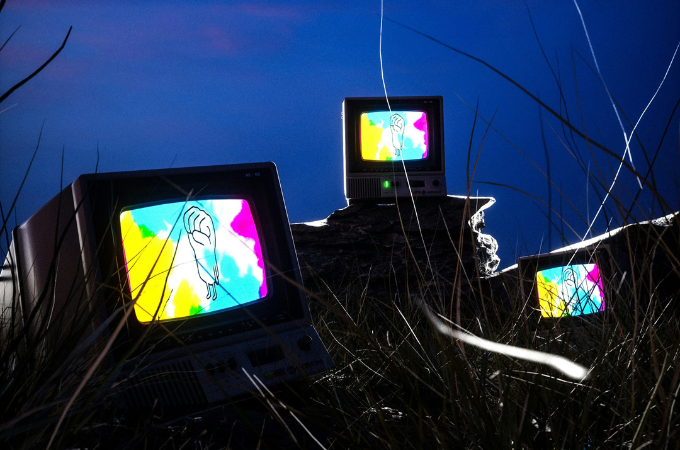
Photo by Cash Macanaya on Unsplash






COMMENTS -
Reader Interactions