

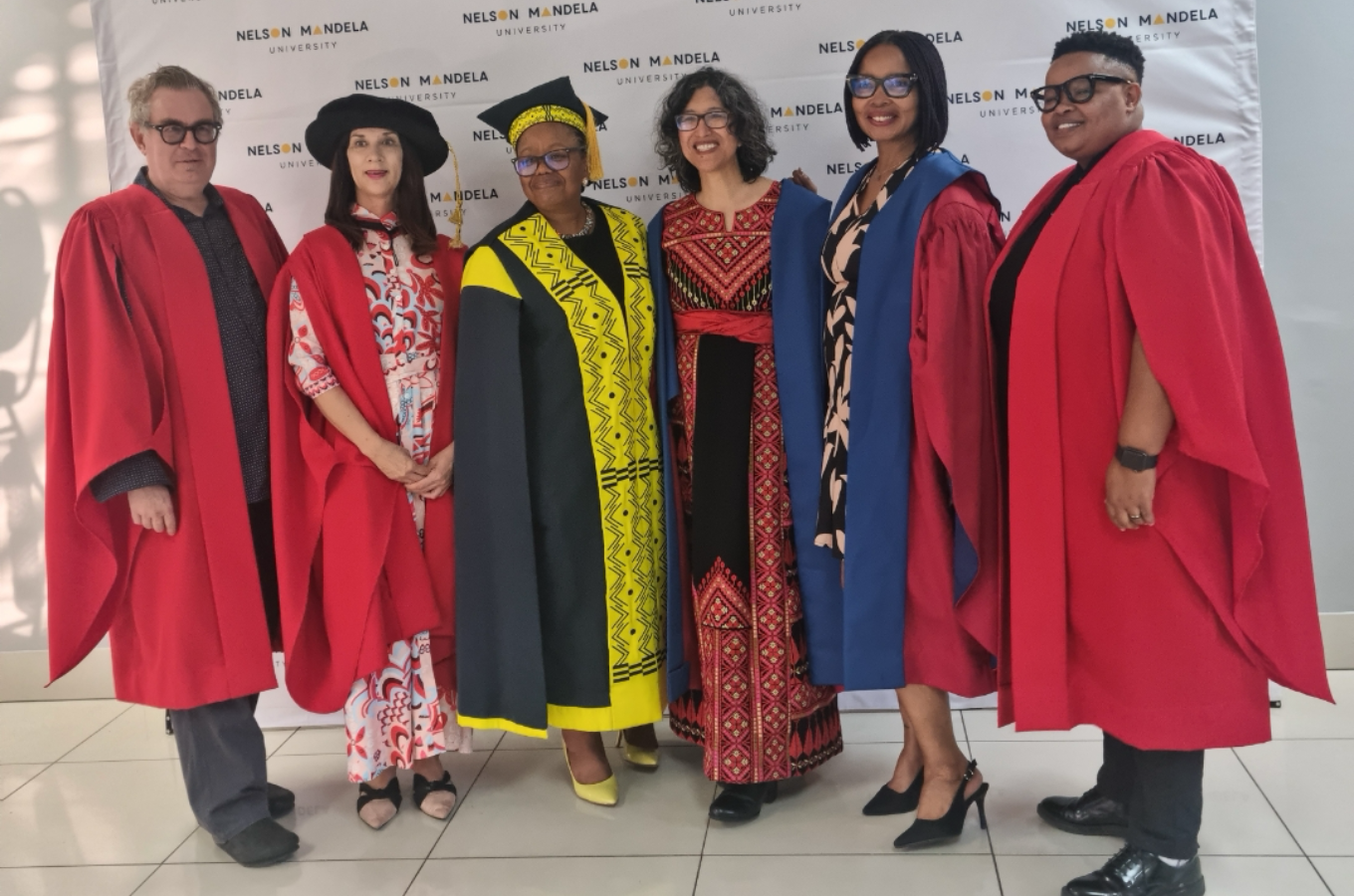
On March 31, 2026, poet and public intellectual Professor Gabeba Baderoon was conferred an honorary Doctor of Literature by Nelson Mandela University for her work that continues to enrich literary culture, advance critical scholarship, and inspire readers and students around the world, a fitting honour for a writer who was herself born on the coastal shores of Port Elizabeth, the very city where Nelson Mandela University stands. The ceremony was part of the university’s autumn graduation season, which also marked a moment of institutional transition as incoming chancellor Dr Naledi Pandor began her tenure, lending the occasion additional historical weight.

Baderoon is one of the most decorated poets in South African literary history. Her poetry collections include The Dream in the Next Body, A hundred silences, and The History of Intimacy, and she is the co-director of the African Feminist Initiative at Penn State University, where she is an associate professor of women’s, gender, and sexuality studies and African studies. The History of Intimacy was named a book of the year by South Africa’s Sunday Times and received the Elisabeth Eybers Poetry Prize in 2019, the University of Johannesburg Prize for South African Writing in 2019, and the National Institute for Humanities and Social Sciences Best Fiction, Poetry and Short Stories Award in 2020.
Her work ranges far beyond poetry. Baderoon is the author of Regarding Muslims: From Slavery to Post-Apartheid, which received the National Institute for the Humanities and Social Sciences Best Non-fiction Monograph Award, and holds an Extraordinary Professorship of English at Stellenbosch University, along with fellowships at the African Gender Institute, the Nordic Africa Institute, Bellagio, and the Stellenbosch Institute for Advanced Study. She co-edited Surfacing: On Being Black and Feminist in South Africa with Desiree Lewis, the first collection dedicated to contemporary Black South African feminist perspectives.
What makes the Nelson Mandela University honour particularly resonant is its geography. Baderoon was born in Port Elizabeth, now Gqeberha, and her poetry has long been rooted in the textures of South African life, memory, and history. Her work uses a gentle eye to consider all that is intimate between us, rendering quiet and still moments as sacred, and has been praised for writing painful histories with care and leaving space and silence around them so they may have room to breathe. To receive this honour from a university in the city of her birth, bearing the name of the president whose release from prison haunts the pages of The History of Intimacy, is a homecoming of the most meaningful kind.
Baderoon joins a long line of distinguished honorary doctorate recipients at Nelson Mandela University, and her recognition reflects the university’s commitment to honouring intellectuals whose work carries African life and thought into the world’s most important conversations. Congratulations, Professor Baderoon!







COMMENTS -
Reader Interactions