


Ghanaian queerness is often framed as a western concept, yet the laws that criminalise queer identities are themselves western colonial imports. What is defended as cultural preservation is, in many ways, inherited Victorian and missionary morality. Before queerness was criminalised, it was contextualised — within cosmologies, ritual systems, and social structures that understood the body not as a site of moral panic, but as part of a greater spiritual continuum: earth, spirit, and universe existing as one divinity.
Colonial legislation and missionary Christianity reshaped pre-colonial spiritual frameworks across West Africa, severing desire from divinity and recoding difference as deviance. In tracing that rupture, it asks a necessary question: if queerness is foreign to Africa, why are the laws that condemn it not? This argument does not suggest that pre-colonial West African societies understood queerness in the modern, identity-based sense familiar to Western discourse. Rather, gender and sexual variance existed without being rigidly policed. Difference was contextualised — woven into social roles, spiritual hierarchies, and cosmological belief systems rather than isolated as moral trespass.
Africa is culturally diverse, and practices varied widely across regions. For the purpose of this essay, the focus narrows to West Africa, specifically Akan cosmology in present-day Ghana. Within this framework, divinity was not confined to fixed gender binaries. The Supreme Being — Onyankopon or Odomankoma — was understood less as a gendered figure and more as an expansive spiritual force: an embodiment of sky, moon, and the fabric of the universe. While certain attributes were described in maternal or paternal terms, the divine was not reduced to a singular human gender category.
In contemporary Ghana, Onyankopon is often perceived as male — a perception shaped by Christian missionary translation. During colonial evangelism, missionaries equated the Akan Supreme Being with the biblical God to ease conversion, presenting Christianity not as the introduction of a new deity but as the fulfilment of one already known. In doing so, the divine was gradually recast through a masculine, biblical lens. Over time, this theological alignment narrowed what had once been a more expansive spiritual conception.
Across West Africa, creator figures frequently transcended human gender categories. Among the Fon and Ewe, Nana Buluku is revered as a supreme being whose nature resists confinement to a single gendered form. Among the Igbo of present-day Nigeria, women could assume the status of “female husbands,” entering socially sanctioned marriages with other women, sustaining lineage continuity, and exercising authority traditionally associated with men. In pre-Islamic Hausa contexts, ƴan daudu embodied feminine-aligned social and ritual roles within Bori traditions, participating in ceremonies and community life in ways that defied rigid binaries.
Across these societies, spiritual authority, social labor, and gender difference were not automatically policed as deviance; they were integrated into the cosmic and social order. Some priests and ritual specialists embodied roles not strictly male or female. Others maintained intimate or ritual lives outside strict gender norms without attracting moral panic. In such cosmologies, the body was not inherently a site of sin or suspicion. Difference was not divorced from the sacred — it was contextualised within an earth-spirit-universe continuum.
Colonialism disrupted this continuum. Through Christianity, missionaries reframed African deities — Onyankopon, Nana Buluku, Olodumare, and others — through a Victorian moral lens, equating them with the biblical God while importing rigid gender and sexual codes. Christianity was presented as fulfilment, not replacement, making its moral framework appear natural rather than imposed. Practices and identities that once existed within flexible spiritual systems were recast as immoral. Indigenous religions were labelled pagan, superstitious, or demonic. Rituals became “witchcraft.” Fluid gender roles became “sin.” Missionary schools reinforced these hierarchies, teaching generations to internalize binary moral codes as truth. Finally, colonial penal codes criminalized sexual and gender variance, legally codifying what had once been socially contextualised. Through faith, education, and law, the expansive sacred was narrowed into deviance.
The damage ran deeper than policy. Colonialism fractured memory. It reshaped how Africans understood themselves. I remember a history teacher claiming that before Europeans arrived, we did not know the value of gold and lived in the bushes like barbarians. Such narratives were not accidental; they were tools. When a people are convinced that their past was primitive, they become easier to govern in the present. Spiritual systems once rooted in continuity — dust to dust, earth to spirit — were cast as evil. Ritual practices were demonized. The sacred unity of the cosmos was fractured into binaries: good and evil, male and female, holy and sinful.
To understand African spiritual history, however, is to confront its multiplicity — including forms of gender and sexual variance that predate colonial rule. African societies were not utopias, nor were they devoid of structure. But they were often more flexible, more cosmologically integrated, and less obsessed with moral panic than the systems imposed upon them.
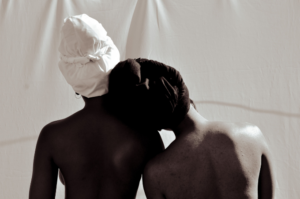
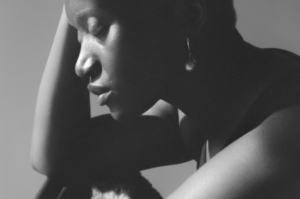
Today, queer African artists are excavating what colonialism attempted to bury. Writers weave myth and body together, drawing from oral traditions to re-center desire as ancestral knowledge rather than sin. Photographers paint skin with clay and indigo, echoing ritual aesthetics that predate colonial disruption. Performance artists use gesture and chant to reconnect bodies to earth and cosmos. Designers reinterpret kente and adinkra as living ritual rather than static heritage. These artists have not invented queerness; they are resurrecting memory. Through image, story, and performance, the body becomes sacred again — a bridge between earth, spirit, and universe. Dust returns not as erasure but as evidence of persistence. The body, like the cosmos, remembers.
If queerness is foreign, then so are the laws that condemn it. If African divinity could transcend human binaries, why should the body not? The dust from which we came still rests in our hands, our skin, our words. The narratives that declared our gods evil and our desires sinful were imported. They were imposed. Yet in reclaiming story, ritual, and art, we restore continuity — not by inventing something new, but by remembering what was interrupted.
To be African is not to inhabit rigidity. It is to inhabit multiplicity. And in holding dust, in painting skin, in telling stories of ancestors and cosmos, we do more than create art — we reclaim memory, divinity, and ourselves.
Photo by Godisable Jacob from Pexels




Kelleen April 24, 2026 07:42
This is very detailed and awesome