

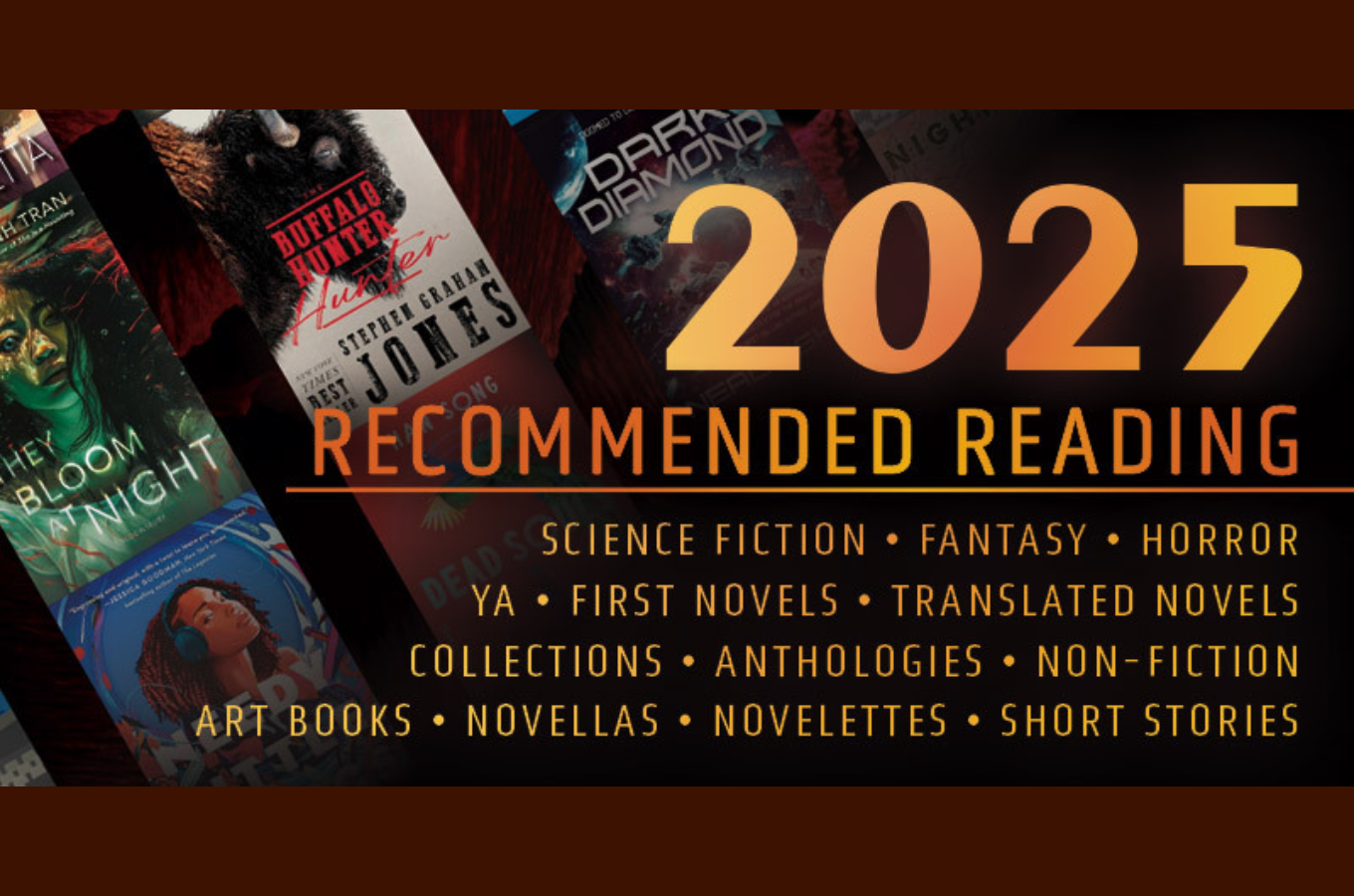
The 2025 Locus Recommended Reading List is out. Compiled annually by Locus Magazine‘s reviewers, editors, columnists, and outside critics this year across more than 1,000 titles.
It is one of the most widely consulted barometers of the science fiction and fantasy field. This year, for the first time, it includes a new category for Translated Novels. And for African literature, the numbers are moving in the right direction.
Fifteen African authors and editors appear on the 2025 list, three more than the twelve who made it last year, and a recovery from what Wole Talabi, who sits on the Locus reading panel and has been tracking African representation on the list since 2021, described as a worrying dip. Writing on his blog, Talabi noted that African authors/editors now account for approximately 6.2% of the 322 works recommended, up from 4.4% in 2024, though still below the peak of 9% in 2021. The direction is encouraging. The underlying pattern, as Talabi also observed, remains worth watching: most of the work recognised was published by imprints and venues outside the continent, by authors also living outside. What is being seen and celebrated is largely the diaspora. Work produced on the continent remains comparatively disadvantaged.
Talabi is himself on the list this year, with his Sauútiverse novella Descent, published in Clarkesworld Magazine. He also serves on the panel that produced it; a neat encapsulation of the role that African writers are beginning to play not just as subjects of the conversation, but as people shaping it. The full list of 15, with confirmed titles and categories where available, is below.
The 15 African Authors and Editors on the 2025 Locus Recommended Reading List:
- Nnedi Okorafor (Nigeria/US) — Death of the Author (Morrow/Gollancz) in Science Fiction Novels; One Way Witch (DAW) in YA Novels
- Laila Lalami (Morocco/US) — The Dream Hotel (Pantheon; Bloomsbury Circus UK) in Science Fiction Novels
- Kemi Ashing-Giwa (Nigeria/US) — The King Must Die (Saga) in Science Fiction Novels
- Adam Oyebanji (Nigeria/UK) — Esperance (DAW/Arcadia UK) in Science Fiction Novels
- Tochi Onyebuchi (Nigeria/US) — Harmattan Season (Tor) in Fantasy Novels; Racebook: A Personal History of the Internet (Roxane Gay Books) in Non-Fiction
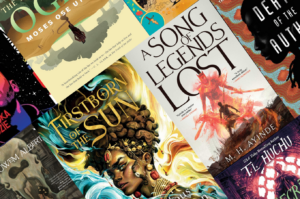
- M.H. Ayinde (Nigeria/UK) — A Song of Legends Lost (Orbit UK/Saga) in First Novels
- T.L. Huchu (Zimbabwe/UK) — Secrets of the First School (Tor; Tor UK) in Short Fiction
- Wole Talabi (Nigeria/Australia) — Descent (Clarkesworld Magazine) in Novellas
- Tlotlo Tsamaase (Botswana) — Mindtrips (Clarkesworld Magazine) in Short Fiction (Novelette)
- CL Hellisen (South Africa) — Shadow Jack (GigaNotoSaurus 5/25) in Short Fiction
- Tade Thompson (Nigeria/UK) — The Apologists (Clarkesworld 11/25) in Short Fiction
- Jarune Uwujaren (Nigeria/US) — Slipcraft (Fiyah Winter ’25) in Short Fiction
- Plangdi Neple (Nigeria) — Full, Empty Houses (Kaleidotrope Spring ’25) in Short Fiction; How To Rob A Bullion Van (Baffling 4/25) in Short Fiction
- Somto Ihezue (Nigeria) — co-editor, Will This Be a Problem (Shilitza) in Anthologies
- Olivia Kidula (Kenya) — co-editor, Will This Be a Problem (Shilitza) in Anthologies
A few things stand out. The long fiction categories are doing the heaviest lifting: five African authors appear in Science Fiction Novels alone, a strong showing by any measure. The anthology Will This Be a Problem, co-edited by Somto Ihezue and Olivia Kidula, represents the continent-based work on the list, and its inclusion is significant. Tochi Onyebuchi and Plangdi Neple’s double appearances reflects how expansively they have been writing. And Nnedi Okorafor’s presence across two separate categories, having published in both science fiction and YA in 2025, is a reminder that she remains one of the most productive African speculative fiction writers working today.
The Locus Awards will be decided by public vote. The poll is open to everyone and closes on 15 April 2026; the winners will be presented on 30 May 2026 during the Bay Area Book Festival. We encourage you to read, vote, and support the work. You can find Talabi’s full analysis, including the historical trend data he has been tracking since 2021, on his blog at wtalabi.wordpress.com.




COMMENTS -
Reader Interactions