

We revealed the cover of Nana Darkoa Sekyiamah’s Seeking Sexual Freedom: African Rites, Rituals and Sankofa in the Bedroom last September, and the book is now out in the world, published by Dialogue Books in the UK and Atria Books in the US.
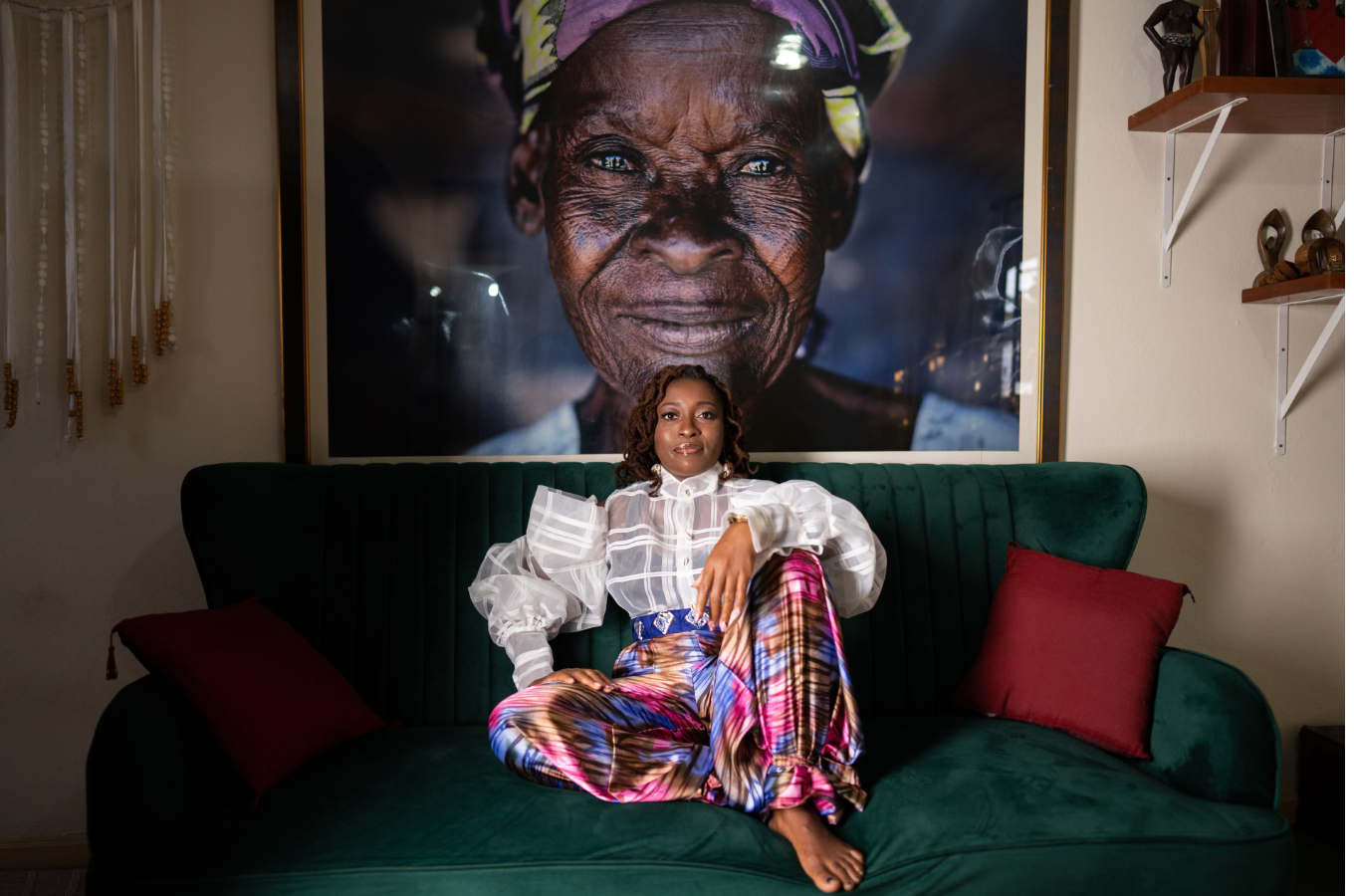
Sekyiamah is a Ghanaian feminist writer, activist, and co-founder of the award-winning blog and podcast Adventures from the Bedrooms of African Women. Named by the BBC as one of 100 inspirational and influential women in the world in 2022, she spent nearly three years travelling across the continent researching this book, the follow-up to her groundbreaking debut The Sex Lives of African Women. Writing for The Guardian to mark the book’s release, she laid out the ideas at its core with characteristic clarity and courage. Here are five of them, alongside quotes from the article.
- Dance is a core tool of Seduction in Africa
Traditional practices like Tanzania’s kitchen parties, where older women passed sexual wisdom and embodied knowledge to younger ones, have been hollowed out by the twin pressures of colonisation and westernisation until they are barely recognisable.
Dance is just one of a range of seduction tips and tricks that Zaishanga teaches at her “kitchen parties”. She also counsels women on how to maintain a healthy marriage, and gives advice on the importance of self-care, and the need to maintain a standard of beauty and style. These gatherings, where experienced older women – aunties, big sisters, grandmothers – share advice with brides-to-be are rooted in traditional rites of passage into womanhood that date back centuries.
The somo Sekyiamah trained with in Dar es Salaam remembers learning the art of touch and other intimate rituals as a teenager. Now, she says, women at these gatherings are being taught how to make tea. The original spirit, sensual, embodied, woman-to-woman, has been replaced with something far more palatable to colonial sensibilities, and far less useful.
Sexual freedom is a precise thing and it belongs to everyone
Talking openly and honestly about bodies, sex and sexualities feels increasingly important as politics leans more towards the right, the rights of women, transgender and gender non-conforming people are rolled back, and anti-rights groups campaign against comprehensive sex education…Pleasure is our birthright. We are all entitled to feel joy in our bodies, and to access and delight in our erotic power. No matter our ability, gender or sexuality. My journey across the continent affirmed to me that we can take inspiration from our African ancestors and make space and time to treasure sexuality and live more pleasurable lives today.
Sekyiamah is careful about what she means by sexual freedom. It is not a vague feeling of liberation but feeling genuinely at home in your body, being secure in your sexuality, and having the real space, not just the theoretical permission, to explore and express desire with other consenting adults. It is a definition capacious enough to include every body, every gender, every sexuality. It is also, she argues, a birthright. Not a reward. Not a privilege. Something we are all simply entitled to.
Sankofa is the method
Sankofa is an Akan philosophy which literally translates as “go back and take it”. In adinkra, a visual system of language, it is represented as a long necked bird looking backwards, or two curved lines which stylistically form a heart. In applying sankofa to pre-colonial rites and rituals we can reclaim them, and infuse them with feminist principles and energy. I call this “feminist sankofa”.
The intellectual engine of the book is sankofa, the Akan philosophy of going back to retrieve what was left behind. Sekyiamah applies it to pre-colonial sexual rites and rituals, arguing that we can reclaim them without reproducing their limitations. The key is to infuse them with feminist principles and energy, what she calls “feminist sankofa.” It is a deliberate, politically conscious act of recovery, using the past as a resource.
Those traditional “schools” gave us something we have not replaced
Rites of passage like the Krobo dipo ceremony in Ghana went beyond preparing girls for heterosexual marriage. They created dedicated, communal spaces where women transmitted knowledge about bodies, pleasure, and identity to one another, and where a shared female consciousness could be forged.
Dipo – much like other African rites of passage – is a formal acceptance into womanhood, but also a chance to make connections.
That infrastructure — time set aside, a community of women, an honest conversation about the body and its capacities — no longer exists in the way it once did. Sekyiamah is not uncritical of the ways these spaces also reinforced patriarchal and heteronormative ideas, but she is clear that something essential was lost when they disappeared, and that its absence is felt most acutely now, as reproductive rights and sex education come under attack across the world.
Queerness is ancestral not unAfrican
Sekyiamah met queer and gender non-conforming Africans who are turning to their own ancestral traditions not as a compromise, but as a source of affirmation.
…The pantheon of African gods and goddesses manifest in different genders, forms and shapes. And if our gods can be multidimensional shape-shifters, why would we be any less?
One interviewee traces their gender non-conforming identity back 200 years through their family lineage, pushing back firmly against the narrative that queerness is a western import. Another, a practitioner of Isese, points out that the gods of African traditional religions have always been shape-shifters, manifesting across genders and forms. If that is true of the divine, why would it not be true of the human?
Seeking Sexual Freedom is out now. Get it here.

COMMENTS -
Reader Interactions