

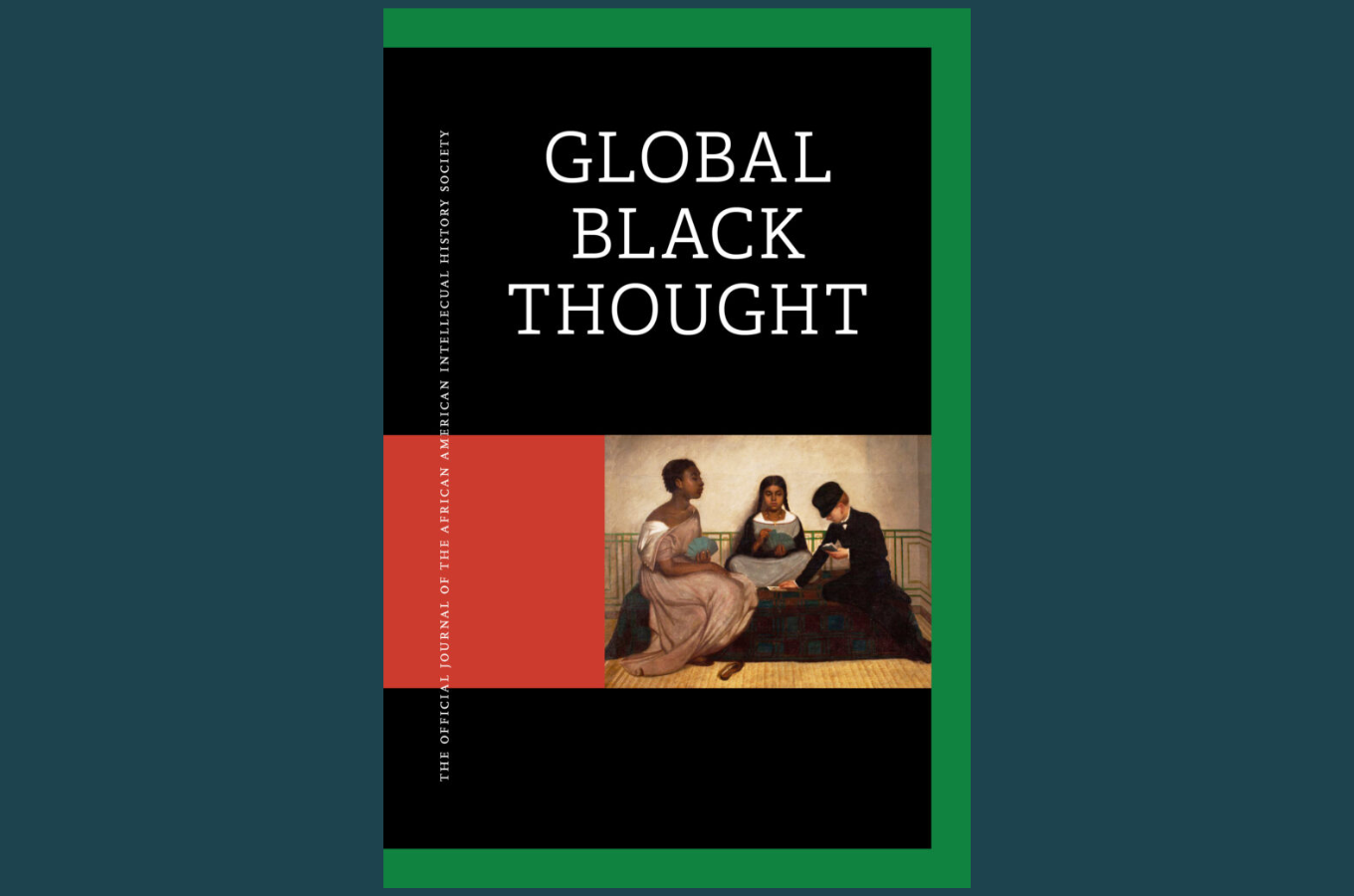
Global Black Thought is preparing a landmark special issue dedicated to African women thinkers and intellectuals, guest-edited by Yolande Bouka, Peace A. Medie, and Olajumoke Yacob-Haliso. The issue invites scholars, writers, and researchers to submit work that centres the intellectual traditions of African women, past and present, renowned and overlooked, and their enduring contributions to how we understand Africa and global Black thought.
The premise of this special issue is both timely and overdue. African women have long shaped intellectual life across the continent as political theorists, cultural critics, educators, philosophers, activists, scientists, religious leaders, and public intellectuals. Yet their contributions have too often remained fragmented, undervalued, or absent from mainstream academic archives and global conversations about theory. This issue aims to change that.
The guest editors are casting a wide net, deliberately so. They are interested in work that moves beyond narrow textual or disciplinary definitions of intellectualism. Homes, markets, healing spaces, political movements, digital platforms, classrooms, religious organizations, and art spaces are all sites of theorizing, and this issue wants to engage them all. From Nana Asma’u’s pedagogical networks in Sokoto to the digital feminist scholarship circulating across African social media today, the issue seeks to map the full terrain of African women’s intellectual labour.
Figures who might anchor submissions range widely: historical intellectuals like Wangari Maathai, Funmilayo Ransome-Kuti, and Yaa Asantewaa; feminist scholars such as Amina Mama, Oyèrónkẹ́ Oyěwùmí, Nawal El Saadawi, and Sylvia Tamale; literary and artistic thinkers including Ama Ata Aidoo, Tsitsi Dangarembga, and Chimamanda Ngozi Adichie; and community-based knowledge producers, market traders, healers, griots, queenmothers, and union leaders, whose epistemologies offer conceptual vocabularies rooted in local realities. Submissions focused on individual thinkers are especially welcome, provided they situate the subject’s vision and trajectory within the broader landscape of African women’s thought.
Suggested themes include intellectual biographies; African feminist theory; indigenous and community-based knowledge systems; women in liberation movements and political thought; the politics of citation and archival silences; queer African women’s intellectual production; digital spaces and contemporary public intellectuals; and aesthetic and literary theory produced by African women writers, filmmakers, and cultural practitioners.
The journal is accepting full-length research articles of 8,000 to 10,000 words. Abstracts of 150 to 250 words, accompanied by a brief bio of 100 to 150 words, should be submitted to peace.medie@bristol.ac.uk with the subject line: Special Issue: African Women Thinkers. All manuscripts will undergo double-blind peer review.
Abstract deadline: 30 April 2026 | Notification: 8 May 2026 | Full paper deadline: 30 September 2026


COMMENTS -
Reader Interactions