

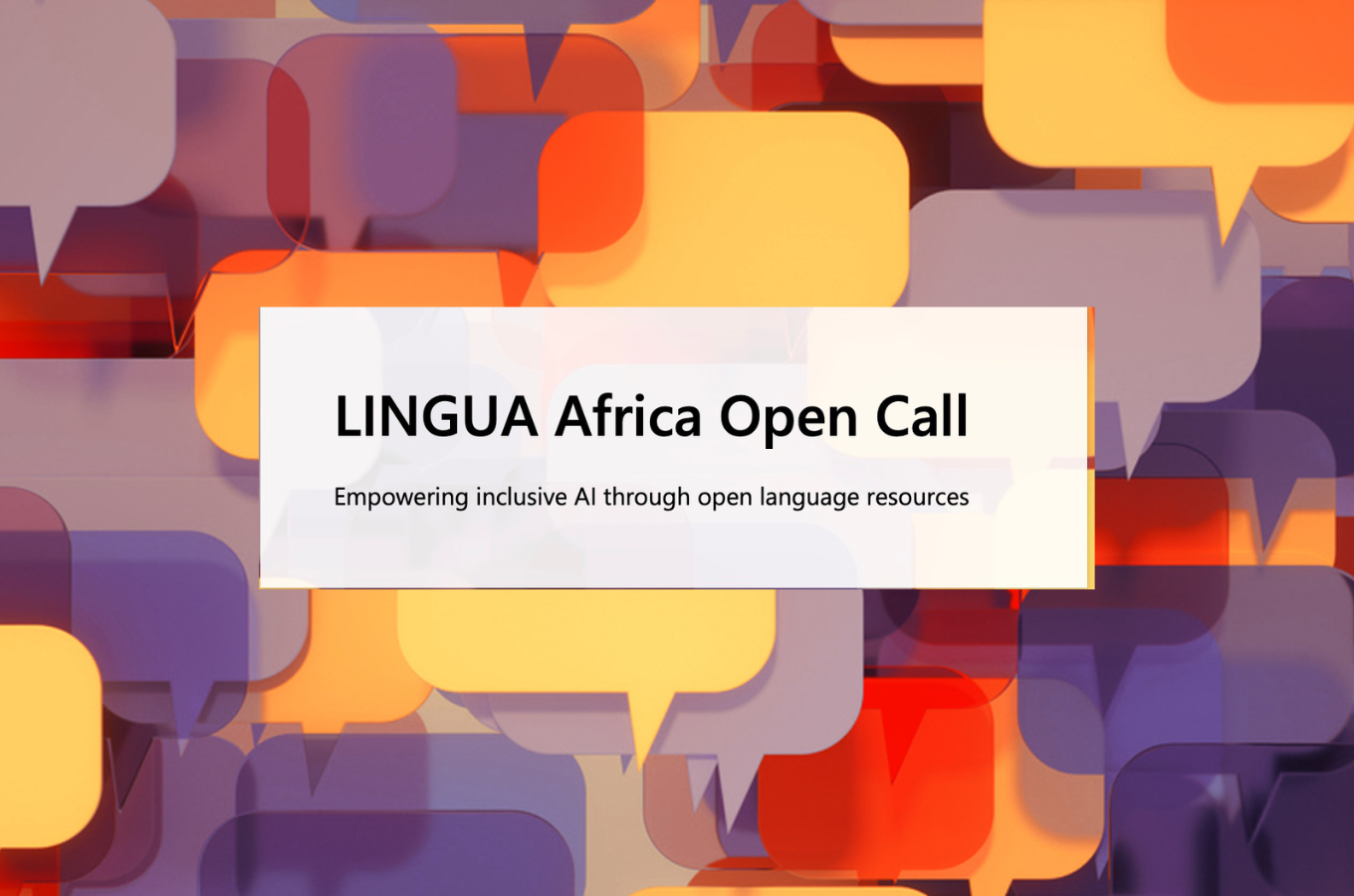
Africa is home to thousands of languages, and the vast majority of them are invisible to modern AI. When a language has no meaningful presence in datasets, models, or digital tools, the communities who speak it are effectively locked out of the opportunities that AI is rapidly shaping, these include access to healthcare information, education, financial services, and public resources, among others. To begin closing that gap, Microsoft AI for Good Lab, the Gates Foundation, the Masakhane African Languages Hub, and Google.org have joined forces to launch LINGUA Africa, an open call inviting organisations across the continent and beyond to submit proposals for projects that build inclusive, community-grounded AI language resources. The application deadline is 15 June 2026.
The call is structured around three grant categories, each carrying different funding levels. Projects focused on data creation — building, curating, translating, or documenting language datasets — may apply for up to $50,000 in cash and up to $50,000 in compute credits. Projects centred on model or tool development, including benchmarks and technical infrastructure for African languages, may apply for up to $100,000 in cash and up to $100,000 in compute credits. The largest category, sectoral applications, supports projects deploying language technologies in real-world settings with measurable social or economic impact — those applicants may apply for up to $250,000 in cash and up to $400,000 in compute credits. Supported projects will also receive Azure and Google Cloud Platform credits, in-kind technical collaboration from Microsoft AI for Good Lab, and access to the broader LINGUA Africa ecosystem.
Eligible applicants include nonprofits, universities, research institutes, social enterprises, cultural organisations, startups, and consortia working in the public interest. Organisations based outside Africa are eligible to apply provided they demonstrate meaningful partnership with Africa-based institutions or communities. Collaborative proposals are strongly encouraged, particularly where partnerships deepen community engagement and cross-domain expertise. Priority will go to projects with strong community buy-in, cross-institutional collaboration, and credible pathways to impact in agriculture and food security, education, healthcare, financial inclusion, and civic services. All funded projects will be required to contribute openly licensed resources that can be reused in research, open models, and practical applications.
LINGUA Africa builds on lessons from a previous initiative, LINGUA Europe, which supported open datasets and evaluation resources for underrepresented European languages on that continent. For Africa, the organisers say they are going further, prioritising projects that connect language resources to tangible community outcomes rather than stopping at the data layer. As Masakhane African Languages Hub Director Chenai Chair noted, the initiative is about providing the resourcing, funding and compute, to enable African-led AI solutions that last. Applications are open now here and close on 15 June 2026. If your organisation is doing this work, or is ready to start, this is the call to answer.



COMMENTS -
Reader Interactions