

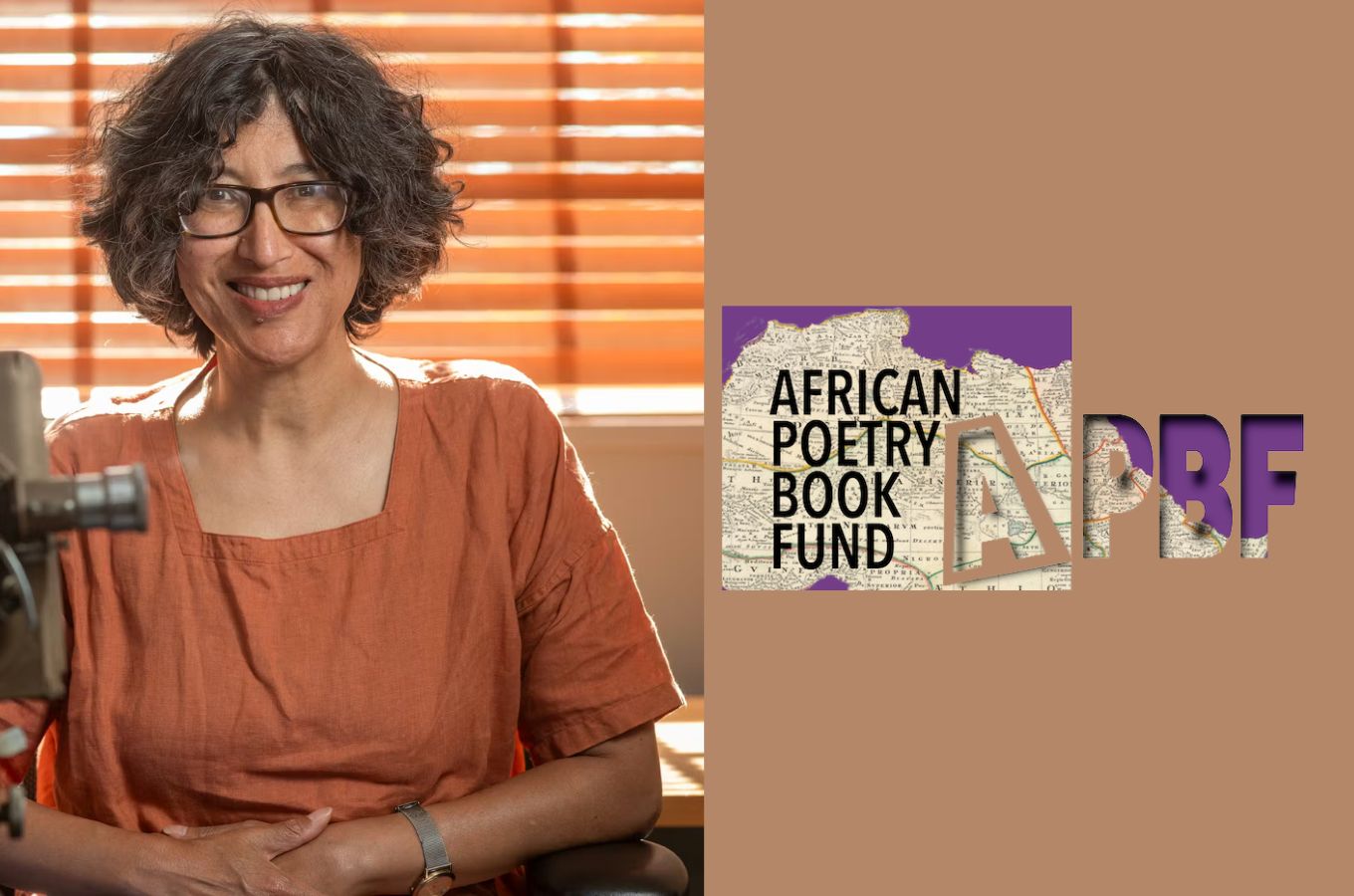
There are prizes, and then there are prizes that feel like a genuine act of witness. The Glenna Luschei Prize for African Poetry, administered by the African Poetry Book Fund at Brown University, is one of the latter. Established in 2015 and named for the late literary philanthropist Glenna Luschei, it is the only pan-African poetry prize of its kind in the world, offering an annual award of USD $1,000 to honor a significant full-length collection published by an African poet. This year, the poet reading those manuscripts is Gabeba Baderoon.
To have Baderoon as judge is to have one of the most layered literary minds on the continent in conversation with your work. One of the most decorated poets in South African literary history, her collections include The Dream in the Next Body, A Hundred Silences, and The History of Intimacy, which was named a book of the year by South Africa’s Sunday Times and received the Elisabeth Eybers Poetry Prize in 2019, the University of Johannesburg Prize for South African Writing in 2019, and the National Institute for Humanities and Social Sciences Best Fiction, Poetry and Short Stories Award in 2020. Just this past March, she was conferred an honorary Doctor of Literature by Nelson Mandela University, a fitting honour for a writer born on the very coastal shores where that institution stands.
What makes Baderoon’s judgeship particularly resonant is the depth and breadth of what she brings to the reading of a poem. She lives between South Africa and the United States, where she is an Associate Professor of Women’s, Gender and Sexuality Studies and African Studies at Pennsylvania State University. Her scholarship moves fluidly between poetry, Islam, gender, and the long afterlives of apartheid. She is equally at home addressing public issues like war and oppression and the very small personal details of life, infusing a special magic and lightness of tone into whatever subject she chooses. A collection placed in her hands will be read with exactness and with generosity.
The prize is open to any book of original poetry in English published during the previous calendar year (2025), in a standard edition of 48 pages or more, written by any African writer — defined as someone born in Africa, a national or resident of an African country, or whose parents are African. Self-published books and books published by the APBF itself are ineligible. Publishers outside the United States may submit PDF galley entries, and no entry fee is required, though an entry form must accompany each submission.
Submissions are accepted annually between May 1st and October 1st. Publishers based in the US should mail four copies to the African Poetry Book Fund at Brown University in Providence, Rhode Island; publishers based outside the US can send PDF galleys with cover art to APBF Coordinator Kerri Malone at apbf@brown.edu. Full submission guidelines are available at africanpoetrybf.brown.edu. If your book came out in 2025, this is your window, and Gabeba Baderoon is waiting on the other side of it.



COMMENTS -
Reader Interactions