

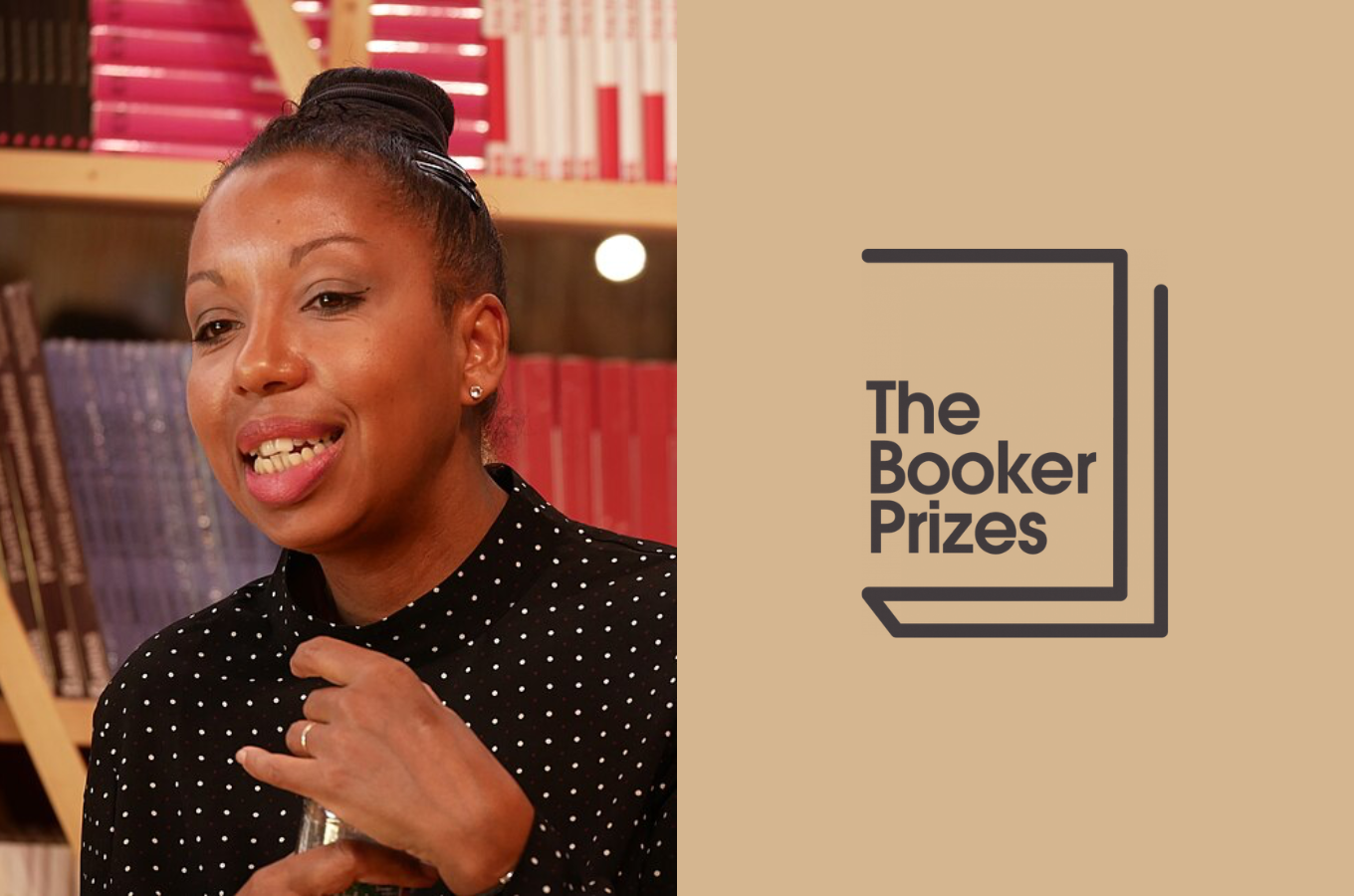
When the 2026 International Booker Prize longlist was announced in February, we noted that Marie NDiaye’s The Witch, first published in French in 1996, translated into English by Jordan Stump and published by MacLehose Press, was among the 13 titles selected. Now, with the shortlist confirmed, NDiaye has advanced further! The Witch is one of six books competing for the prize, to be announced on 19 May at a ceremony at Tate Modern in London.
In the novel, Lucie, a suburban housewife with modest witching abilities, initiates her twin daughters into the matrilineal gift she has always been ambivalent about. Her powers are, by her own admission, a little laughable, enough to see trivialities, no more. Her daughters, however, are something else entirely. As the daughters’ abilities bloom and her marriage crumbles, the novel moves through domestic failure, familial estrangement, and the particular shame of a woman whose children have surpassed her in the very thing she hoped would bind them together. The judges described the language as exquisite: “sentences twist and transform in unexpected ways.”
NDiaye has spoken about what drove her toward this subject. When she wrote the book, she said, the idea of witches was little more than a residue of childhood fairy tales. She wanted something different, a witch for now: “not very confident in her gift, even a little ashamed of it, and not particularly successful in passing it down to her daughters, who, modern teenagers that they are, don’t believe in it.” The ambition, she said, was to write about a woman who never asked for her power and has had to make a life around it anyway.
The translation itself carries its own story. Jordan Stump, who has now translated eight of NDiaye’s books and whose work on The Witch only appeared in English this April, nearly three decades after the novel’s original publication, describes the appeal of the novel in terms of balance: “the novel’s casual mix of the banal and the magical, the gently comic and the understatedly tragic.” His process is one of relentless revision: “eventually, after more revisions than I can count, I read through a draft and find a voice emerging that’s not mine, nor exactly NDiaye’s, but that sounds like the voice of this novel. That’s a most exhilarating feeling.” NDiaye, for her part, described her gratitude toward Stump specifically, for “a steadfastness and a soundness” built over years of work together.
We have followed NDiaye closely at Brittle Paper because her story intersects meaningfully with African literary history. Born in France in 1967 to a Senegalese father and a French mother, she won the Prix Goncourt in 2009 for Three Strong Women, becoming the first Black woman to receive France’s most prestigious literary award. This is her second International Booker Prize nomination; Ladivine, also translated by Stump, was longlisted in 2016. The winner is announced on 19 May.







COMMENTS -
Reader Interactions