

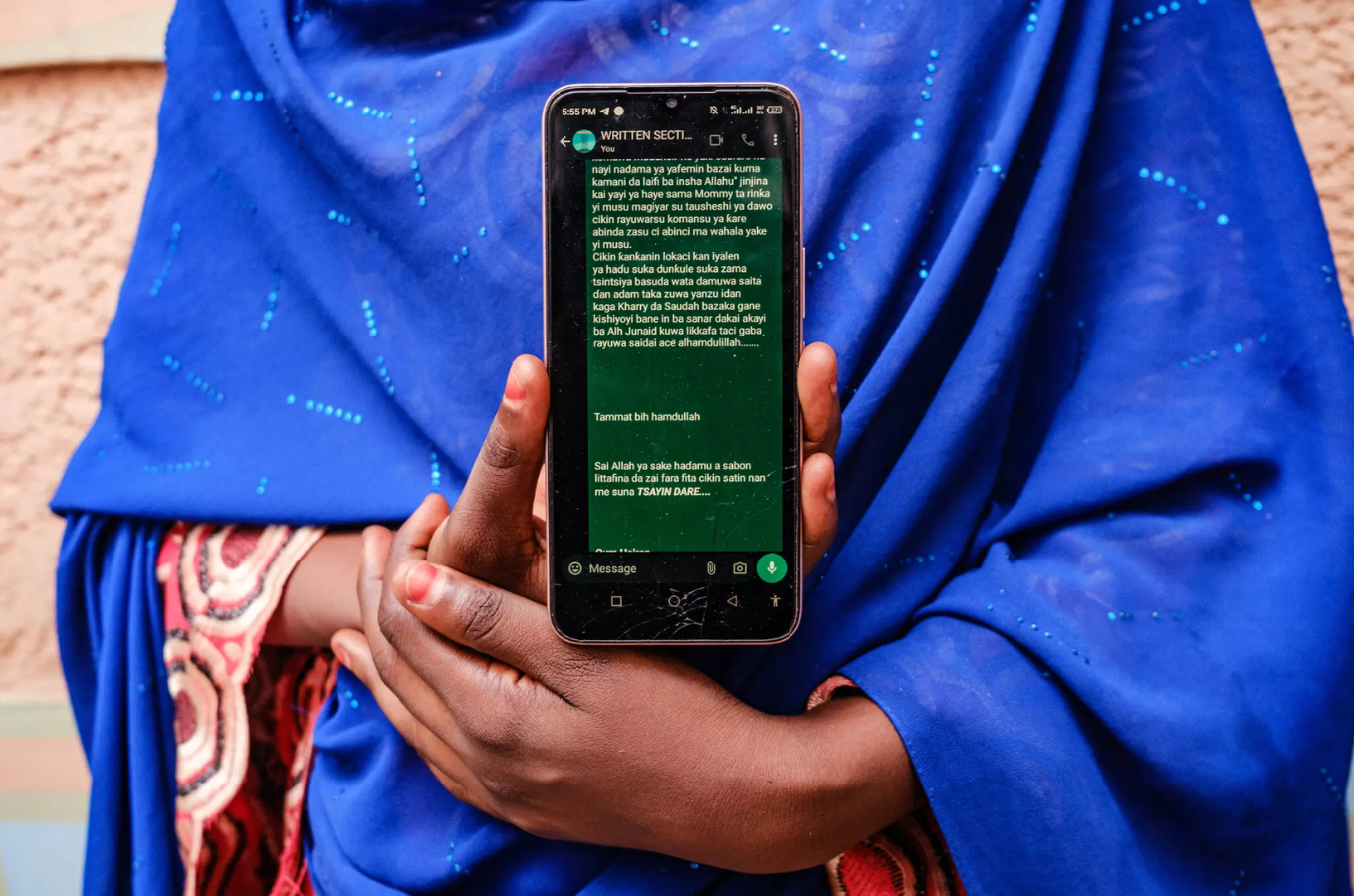
In 2009, officials in Kano staged a public bonfire of romance novels. Western Romance paperbacks went into the flames on the grounds of moral indecency, and for a time, the message that certain kinds of desire had no place in the written record of northern Nigeria seemed clear. The New York Times has now published a long reported piece about what grew from the ashes that bonfire left behind, we consider it one of the more remarkable portraits of a literary underground to appear in a major western publication in recent memory.
The story centres on a generation of young Muslim women, primarily from Kano, Kaduna, and Sokoto, who are writing and serialising Hausa-language erotica inside women-only WhatsApp groups. The authors employ an interesting business model: free chapters to build an audience, cliffhangers to retain it, and payment walls for what comes next. Writers like Fauziyya Tasiu Umar, who publishes under the name Oum Hairan, have built readerships that number in the thousands; communities of women exchanging stories about desire, marriage, and power, in a language that is theirs, on a platform that religious and government censors have not yet found a way to reach. Beyond the surface intrigue, these writers are engaging, through the language of the erotic, with questions about gender, autonomy, and what it means to be a woman in a society whose institutions have rarely asked for their opinion.
The significance of this, for how we understand African literature, is hard to overstate. Conversations about Nigerian writing have long been dominated by the work produced in English, by writers who have navigated the international publishing circuit and arrived at the Booker or the Caine Prize. The Hausa literary tradition is vast and old and largely invisible to that conversation. What the NYT piece surfaces is a vernacular literary culture that has been developing its own economies, its own distribution systems, its own aesthetic questions, entirely outside the frame that the global literary establishment uses to look at African writing. The women writing erotica on WhatsApp in Kano are not waiting for a London publisher or a festival invitation. They have their readers, and they sure are getting paid.
There is also the question of what this means for the longer argument about censorship, religious authority, and the relationship between African writers and the states they live in. The bonfire of 2009 is the piece’s origin point, but the real story is about what happens when suppression fails to account for technology, and when the writers it meant to silence turn out to be more resourceful, more entrepreneurial, and more widely read than the books that were burned. This story of the underdog is one worth sitting with. We invite you to read the full piece at the New York Times: nytimes.com.



COMMENTS -
Reader Interactions