

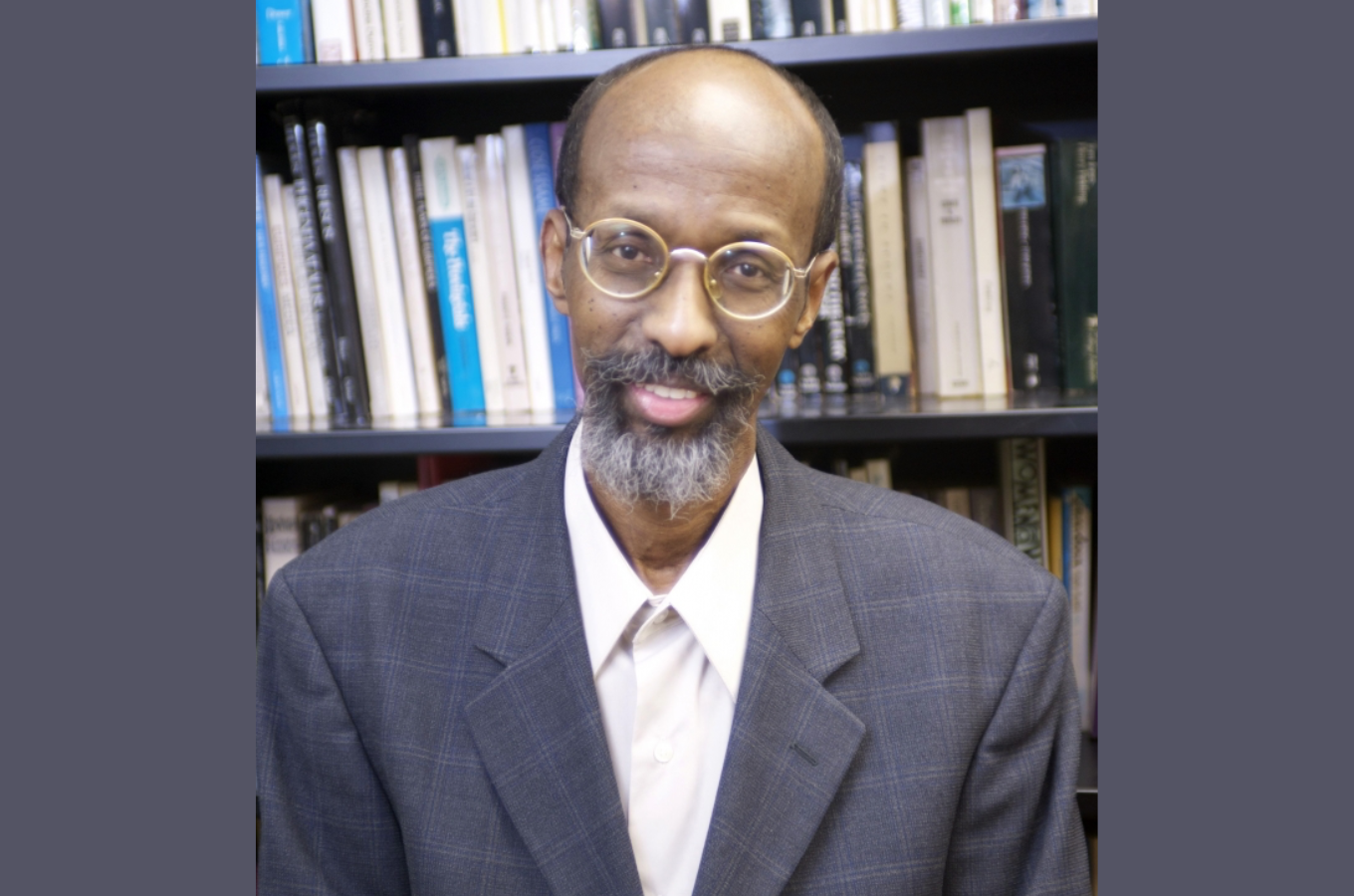
The African literary world mourns the passing of Professor Ali Jimale Ahmed, the preeminent scholar of the Somali experience, poet, and cultural critic, who died on March 31, 2026. Born in Mogadishu on April 17, 1954, Ahmed devoted his life to building bridges between the rich oral traditions of the Horn of Africa and the broader conversations of global academia. The African Literature Association has published a beautiful remembrance of him on their website, written by Professor Ghirmai Negash of Ohio University, we encourage you to read it.
Ahmed held a doctorate from UCLA and served as Chair of Comparative Literature at Queens College, City University of New York, where he taught courses in African, Middle Eastern, and European literature. He was known for his Socratic methods and his emphasis on teacher-student learning as a two-way exchange, viewing the classroom as a space of intellectual community. His was a scholarship defined by what those close to him described as “Critical Optimism”, a persistent faith in justice and in the futures that literature makes possible, even in the face of exile, displacement, and loss.
His works have been translated into multiple languages, including Japanese, Danish, Bosnian, Portuguese, and Turkish. His notable works include The Invention of Somalia, Daybreak Is Near, Silence Is Not Golden, Diaspora Blues, The Road Less Traveled, Fear Is a Cow, and When Donkeys Give Birth to Calves, works that reflect his sustained engagement with questions of history, identity, exile, and the ethical imperatives of postcolonial thought. He began his public literary career as a radio broadcaster and journalist in Somalia, and that early grounding in storytelling as survival never left his work.
Beyond his scholarship, Ahmed was a tireless champion of emerging voices. He possessed a rare ability to recognize potential in others and to nurture it with sincerity and purpose, and many of the scholars he mentored carry the imprint of his generosity into their own work and classrooms. He was not merely an academic; he was a custodian of memory, a skeptic of invented nations, and a voice that insisted on the dignity of marginalized communities.
We at Brittle Paper extend our deepest condolences to his family, friends, students, and all who had the privilege of learning from him. Professor Ahmed belonged to that rare company of scholars whose lives and work are inseparable, who wrote and taught as an act of love for the world. His absence is immense, and we hold his loved ones in our thoughts during this time of loss.






COMMENTS -
Reader Interactions