

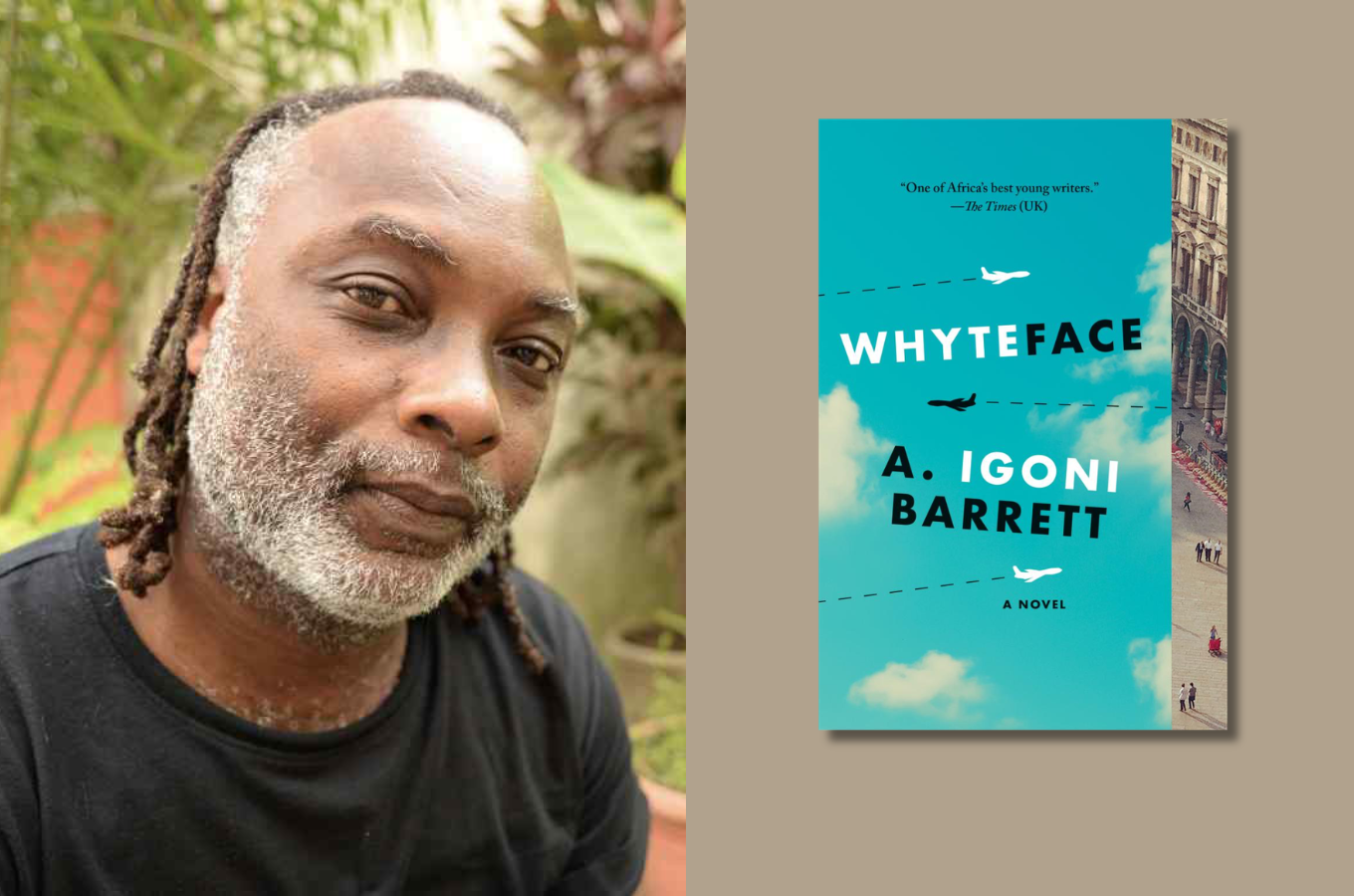
One of Nigeria’s most inventive literary voices has a new book on the way! A. Igoni Barrett, author of the short story collections Love Is Power, or Something Like That and Daddy Gifts, and the novel Blackass, which announced him to international readers as a master of satire when Graywolf Press published it in 2016, is back with a sequel. Whyteface arrives on August 4, 2026, once again from Graywolf, and readers are already counting down.
Blackass follows Furo Wariboko, a Lagos man who wakes one morning to discover he has transformed into a white man, his buttocks the sole exception. Whyteface picks up four years later. Furo now goes by Frank Whyte. He is established, settled in Abuja, and about to take his first real vacation outside Nigeria. The announcement, in the way that Barrett’s work always does, has sent readers into an immediate frenzy.
The novel moves between continents and identities, in the way that Barrett’s fiction has always moved, obliquely, satirically, with a precision that cuts deeper than it first appears. Literary Hub, which named Whyteface one of its most anticipated books of 2026, put it plainly: “Barrett is a genius of social satire, holding up a mirror to the subtle ways we interact with, judge, irritate, and delight one another.” Whyteface asks what belonging means when your body has become a costume, and what it might take, anywhere in the world, to be seen as simply human. August 4 cannot come soon enough.
Here is the synopsis:
As Frank travels to Amsterdam, Oslo, and Milan, he finds himself, for the first time in years . . . blending in. His skin is not in the least remarkable. In Amsterdam he befriends his well-meaning but occasionally misguided Airbnb host. There he also meets a Nigerian expat living in America whom he is both delighted to see but who vexes him for reasons he can’t initially identify. In Oslo, he intervenes when a charismatic Kenyan writer is the victim of a racist taxi driver. In Milan he comes upon a woman who might be a distant relative who has survived a treacherous journey of migration. He quickly realizes that he feels most Nigerian when he is outside of Nigeria, and he begins to wonder what it might take to be treated, simply, as human.


COMMENTS -
Reader Interactions