

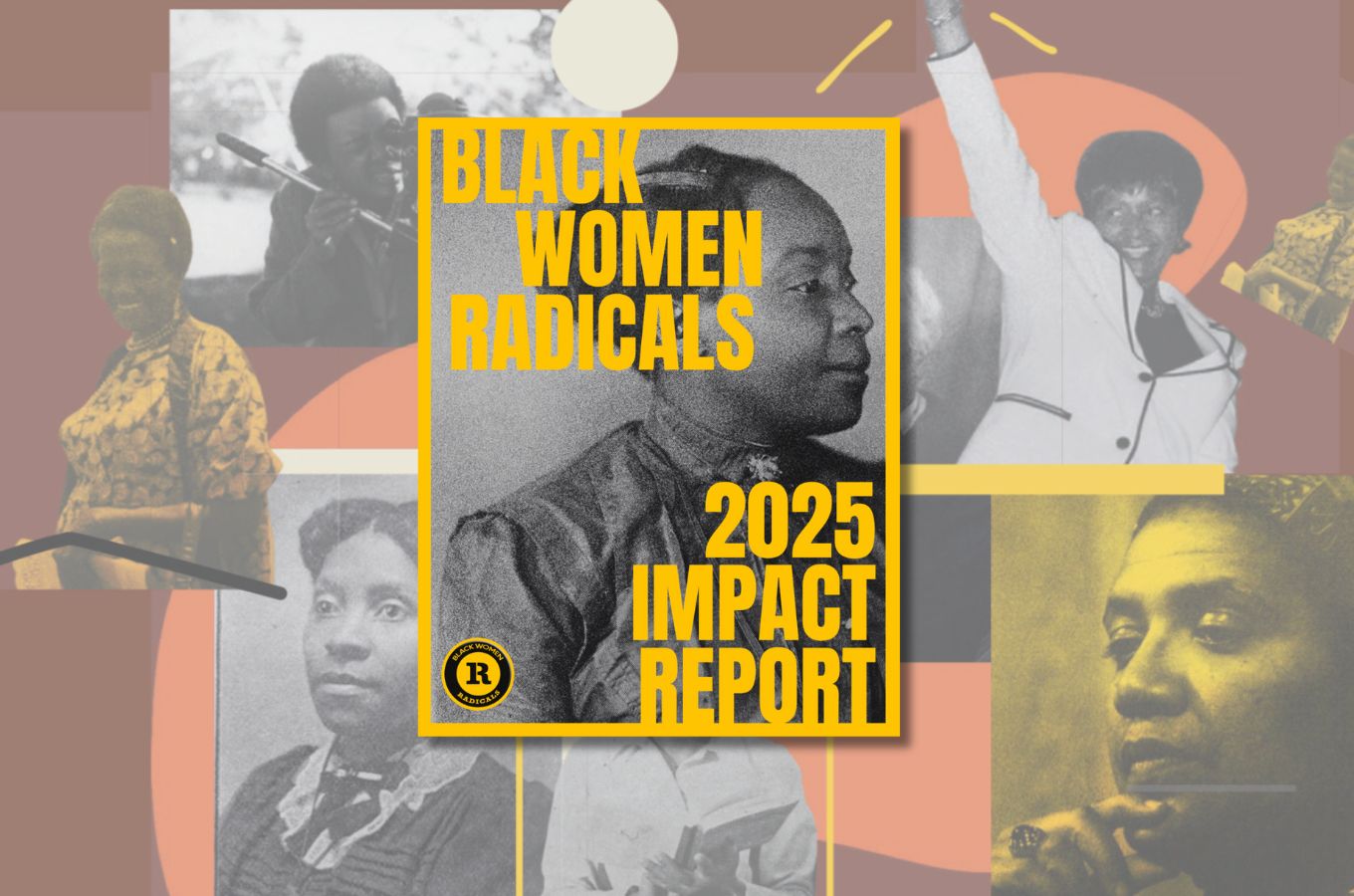
When Jaimee A. Swift founded Black Women Radicals (BWR) in 2019, it began as a place to recover names and stories erased from the histories of activism and feminism. Six years later, it has grown into a transnational community, and its latest impact report shows how wide-reaching the work has become. It has hosted over 200 free events and built a community of more than 255,000 social media followers. But what stands out to us more is the way that it has expanded the literary footprint of a black feminist thought.
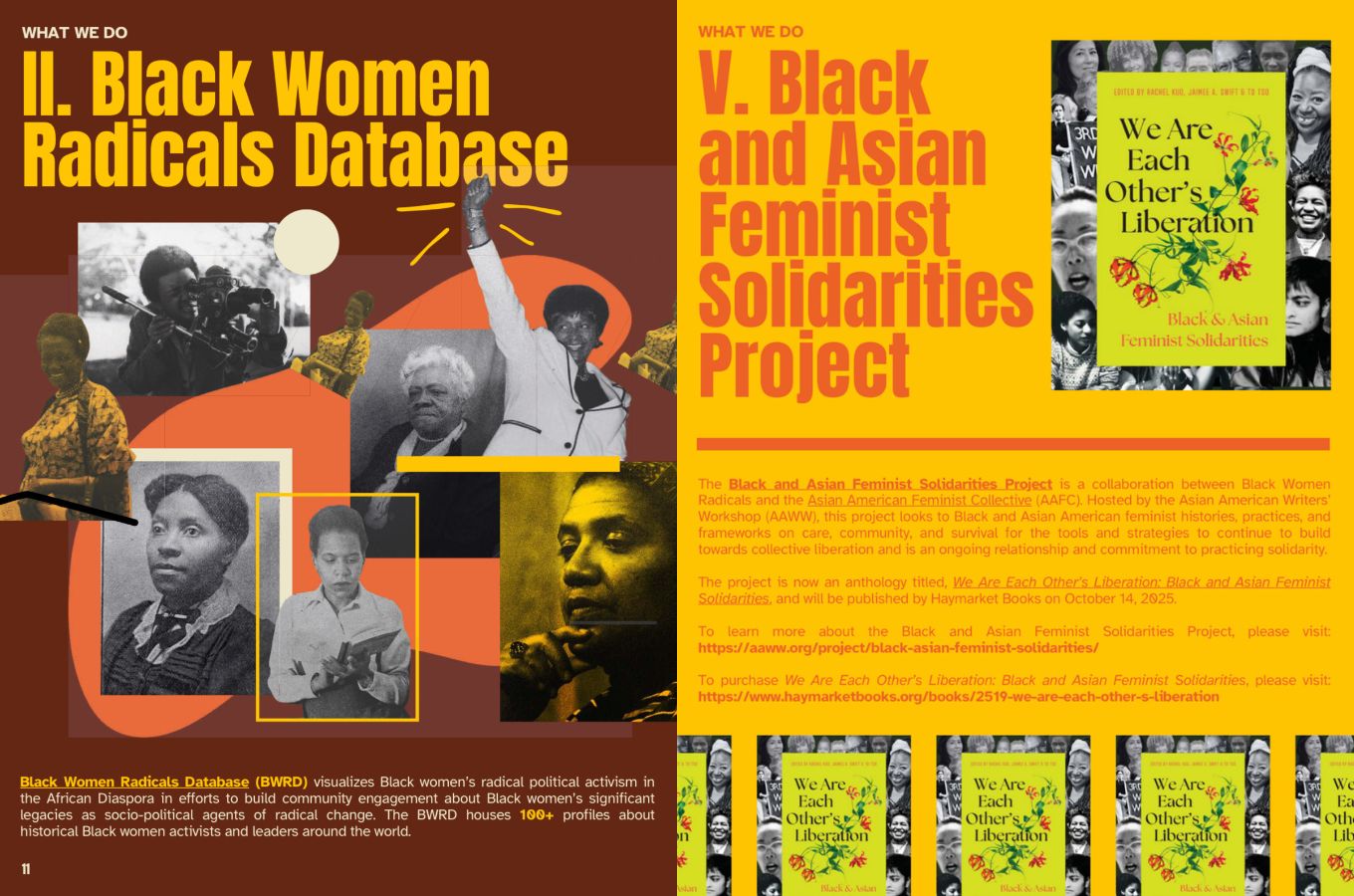
There is the Black Women Radicals Database, which houses more than a hundred profiles of Black feminist leaders who organized voter drives, built schools, led revolutions, and wrote texts that informed political thought. Instead of being scattered in obscure archives or footnotes, their stories now live in one accessible, public-facing resource. It’s a digital library that doubles as a living syllabus.
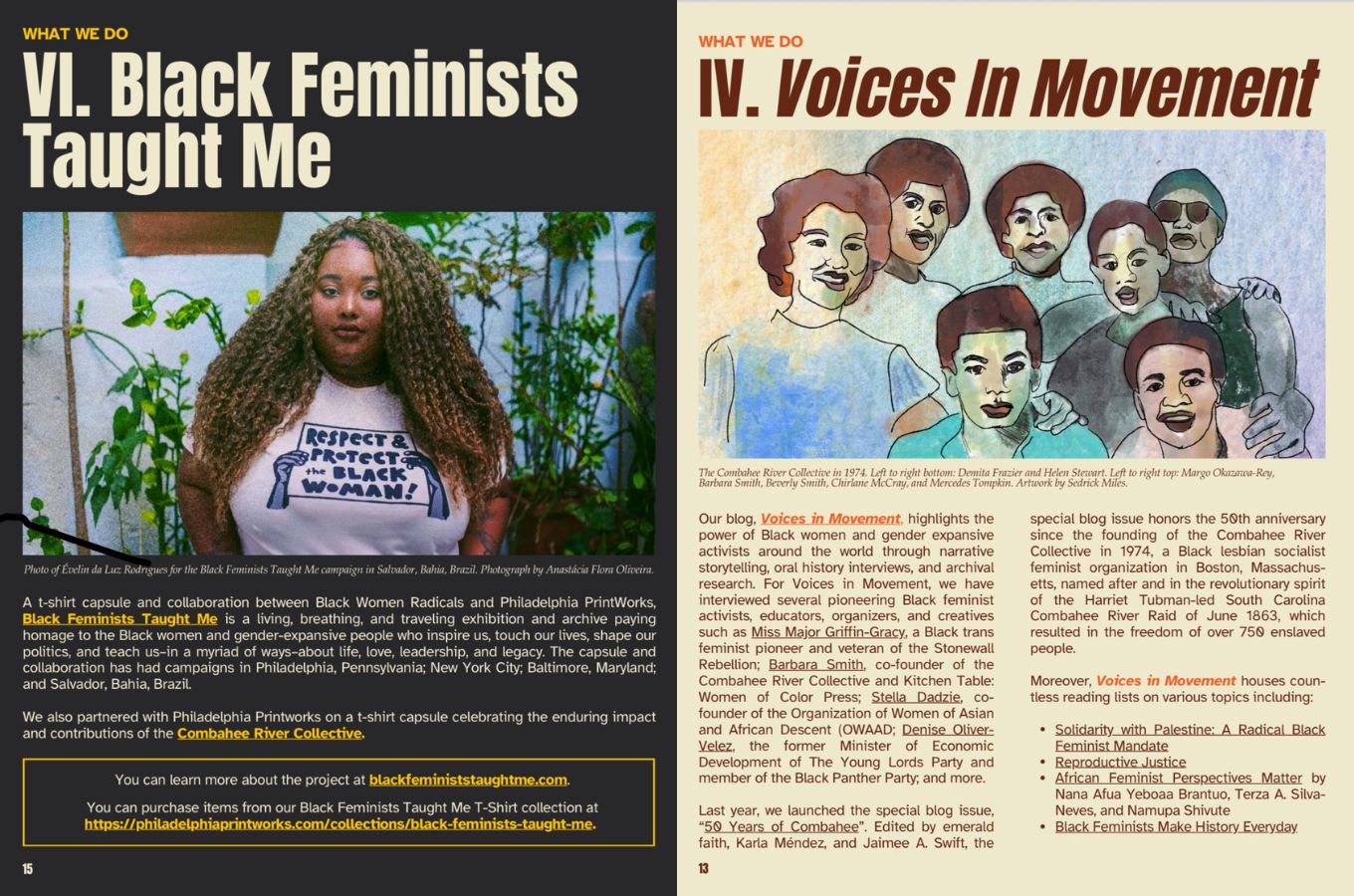
Their Voices in Movement blog features oral histories, essays, and interviews, including conversations with Barbara Smith, co-founder of the Combahee River Collective, and Miss Major Griffin-Gracy, a veteran of the Stonewall Rebellion. The blog also features curated reading lists on reproductive justice, Palestine solidarity, African feminisms thare are circulated across classrooms, study groups, and book clubs.
BWR’s work also extends into book publishing. Their Black and Asian Feminist Solidarities Project, developed with the Asian American Feminist Collective, has become a full-length anthology, We Are Each Other’s Liberation, forthcoming from Haymarket Books in October 2025.
Sometimes their literary work takes unexpected forms. Last year, in collaboration with Kinfolk Tech, BWR created a virtual monument to Nannie Helen Burroughs, the early 20th-century educator and activist who ran a training school with the motto: “We specialize in the wholly impossible.” Using immersive tech, the monument reintroduces Burroughs’ story to new audiences, proving that archival recovery can be as experimental as it is necessary.
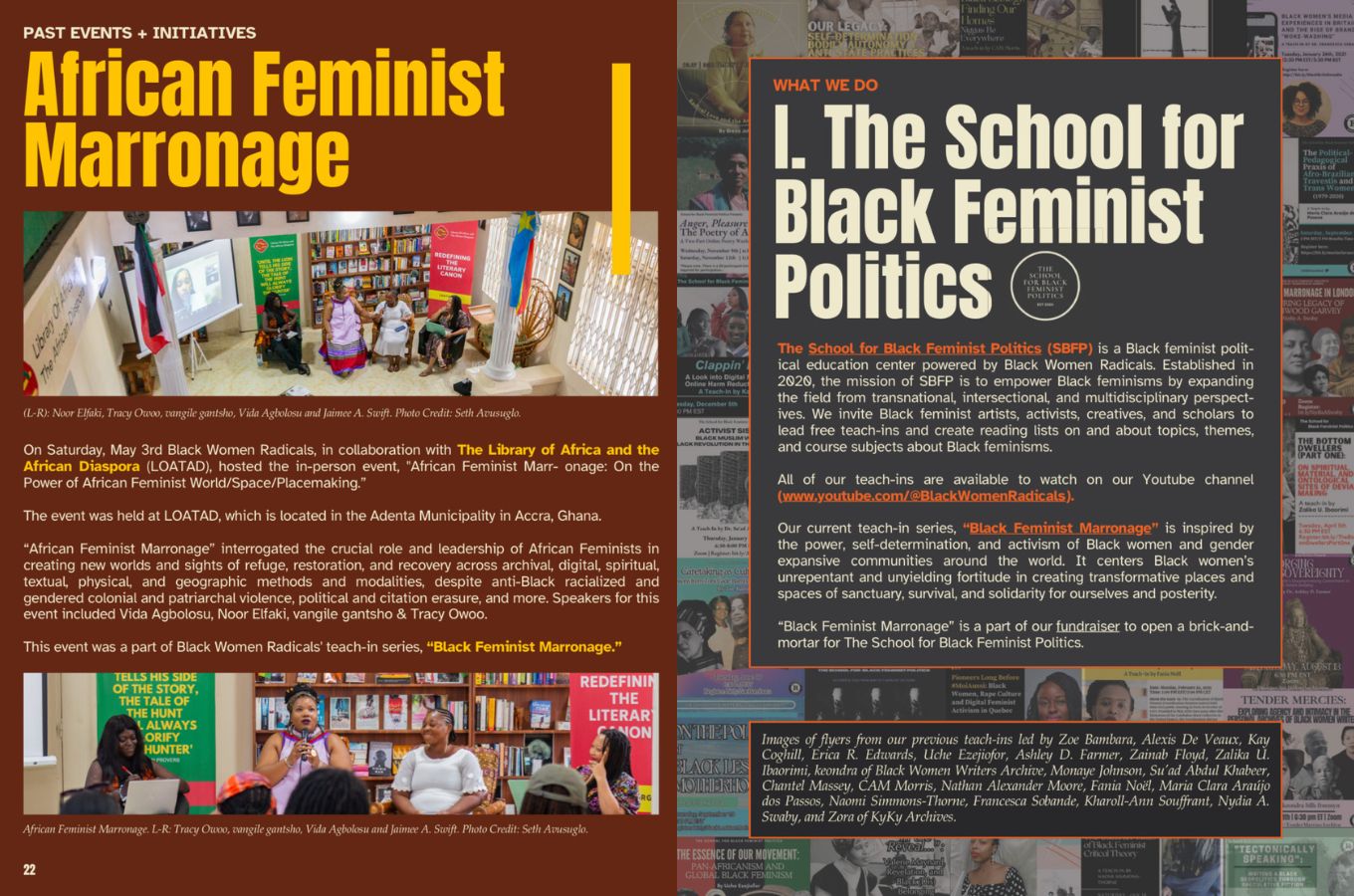
And in Accra, Ghana, BWR partnered with the Library of Africa and the African Diaspora (LOATAD) to host African Feminist Marronage, a gathering that asked what it means for African feminists to create spaces of refuge and imagination.
What Black Women Radicals has done in just six years is remarkable. They have made real interventions in how people read, teach, and remember Black feminist writing. They have made a space where the line between community organizing and literary culture work blurs. Archiving, publishing, and activism are part of the same struggle.





COMMENTS -
Reader Interactions