

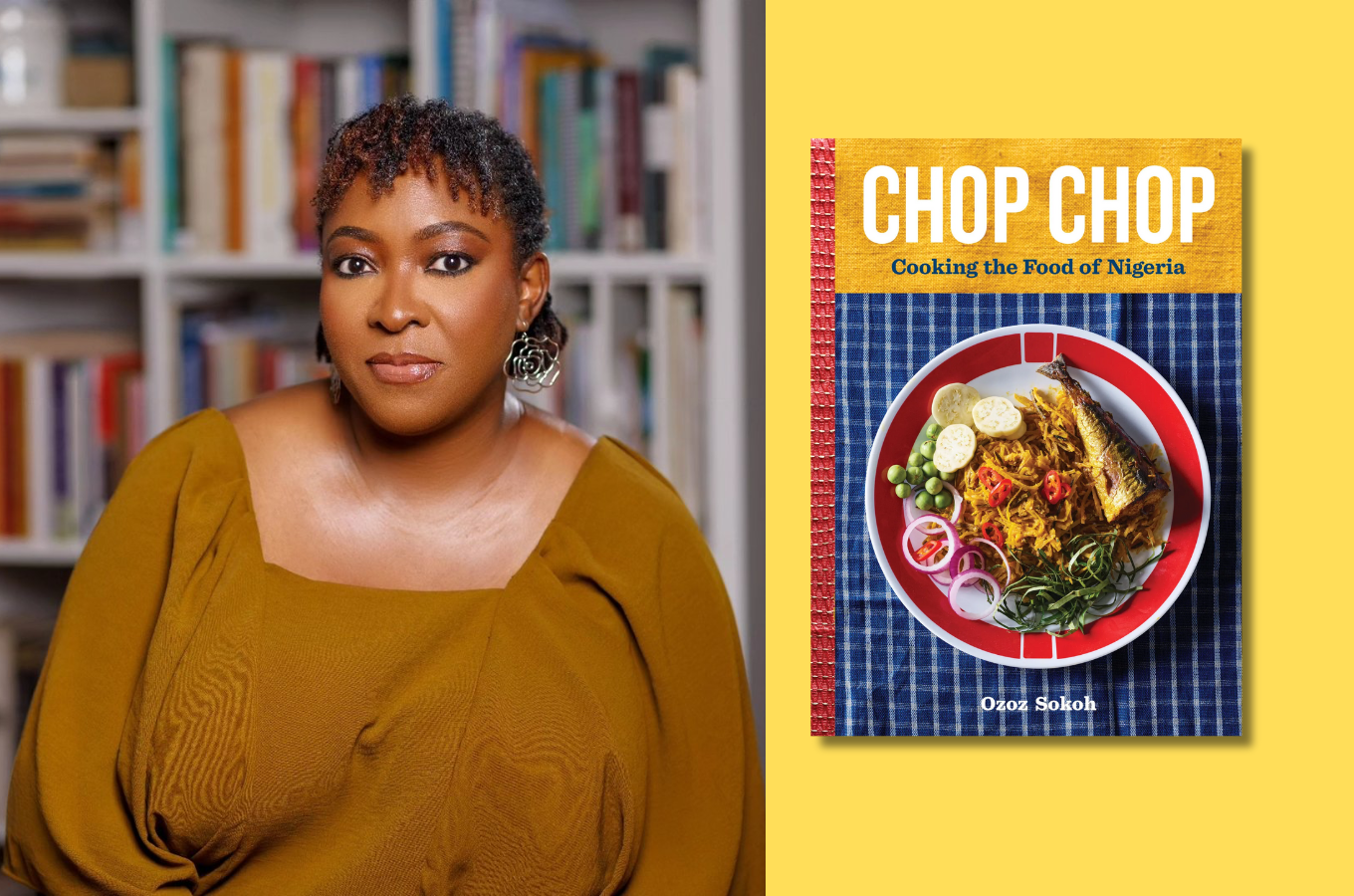
Nigerian food writer Ozoz Sokoh has had the kind of year that cookbook authors dream about. In May, Chop Chop: Cooking the Food of Nigeria won the Gold Award in the Food, Cooking, and Healthy Eating category at the 2026 Nautilus Book Awards. Then, on June 13, the same book won Emerging Voice in Books at the James Beard Media Awards, presented by American Express and Resy at the Art Institute of Chicago. Two of the most respected names in American food and book publishing, within weeks of each other, landing on the same title.
Sokoh is a Nigerian food writer, culinary anthropologist, and geologist-turned-gastronome, known for the long-running blog Kitchen Butterfly. Born and raised in Warri, she has spent nearly two decades, first as a blogger living in the Netherlands, later as a researcher building Nigeria’s first seasonal produce calendar, and now as a professor of food and tourism studies in Ontario, narrowing the distance between Nigerian foodways and a Western readership that has historically arrived at African cuisine, when it arrives at all, through caricature rather than care. Chop Chop moves through all six regions of Nigeria, anchored by more than fifty recognized languages and over 250 ethnicities, gathering the country’s culinary vocabulary into a single, richly photographed volume. It was also named a New York Times Best Cookbook of 2025.
What the James Beard Foundation calls “Emerging Voice,” in Sokoh’s case, is something closer to a culmination than an emergence, a category title that tends to flatten nearly twenty years of fieldwork into the language of discovery. Sokoh has described her own relationship to food as having transformed entirely since childhood, when she often refused dinner outright; now, she says, she is “big on flavor and textures.” Chop Chop is the published record of that long transformation, offered outward and now, formally recognised for it.
Sokoh’s double win this year sits alongside another African name on the James Beard Media Awards list: Dr. Aishatu R. Yusuf, co-author of Eating Behind Bars: Ending the Hidden Punishment of Food in Prison, which won Food Issues and Advocacy. The book, born out of research at Impact Justice, the Oakland-based nonprofit where Yusuf serves as vice president of innovation programs, confronts how America’s prison system feeds, or fails to feed, the people inside it. It is a markedly different register of food writing from Sokoh’s, celebratory versus investigative, but the two wins landing in the same ceremony, from two African women working in entirely different corners of food media, speaks to the range African voices are now occupying in this space.
The James Beard Foundation’s relationship to African cuisine has been a gradual buildup rather than a sudden embrace. Two years ago, Nigerian-American food writer and New York Times cooking editor Yewande Komolafe was nominated in the International category for My Everyday Lagos Kitchen. Komolafe, who moved from Berlin to Lagos as a toddler and later to the United States, has spent her career writing about Nigerian food and the broader experience of immigrant cooking in America. Sokoh’s back-to-back wins this year, at Nautilus and then at Beard, suggest that recognition for African cuisine has finally tipped into something more solid: not a nomination here and there, but a body of work, Chop Chop, being named, twice in one season.
Congratulations, Sokoh!





COMMENTS -
Reader Interactions