

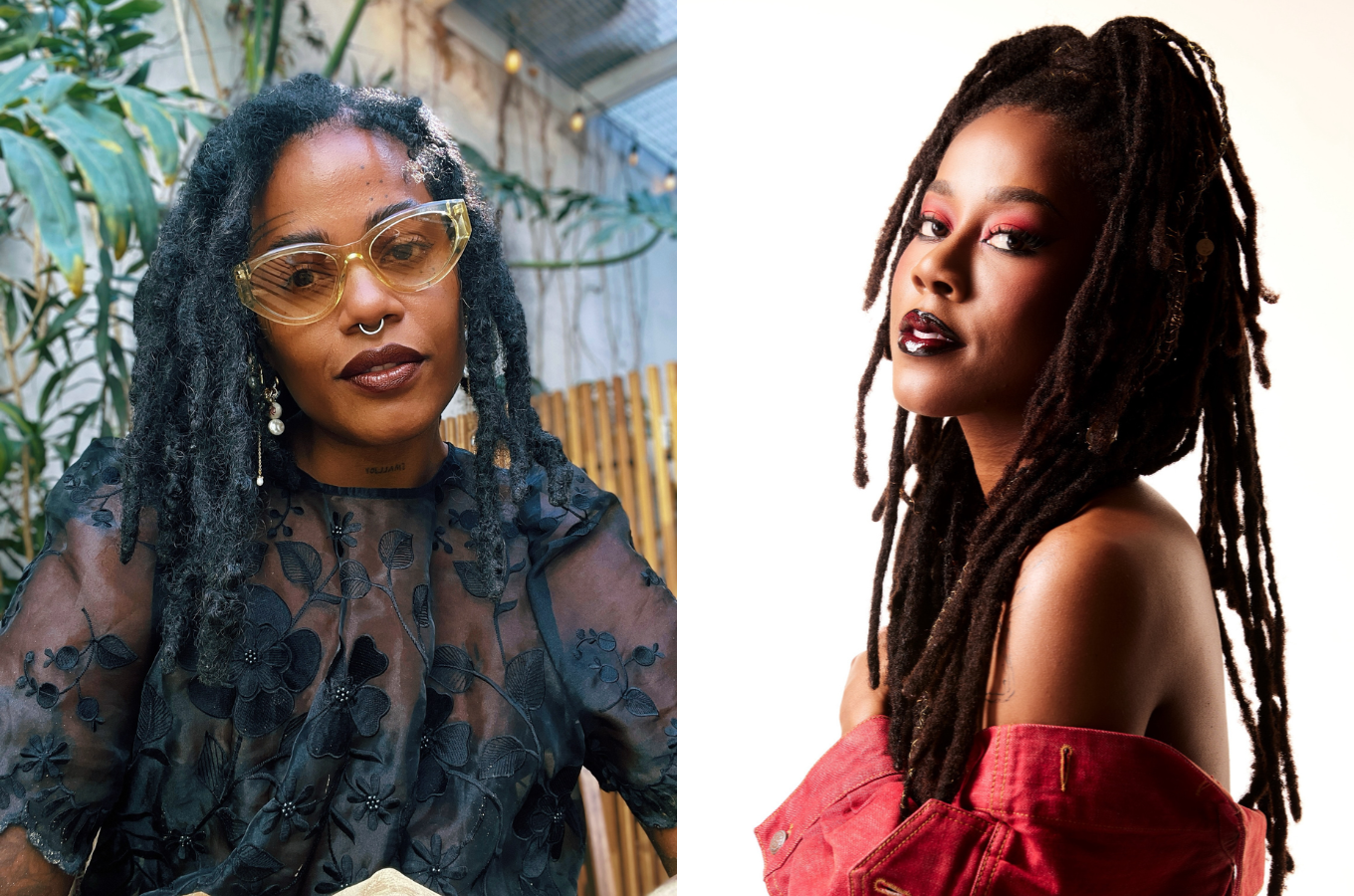
Akwaeke Emezi, the Nigerian-Igbo and Tamil writer known for Freshwater, The Death of Vivek Oji, and Pet, has weighed in on the discourse swirling around Paramount’s newly released Children of Blood and Bone trailer, specifically, the choice to score it with Beyoncé’s “Energy.”
The trailer, released this week ahead of the film’s January 2027 debut, offers the first extended look at Gina Prince-Bythewood’s adaptation of Tomi Adeyemi’s bestselling fantasy novel, starring Amandla Stenberg, and arrives amid a separate, ongoing controversy after Adeyemi herself described the making of the film as traumatic in a video posted just a day after the trailer dropped.
Reacting to online commentary about the soundtrack choice, Emezi found the pairing amusing but used the moment to make a broader argument: that the Children of Blood and Bone project, from novel to film, has always been built for a diasporic African audience rather than a continental one, an alignment she compared to Black Panther‘s Wakanda.
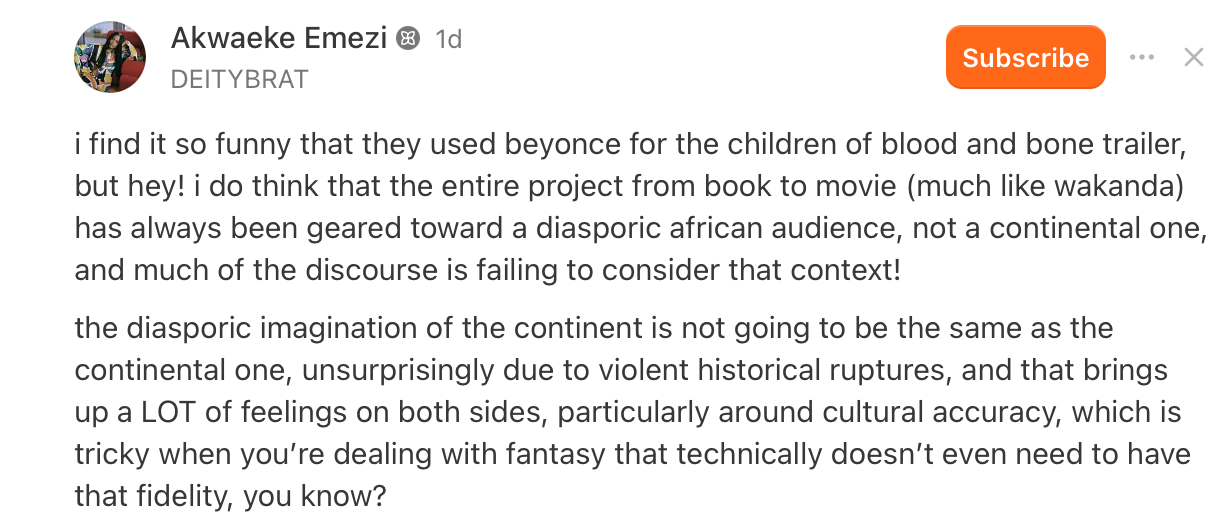
That distinction, Emezi argued, is exactly what much of the surrounding discourse keeps missing. The diasporic imagination of the continent, shaped by what she called violent historical ruptures, was never going to map neatly onto a continental African one, and that gap surfaces most visibly in arguments over cultural accuracy, a fraught standard, she noted, for a fantasy story that doesn’t strictly require that kind of fidelity in the first place.
Responding to a follow-up comment, Emezi went further on the Beyoncé choice specifically, framing it as a straightforward Hollywood calculation: a studio film with Hollywood actors reaching for the biggest possible Black American pop star to draw Black viewers into US theaters, especially given that the project has been explicitly positioned as being made for the diaspora rather than continental African audiences.
Emezi’s read on the soundtrack turns out to echo a broader current running through the trailer’s comment sections, even from viewers who otherwise loved what they saw. One commenter, praising the film’s costuming and worldbuilding, asked that Beyoncé’s music be kept away from the show entirely, arguing it sounded out of place against a mythological setting that called instead for indigenous African music, drums, and vocals. “Big energy,” they wrote, “is taking me out,” before clarifying, in the same breath, that the criticism was constructive and that they’d still be first in line for theater tickets. Others zeroed in on different details: one viewer celebrated the trailer for centering Black kings, queens, warriors, and magic without any white characters or slavery narrative; another used the moment to point people back to Adeyemi’s original trilogy, arguing the books are where the story actually lives and deserve love alongside the film and its cast; and a third, more measured take echoed Emezi’s underlying point about fidelity, praising the costuming and cultural depictions on screen while suggesting a heavier reliance on African musical instruments, rather than “random studio work,” would have deepened the effect and helped the film avoid what they called a “plastic depiction of cultural portrayals.”
The reactions suggest the soundtrack has become an unexpectedly central flashpoint for a much bigger conversation about who this adaptation is for and what authenticity means in a fantasy world explicitly built from African myth. Where do you land on it? Does a Beyoncé needle-drop make sense for a story like this, and how are you feeling about the trailer and cast so far?



COMMENTS -
Reader Interactions