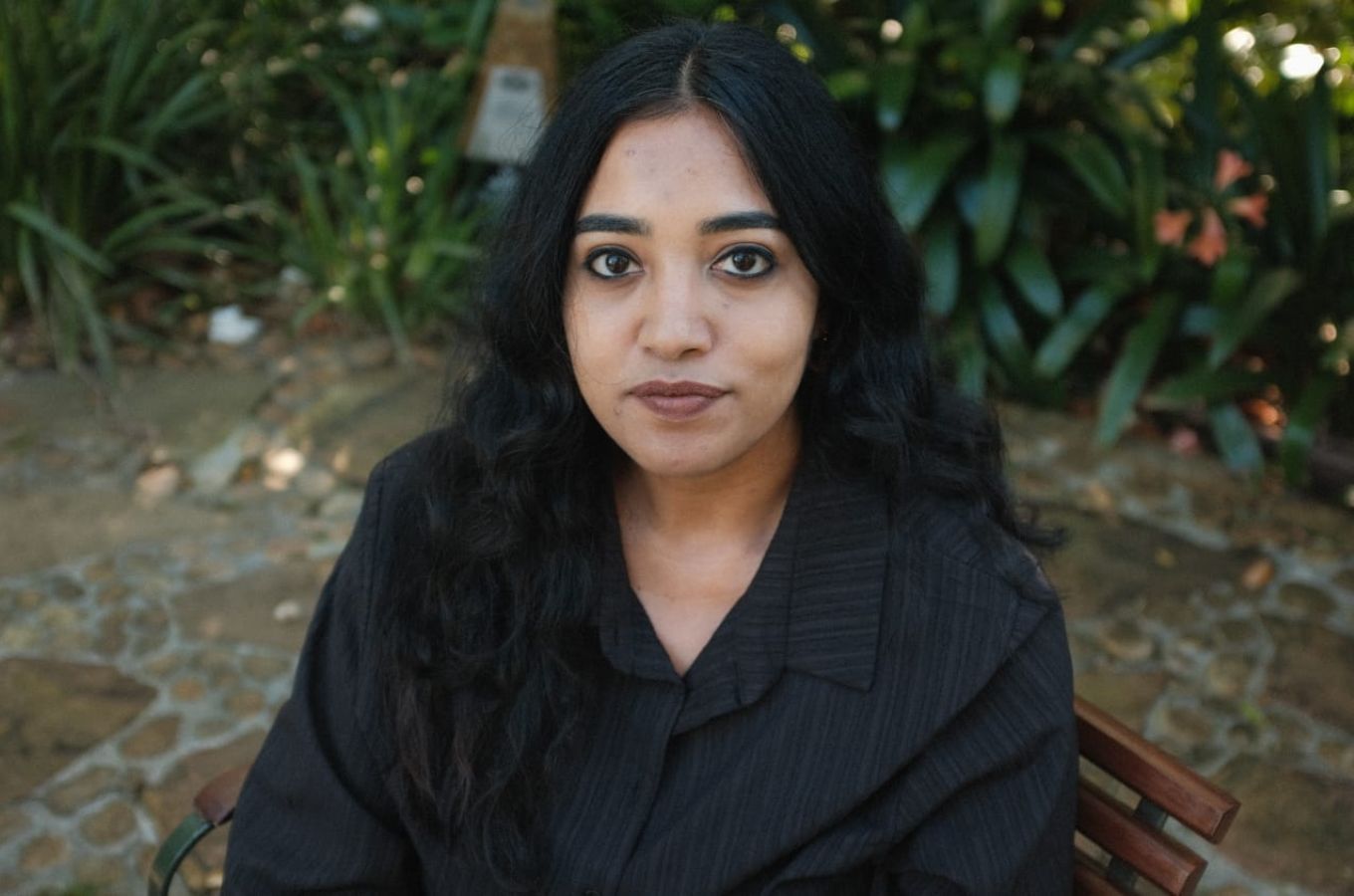
For an emerging writer, or even a writer still finding their voice, one of the biggest joys is receiving that email: “Your work has been accepted for publication.” For many writers who have shared the thrill of announcing, “My work just got accepted,” to be published by a literary magazine like Brittle Paper is a milestone. And for the past five years, Tahzeeb Akram, a South African editor and writer, has been one of the people behind that joy.
As Brittle Paper’s submissions editor, Akram works with hundreds of submissions every month, reading through the work of writers from across the continent and beyond. For Akram, the work goes beyond reading manuscripts and deciding what gets published. She has a particular interest in under-represented voices, one that mirrors Brittle Paper’s own commitment to amplifying the many and varied voices that make up African literature.
Her journey with Brittle Paper began long before she became a submissions editor. Having followed the publication and its work for a while, Akram eventually found herself on the other side of the submissions desk, helping to shape the very literary community she had once simply observed. In the five years since, she has had a front-row seat to the ways African fiction has changed: the stories writers are telling, the voices emerging, and the questions shaping contemporary literature.
Being an editor, after all, is about much more than language, grammar or sentence structure. It is also about mentorship. It means being involved in the shaping of a writer’s voice, thinking about how a story is received, and sometimes helping a writer see possibilities in their work that they had not yet considered. For many of the writers whose work has appeared in Brittle Paper, Akram has been that person behind the scenes.
With the Brittle Paper Literary Festival approaching, we sat down with our beloved submissions editor to talk about her journey so far: what led her to this path, what keeps her returning to the submissions desk, and why she loves the work so much. And as she speaks about it, we can hear the passion in discovering under-represented writers, making space for their stories and, in some small way, helping them find their audience.
We also spoke about the evolution of African literature over the past five years, the changing landscape of African fiction, the advent of AI and its implications for writers and editors, and what it means to hold the voices of others with care.
Brittle Paper
Just to recap your journey before we start, how did you find your way into becoming Brittle Paper’s submissions editor?
Tahzeeb Akram
I started my MA in Literary Studies in 2019. My thesis was on contemporary queer Nigerian literature, and when I was doing my research, I found Brittle Paper’s 14 anthologies and the discussion they hosted called Un-Silencing Queer Nigeria. After that, I became Brittle Paper’s biggest fangirl. I used the 14 anthologies and borrowed the Un-Silencing title for my thesis. At this point, I had been doing editing on the side to build my experience, so when I got my MA at the start of 2021, I emailed Dr Edoro to try my luck and see if Brittle Paper had any openings for an editor or curator. I’m very thankful every day that she read that email because now I am publishing anthologies for Brittle Paper, meeting incredible writers, and most importantly, doing a job I absolutely love.
Brittle Paper
You’ve been working with Brittle Paper since 2021. How has your understanding of what makes a writer or a piece of work worth championing evolved over the years? What do you recognise in writers now that you might not have recognised when you first started?
Tahzeeb Akram
That’s quite difficult to answer. But to be entirely honest, when I first started, I was trying to ensure I was keeping up with the reading trends or the topical themes. But I soon realised, as a publisher and as someone helping writers, it was important to not confine anything to the current ‘hype’.
That freedom of knowing you can put out work of a wide range that will in turn inspire other people to just write and to just share, even if it isn’t the current fad of the reading world, is a great feeling. And it makes me happy when I come across writers now who you can tell are writing for themselves and not because they want to write a particular theme because someone else did it and got published. That recognition has grown over the years.
Brittle Paper
Emerging writers can often exist in a kind of literary invisibility. They may be writing excellent work without access to editors, publishers, literary communities, or people who can help their work find an audience. How conscious are you of that gap when you read submissions, and does it affect the way you engage with writers whose work shows potential?
Tahzeeb Akram
I think it’s unfair for a publisher or editor to expect work to come to them already polished or flawless. I think if you have that mindset, you are bound to let some really fantastic pieces slip between your fingers. I could read a submission that is ‘polished’ and still reject it because it is not very strong or lacks potential. And I could read a submission that will require an intense amount of work, but if it has potential and there’s a pull as a reader, then I will gladly accept it. It’s my job to edit and prep a piece for publication, and it’s the writer’s job to present work that holds up.
Brittle Paper
Your role goes beyond selecting work for publication; you’ve also worked closely with writers to develop their submissions. What does mentorship look like for you in an editorial role? What are you hoping to give a writer when you choose to work with them on a piece rather than simply accept or reject it?
Tahzeeb Akram
I honestly love that part. I know there are some writers who dream of the day they can have an editor to work with and to discuss their works with, and I’m the editor that used to dream of working with writers, ever since I was little. So to be able to be a part of the process, where you meet a writer and meet different sides of them through their work and get to be invested and deeply woven into their work, is a dream come true.
And for most of the writers I work with, it’s the first time they are getting published or having their work edited, so it’s nice to remember that and to ensure they are involved in it to give them the experience to carry forward.
Brittle Paper
When you are reading a large pool of submissions, what makes you stop at a particular writer? Beyond whether a piece is technically polished, what are you looking for in a voice, perspective, or way of thinking? And how do you approach work that may not be fully formed yet but has something you cannot quite ignore?
Tahzeeb Akram
Usually, I can tell after the opening lines if I am going to accept it or not. But either way, I always read through the whole submission. My favourite types of submissions are the ones where I have to challenge myself and kind of take a leap. Those are the ones where I read them a few times because there’s something pulling me back to the story, but it’s not outwardly strong. And I have to think about whether it is because the story has potential or if it is me personally being intrigued by something.
Brittle Paper
Can you take us behind the numbers? How has the volume and diversity of submissions changed since you joined Brittle Paper in 2021? What does that growth tell you about the expansion of African literary culture, and has it changed the way you approach the submissions process?
Tahzeeb Akram
So, roughly, over 200 submissions come in every month. When I first started, it was about 150 on average. I once told Dr Edoro, a couple years into my time at Brittle Paper, that we had been getting a surprisingly high amount of submissions, and it kept increasing every month, and she said she thought it was because of the relationships I’d built with writers. It was very kind of her, but what I actually think happened is that Brittle Paper is consistent.
We have always been about promoting African and diasporic writers; after a while, that community has grown and has become fiercely loyal. And we see that in other spaces, like Shallow Tales or JAYLit or Masobe. Readers and writers notice when spaces are inclusive and supportive, and then they build community around it. Every success or impact in African literature over the years is entirely because readers on the continent are behind us and they want to read from writers also on the continent.
Brittle Paper
AI is increasingly becoming part of the writing and publishing ecosystem. Have you encountered submissions that you suspected were AI-generated or heavily AI-assisted? How do you think editors should navigate this moment, particularly when questions of originality, voice, and a writer’s ownership of their work become harder to define?
Tahzeeb Akram
I absolutely detest AI, and while I know we cannot fight against something that is already taken root, I do think we can fight for regulation in every institution and industry. That said, I don’t want to sound naïve, but like every other oppressive or threatening development, artists will also prevail. It sucks that there are many losing work and income to AI, but I also don’t believe there could ever be a world devoid of human-made creativity.
I wish to ban AI from submissions and competitions, but realistically, it cannot be enforced, and none of us have the resources to employ checkers. If a writer uses AI to help them research a topic they want to write on, I don’t like it, but I can see that being allowed. However, I do not think any writers should be submitting work that has been written by AI, even if it is just a sentence in a much larger story.
Brittle Paper
After five years of reading writers at different stages of their careers, what have they taught you? Is there a particular writer, submission, or editorial experience that has stayed with you and reminded you why the work of discovering, nurturing, and creating space for emerging African writers matters?
Tahzeeb Akram
Every year I’ve spent at Brittle Paper has introduced me to remarkable writers, and I’m forever thankful for the relationships I’ve formed. The Brittle Paper literary festival is basically entirely made up of the people I met during my time at Brittle Paper and who have made it a fulfilling journey.
One of the people I always have to shout out is Ibrahim Babátúndé Ibrahim, who is a wonderful writer, person, editor, mentor, and friend. He was one of the first people I got to work with at Brittle Paper, and he has gone on to do amazing things. Then, submission, there is one I always think about. Dami Salami submitted a piece called ‘Airport Chaos’, and it was such an honour to publish, and I always remind her how much I love that story whenever we chat.
Overall, I have thankfully gained more experience over the years, so reading older stories I published makes me cringe because I would do a much better job at it now (sorry to those writers!) But short stories are my absolute favourite form of literature, so to have a job where I get sent 5-10 a day is fantastic, and I don’t want to sound dramatic, but I am genuinely thrilled that I get to be a part of this world and I get to meet writers who I know will one day be household names and that they trust me with their work. So, thank you to all the amazing writers I’ve worked with in the last five years, and I hope I get to meet so many more in the years to come.
Brittle Paper
You’ve done an amazing job so far! Thank you for speaking to us.
Tahzeeb Akram
Thank you!


COMMENTS -
Reader Interactions