

To wail in peace the other day, I took a stroll through the cemetery, one of the few places where tears go undisturbed. I wanted to see my father’s grave, maybe even throw in a joke about how crooked his teeth used to be, but what I really needed was a place to pour out the spring that was welling within me. Why does the withdrawal of a touch that never was still ache? For someone I never knew, why does his absence leave such a void?
I grew up with no direct memories of my father, only a collage pieced together from the stories of others. I craved those stories, sitting quietly by my siblings whenever they mentioned him, storing their memories like ammunition against my ignorance of him. I became an archivist of borrowed memory, carrying scraps of other people’s recollections as if they were my own diary pages. There was always the fear that if I didn’t hold on tightly, the man who fathered me would dissolve completely into myth.
One of my favorites is when my sisters, then children, smeared his aftershave on their dresses, hoping to smell like him. They thought it was his body spray, because every morning he smelled of aftershave. They were caught, but years later we laughed hysterically about that. Their laughter became my entryway into intimacy with him, a way to share in a moment I never witnessed. It was always like that, me clinging to echoes, trying to translate second hand joy into something I could inhabit.
Those stories were never consistent. One sister’s version might clash with another’s, leaving me to stitch together my own imagined version of him.
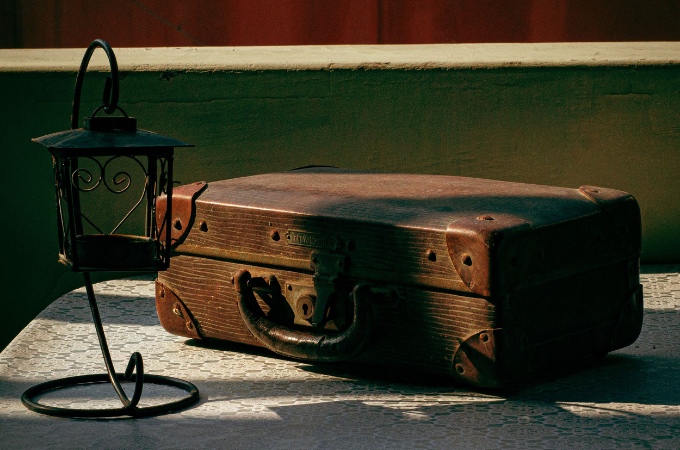
For years we kept his clothes folded neatly in a brown leather box, as if he were on a trip and might return. My mother had packed them the week he died, after she washed them one last time with tears. I opened that box countless times, pressing my face into his agbadas, searching for the minty fragrance of his aftershave. Some things are just hard to let go. Sometimes, in the stillness of childhood afternoons, I would sit cross legged by that box and pretend he was simply late, that one day the door would creak open and he would reach for those folded clothes again. Those imaginations kept me company.
I like to think that grief does not vanish with time; it hides in the body, waiting for a trigger. Once, when the man I loved disappointed me, I tried to dismiss it as insignificant. But one evening, struggling to fix a stubborn zipper for a customer, the grief surged. After four failed attempts, I found myself crying on the phone to my sister, blurting out, “The zip won’t fix. Why did Musa lie, and why did Dad die?”
Later, with distance, I understood that the zipper was never the real rupture. What came undone that night was a story I had been telling myself.
I had loved a man who did not want me, and I had built a relationship in the space where there was only politeness. I mistook kindness for invitation. Wanting him felt too vulnerable to admit, so I rearranged the narrative, letting it sound as though he wanted me too. When the truth surfaced, I leaned into his omissions and softened my own. I did not lie outright, but I curated. I left out the parts that would have revealed how much I longed to be chosen. The grief found me anyway.
Comfort Steven later said, “It wasn’t about the zipper. Your cup of grief refilled and you came undone.” She was right. I have often blurred the lines between people, finding fragments of my father in them, even when I am not looking. Sometimes it is a smile shaped like his in a stranger’s face, other times the way a man holds a book, or even the silence someone keeps in the middle of a crowded room. My mind rushes to pin these fragments to him, as though piecing together a mosaic that will never be whole.
In October 2020, Lagos became another site of grief. The EndSARS protests turned into a bloodbath. I could not stop scrolling through videos, watching young Nigerians cry out to leaders who turned a blind eye. I kept a vigil that night, and on the nights after. The images looped endlessly: bodies falling, voices breaking, the glow of phone screens illuminating terror. My body mourned with the city, every tear feeling like both a private loss and a national one.
That national grief felt personal. My father died in Lagos too. Once again, everything pointed back to him. The sorrow of a country bled into my unfinished sorrow. In that moment, even an apology from our leaders would have mattered, because sometimes nations, like daughters, need acknowledgment to heal.
Years later, I would recognize the pattern more clearly. I fell in love again, this time with a soldier. He asked me to give him eighty percent of myself while offering no trust in return, and I agreed. I went all in anyway. I wanted my own person. I wanted something to anchor me.
We volunteered in the same organization. He sang in the choir, unlike me unable to hold a musical key to save my life; I worked quietly behind the scenes, drawn to cameras and captions. I learned him the way I always do, by gathering fragments. I asked questions. I listened for stories. I filled in silences.
There were things I never told my sister. I never told her I bought him gifts—three times—though he never bought me any. I never told her it took a week for him to acknowledge the first gift, four days for the second. I never told her how he cut my calls while I was speaking and how I returned, apologizing, with gifts in my hands. I stayed silent because naming these things would mean admitting how little I demanded of love, how much I was willing to surrender to keep it. I suppose I was drawn to him because he reminded me of my father, a soldier too, with the same strength, and his best friend was my senior in school, even sharing my father’s name. How can I explain this to make proper sense?
Did I unknowingly make grief my companion? The first poem I ever wrote drained me, each line twisted with truth and sadness. A friend, Aikensinyo, once asked why all my poems were sad, but how could I explain? I had been slapped by a thousand triggers. Writing didn’t cure the grief, but it made it bearable, like opening a window in a suffocating house. Each poem was a small exhale, a way to survive one more day without collapsing.
My grandmother used to say that sad memories are like scars: they begin as raw wounds, but the pain ebbs as days pass. I choose to believe her. I still carry a scar on my knee from a childhood fall I no longer remember. The fall is gone. The sting is gone. Only the mark remains. Perhaps this is proof that time dulls even the sharpest hurt.
A friend, Phrv, the liberal trapper, once told me grief can become familiar, even addictive. You know it hurts, he said, but where else would you rather be? I wrestled with that idea. Maybe grief is a loop. But I choose the opposite. I choose wonder.
Science, history, and fossils remind me there is never a void. Eggs become birds or food for worms. Extinction gives rise to new epochs. When I read about the KT boundary, about worlds ending and others beginning, I feel less alone. The earth carries scars too, layered and softened by time.
On a field trip to Afikpo in Southeastern Nigeria, I pried a shell from a rock where it had rested for a thousand years. I kept it because it made me wonder. Because it reminded me there is no end without a beginning.
As I sat by my father’s tombstone, tears finally spent, I understood that grief would ebb and return, surfacing in broken zippers, unfinished love, collective tragedy. But I also understood this: Wonder is an armor. When I wonder, I do not despair.
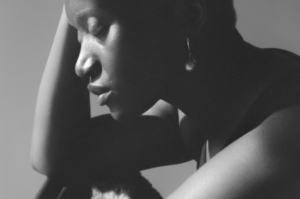
Photo by Johanna M Jaramillo from Pexels



Joy Adanu August 30, 2026 16:52
My God! Your writing has a way of healing hearts. You don't write from pain, but from hope, and that's really beautiful.