


Baba said he was fourteen when he was sixty-seven. At first, we saw it as one of those late-life oddities. Old age had begun to court him, but unlike his peers on Marian Road, he did not flirt back.
They dyed their grey hair black, left the top button of their shirts undone to show fake gold chains, and smiled at young women even when their pockets were empty. He simply begun to hold his favourite paper, The Punch, a little farther from his eyes than he used to, and his trips to the doctors had become frequent. The doctors warned him about tobacco and liquor. The combination had taken its toll on organs that do not forgive. He listened and made his peace with the implications. He did not believe years surrendered to pleasure were necessarily wasted years.
There were evenings when he seemed far away, so absorbed in his thoughts that he did not notice when I slipped into the room to serve his tea. He sat inside a cloud of his own making, the cigarette burning slowly between his fingers. He had spent the whole day belonging to everybody. Why could he not now belong to himself? He let the smoke out unhurried, lips pursed, in no rush to come out of his thoughts.
One such evening followed the death of his friend and long-time customer, Alhaji Musa, buried the same day he died, in an unmarked grave outside Takum. He observed his mourning by pouring himself a glass. The doctor’s warning still flickered, but that night, the cost seemed fair. He had loved Alhaji Musa, who died believing that all fifty-nine of his years belonged to him. Musa had little patience for his friends’ arguments about which years counted and which did not.
Their friendship had begun years before 1997, before Musa wheeled a Suzuki generator into Baba’s shop and became one of his most faithful customers. Years earlier, Musa reported for a night shift after driving six hours from Takum to Jalingo. Exhaustion had defeated him. He dozed at the wheel of the forklift and struck the side of a parked van close to the warehouse. There was no real damage, only the parked van bumper folded inward, but by standard procedure the company would open an investigation regardless. The accident was seen by Kolade, who was on guard that night. Dike, the warehouse keeper, saw that no one had been injured and decided usefulness required silence. Sleeping at the wheel meant negligence: a query, suspension, perhaps dismissal. The company spoke often of a no-blame culture and transparent investigations, but everyone knew how quickly recent inquiries found their way to contract workers.
Baba, the shift supervisor that night, was called to complete the incident report. They looked at Musa, shaken beside the dent he had made, his eyes red with fear, and decided that a man with two wives and four children should not lose his job over a single mistake. Baba blamed the rain, poor visibility, the awkward position of the parked van, and almost every inconvenience except sleep. Dike signed where Baba pointed. Kolade, no doubt, a deeply religious man, never completely forgave himself for partaking in the lie. The incident bound the four of them in an accidental friendship.
When Musa died, Dike wept openly, the way he never let himself cry over his own losses. His handwriting, someone said, was illegible on the condolence register. Kolade was in Takum. He did not go to the burial. He sent money and condolences instead. Baba did not grieve the way people expected. Instead, that evening, he drew on his cigarette, further reddening the burning tip, disinterested, as if he had not yet decided what to do with the news.
It was tempting to think that the years he refused to count were the years that had taken people from him. But Baba’s arithmetic was older than Musa’s death. It had begun in the years when his life was being arranged for by people who loved him, and still did not think his wants mattered in what was best for him.
Within his household, marriage was never the private wish of a young man in love. History was weighed with ruthless severity by the Ukwase, the family elders who had lived long enough to see the outcome of poor choice of partners. There were dozens of such stories, filed by family name and ready to be produced the moment a son or daughter announced they had found someone. They remembered the woman from Gindin Dorowa, whose grandmother had once been accused of having a child with a distant relation. The rumour was fifty years dead. It still cost her granddaughter a marriage proposal. By the time the family delegation arrived with the woman they had chosen, his objections carried no more force than a toddler’s tantrum. They were heard, acknowledged, and ignored.
Even in his helplessness, he recognized his father’s hand in the Ukwase’s choice. The woman who stood before him possessed the qualities his father most admired in Baba’s mother. She was stronger than her frame suggested. In the black-and-white photographs in his father’s sitting room, his mother had once possessed the same small, smiling figure, before it was shaped by seven pregnancies and the grief of one stillborn.
Baba’s calculation unsettles me because the one thing he never chose became the truest gift of his life. The wakuku he had no hand in finding became the one person who knew his body better than he did. She never asked how he was feeling, but she could read it in the way he lowered himself into his chair after a long day at the shop. The week his cough changed and began producing sputum, she started slipping unnoticeable amounts of ground ginger and ground tsanya seeds into his morning tea. She never spoke inanities: you are the sun and the moon, the sugar in my tea. She simply arranged his days, so that the world pressed a little less against him.
Among those supposedly lost years were the domestic ordeals he later recounted with glee. The midnight fevers of his children, the vomit souring his shirt, his palm holding a damp cloth against a small forehead by the light of a hurricane lamp. Perhaps he was present in body and absent in attention, his face turned toward some other road even as his hands did the work. Yet even in the memories he treasured, another life kept pressing at the edge of the story.
There was another road, once, in Sicily. The story shifts slightly each time it is told. What stays constant is the boy on the ground, beaten by men who outnumbered him, and Baba close enough to help. In defence of his own cowardice, his mind became remarkably generous with its reasons. He told himself he was young. He told himself he was a stranger there, a foreigner. He told himself that if the boy’s own people, who stood watching, would not step in, why should he carry what was not his to carry?
He believed, then, that he had an unfinished business in Sicily. He was going back, once his father recovered from the stroke, once he married, once his wife gave him children, and so on. He had imagined a life waiting for him somewhere in Europe. Perhaps that was the first life he subtracted from himself.
Years later, the company included him in a severance scheme without understanding what it had given back. He returned to the craft he had learned from his father and which his hands had nearly forgotten: coaxing dead engines back to life. These years were difficult, but they were his. No father, ukwase or company had arranged them for him. At first, I thought he should have removed those years too, because they were thin with money.
Fourteen, I eventually understood, was the number of years since the company released him, and he returned to his father’s trade. Baba’s perplexing arithmetic still does not sit easy with me. He removed the years he obeyed what he resented, the years he lived inside choices that were not his, though some of them were washed with comfort. He removed the years his body sat in one place while his longing sat in another, though those same years built the affable man people came to know. At times I think he was wrong: that a man cannot subtract the years that disappointed him, and still call the remainder his life. Maybe Musa had it right: all fifty-nine years, unhappy episodes included, still made a complete life.
I am only certain that, since Baba started his calculations, I have begun mine. As I write this, I count the years I spent becoming acceptable, the version of me that learned which opinions to swallow. I count the fruitless friendships I did not break early enough, and the ones I kept alive by making myself small inside them. I have not made a mental note of the number. If Baba’s philosophy is right, I suspect that number is smaller than I can bear.
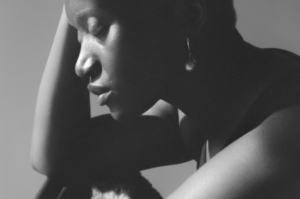
Photo by Jutta Elisabeth on Unsplash





Ikenna September 10, 2026 10:54
Really loved this!