


I did not know a name could die until the day mine did.
My grandmother named me Kwame, the one born on Saturday, because the sky was still grey with morning when I arrived. She said a name given at the right hour follows a child like a shadow, feeding him strength he cannot see. I loved my name. I loved the way she sang it when she called me for warm porridge, stretching the middle so it sounded like a small drum. Kwa-a-me. Come and eat, child of the soil.
Then the white missionary came to our village with his black book and his foreign God. He stood before the whole compound one afternoon, sweat shining on his pale forehead, and told us our gods were demons hiding behind wooden masks. He said our names carried curses inside them, tied to spirits that did not know his true God. Kwame is a heavy name for a child, he told my mother, shaking his head like a man pitying a fool. Let him carry a lighter one. Let him carry Peter.
My mother looked at my grandmother. My grandmother looked at the ground. I did not understand yet what was being taken from me.
The following Sunday, water touched my head inside the small church the missionary built from mud and zinc sheets. He called me Peter before the whole gathering, and the people clapped, and my mother smiled like she was trying not to cry. I was seven years old. I did not know that a name, once buried, still breathes underground.
That night I woke to my grandmother’s voice, low and cracked, coming from the corner of our hut where she knelt before the small carved stool that held my father’s spirit. Kwame, she whispered into the dark, do not let them bury you twice. I sat up on my mat. My chest was tight. Nana, I called. She turned to me slowly, her eyes wet in the moonlight. Your ancestors are calling your name, my child. And no one is answering them. I did not sleep again that night.
The rains refused to fall that season. The millet in our farm curled and browned, though the sky above us stayed heavy and grey, promising water it never gave. The missionary said it was a test sent by his God. My grandmother said it was something else entirely. When a name goes silent, she told me one evening, grinding herbs with slow, tired hands, the ancestors grow restless. They knock. If no one answers, they knock harder. I felt the knocking myself, some nights, deep in my chest, like a second heartbeat that did not belong to me.
One morning, I stood before the small mirror my mother kept for church days. I looked at the boy in the glass wearing a borrowed name, and for one breath, just one, the boy in the mirror did not move when I moved. I screamed and ran from the room. My mother held me that night, rocking me the way she used to when I was small enough to fit inside her arms completely. Mama, I whispered against her wrapper, I want my name back. She went still. They will call you a heathen, she said quietly. The missionary will say you have chosen the demons over God. But I had decided, and although my voice shook, I said, Then let them say it. I would rather be a heathen who knows his own face than a saint who has forgotten it.
My grandmother did not wait for church, for the missionary, for anyone’s permission. The next dawn, she poured water at the foot of the carved stool and called out my father’s name into the grey morning, and then she called out mine, both of them, the borrowed one and the true one, so that the ancestors would know I stood between two rivers and had finally chosen where to plant my feet.
Kwame. Child of the soil, she said, pressing her palm flat against my chest. Kwame, I said. And for the first time since the black book came to our compound, I felt my chest belong only to me.
The rains came three days later, soft at first, then generous, soaking the millet leaves until they stood green and grateful again. The missionary still calls me Peter on Sunday mornings, and I still answer him, because the world outside our compound speaks that language now, and I am not foolish enough to refuse it entirely. But at home, at the fire, beneath the moon my grandmother still prays under, I am Kwame. Child of the soil. And every evening, when she calls my name, stretched long like a small drum, a spark old and patient inside me finally answers back.
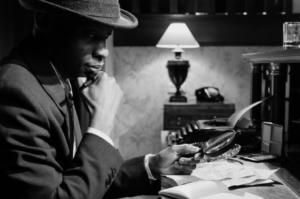
Photo by Kunj Parekh on Unsplash



COMMENTS -
Reader Interactions