


“So where are your people from?”
It’s usually the third or fourth question, after the perfunctory small talk. It’s never been the first question. By then, I’ve already said I’m from Mauritius. Yet, the question that follows is rarely about Mauritius at all. I’m asked about which Indian region my family left, what my surname might reveal, where exactly I’d slot into a complex map of caste and community that I am only now learning how to read. In India, this is how strangers get acquainted. In India, it is also an unmistakable appraisal.
I usually have a choice in that moment. I can let the assumption stand. Yes, Indian, full stop. I then watch the complex map dissolve into the familiar terrain where the conversation moves easily. Or I can say Mauritius and watch the questioner recalibrate, mentally figure out a category that fits, and arrive, eventually at the surname question anyway. Either way, I am being placed. The variations lie in how much explaining it takes to get there.
I’ve lived this line of questioning long enough now, teaching at a UWC school in India, after years in Mauritius, Australia and China, to register what it assumes; you look ‘desi,’ but what kind of ‘desi’ exactly? It needs a region. A surname. A position in a hierarchy that precedes you, and should outlast you. Most writing I have encountered about the Indian diasporic identity, when written in English, travels between binaries; a homeland on one side, the West on the other, longing and assimilation interspersed here and there. This binary never reflected where I actually stand. It’s a binary, a line of questioning about whether I belong to a system most of the ‘NRI’ or ‘Diaspora-in-the-West’ conversations even encapsulate.
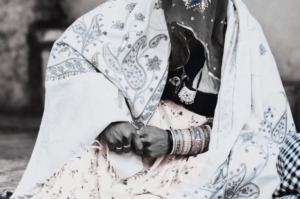
In Mauritius, ‘Indianness’ worked on entirely different terms. It is complex in its distinctive ways. My grandmother wore, and still wears, saris and dupattas as ordinary, daily clothing, a seamless heritage threaded from the indentured laborers who arrived generations ago. But the world I actually grew up inside was Creole: French cultural references, Creole cuisine, a postcolonial Indian Ocean texture that weaved in ‘Indianness’ more than it lived inside it. We watched Hindi films. We celebrated the festivals. Indian heritage functioned as something closer to added value, a layer of cultural richness you could claim, display, take pride in, without it sorting you into a hierarchy the way it does here. Nobody in Mauritius needed to know my surname to know how to treat me, most of the time. Mostly, because the cracks and divides are there, holding a mirror to the remnants of past legacies that hold firm.
The Hindi I picked up came from those films, not from conversations, which means I learned a symbolic language before I learned to communicate in it. When I landed in India ten years ago, I was embarrassed by my ‘broken Hindi.’ Since then, I’ve stopped treating Hindi as an inheritance I’m failing to honor and started treating it as what it actually is: a third language, after French and English, that I happen to understand and stumble through with increasing ease now. People here often comment on this directly. I speak with surprising fluency, that I seem unusually unselfconscious about getting it wrong. I don’t fully understand what’s underneath that comment. I do understand, however, that I wasn’t trying to own the language. That refusal, paradoxically, is what let me get good at it.
None of this makes me a foreigner here, exactly. I understand too much for that; some of the unspoken rules of caste and class that shape an identity before anyone speaks, the gendered expectations that govern who gets labelled and who doesn’t, the particular friction between a colonial mindset many still carry and a genuine, often electric spirit of protest and dissent that runs alongside it. I see the inequalities. I feel the contradictions. But I don’t carry their costs the way someone fully positioned inside this hierarchy does. I can wear the sari as heritage and still walk away before the harder conversations start. I could hear a casteist assumption and choose, depending on the room, whether saying something is worth what it would cost me. Irrespective of my silence and however I choose to answer now, I get to leave that room and am able to write an essay about it.
This is where I have to be honest about something less flattering than hybridity: there is real privilege in being unplaceable. I get to claim Indian heritage when it serves me‚ the clothes, the food, the festivals, the cultural fluency people find charming‚ and step back from it when the costs of full belonging would actually land on me. I notice the misogyny, the caste allusions dressed as small talk, the quiet colonial residue in how institutions run, and I name it, sometimes, in the rooms where I can afford to. I have also stayed quiet plenty of times I probably shouldn’t have. I’m not sure observation dressed occasionally as critique amounts to much. I ask myself, more often than I’d like, what exactly I think I’m contributing to.
The closest thing I have to an answer is in one of the rooms I’ve tried to build something out of this position, rather than just hold it. I teach IB English Language and Literature to students from everywhere, and I’ve shaped my syllabus deliberately‚ heavy with African and Global South writers, decolonial in its emphasis. These are deliberately political curricular choices that are a direct extension of how I see myself. Most of my students are already fluent in some version of hybridity; a UWC school selects for that. I don’t have to explain why their Mauritian-of-Indian-origins English teacher, a native Mauritian Kreol speaker, fluent in French and a mildly halting third language Hindi, is teaching them Banu Mushtaq next to Binyawanga Wainaina followed by Toni Morrison. They already live somewhere between categories themselves. It is, of all the rooms I move through, the one where I get to generate and disturb automatic ‘placement’ as opposed to being at the receiving end of it.
The classroom is still, nonetheless, a contained, fairly privileged space. It doesn’t touch the caste hierarchy outside its doors, doesn’t undo the gendered weight a woman travelling alone still has to calculate in this country, doesn’t answer for the times I’ve decided silence was easier than the conversation. Building a syllabus around hybridity is not the same as having earned the right to speak for, or even fully alongside, the people actually living inside the structures I’m describing.
And yet, I came back to India after having to leave it. When the choice was mine to make, I left a higher salary in China and took a pay cut to return to India, because nowhere else have I felt as alive as I do navigating this particular friction. That’s its own kind of admission. The unresolved questions had not gotten any easier, the contradictions still puzzle me. I’m staying partly because of them, because something about being held in that unresolved place‚ placed and placing, claimed and claiming, feels more honest than the comfort of belonging fully anywhere else ever did.
Now, when someone asks, again, where my people are from, I’ve started answering more honestly‚ which is to say, less cleanly. Mauritius. Indian origin, several generations removed. English and French-educated, Mauritian Kreol as her mother tongue. Currently here, trying to understand what ‘here’ actually means. It never satisfies the question the way a region and a surname would. I’ve stopped expecting it to.
But I don’t think that lets me off the hook. Being unplaceable is not the same as being innocent. It doesn’t shield me from accountability, doesn’t give me permission to look away and I’m still working out, in any given room, whether I’m doing it.
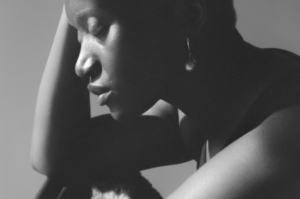
Photo by Xavier Coiffic on Unsplash



COMMENTS -
Reader Interactions