

For my husband, whose sacrifice made this journey possible, and whose perfectly timed playlists made every trip an adventure.
***
Her phone buzzes in her hand, and she stops the alarm before it rings. She has been awake for hours. Eyes open in the dark, trying to find her way back to the excitement of the call from yesterday.
“Your South African ID is ready for collection.”
The woman had said it plainly, as if readiness were a simple thing.
Now she lies still, mind already at the counter 38 kilometres away. The list runs through her head again. Receipt. Passport. Permanent residence certificate. Copies. Everything is inside the red plastic folder she packed last night and checked twice before bed.
“Love,” he murmurs, still half asleep.
He knows what today is.
“I know, Amor,” she whispers. “I’m awake.”
By the time she’s ready, he is sitting up.
“Do you want me to come with you?”
“Não. You’ve got the kids. I’ll be fine. It’s still early.” Before the queues. And the heat. And any protesters gathering outside Home Affairs, staring too hard at anyone arriving with foreign passports and plastic folders.
He doesn’t argue. He knows the calculation. They have been making versions of it for years: leave early, carry copies, keep the receipt safe, never assume one document is enough.
Outside, her footsteps sound too loud in the still morning. She starts the car and drives off in silence. At the intersection, the robot is red for nobody. She stops anyway. The highway is almost empty in this direction and the GPS says forty minutes. Her mind has nowhere to go but backwards.
She remembers being eighteen, standing at the embassy in Maputo with her university acceptance and first passport. The rules seemed honest then. She submitted what they asked for and returned when they told her. A few weeks later, the student visa was ready. That was the first lesson: submit, wait, and when you come back, the document will be there. Another student visa. Then a work permit. The waiting became ordinary. She did not yet know ordinary could still hurt her.
The first time it did, she had changed jobs. Eight weeks, they said. She waited eight months. The job waited too. Only the bills did not. For eight months, she remained correct but unpaid. Somewhere, the rule had broken quietly and stopped giving anything back.
A taxi passes her on the right, too fast, then cuts across two lanes toward an off-ramp.
Her oldest son was born in South Africa. But his South African birth certificate did not make him South African. So, they began again. Embassy visits. Trips to Maputo. A thirty-day visitor’s visa. But thirty days with a newborn is not a month. It is broken nights and clinic days, feeding, washing, holding. Waiting.
They were two days late. At the border, the official was direct. The infant had overstayed and was not welcome back. They left the border dazed, cradling the baby and the form.
DECLARATION OF FOREIGNER AS UNDESIRABLE PERSON
She read it again. Her body rejected the words. Where the offender was supposed to sign, there was no signature. There couldn’t be. The offender was asleep against her chest. Instead, the officer had written: Too young, two months. Too young to hold his own head up. Yet the title remained. Undesirable. They drove to Maputo in silence with that word in the backseat.
That night, she put the baby down and opened the laptop. Her husband laid the form, passport and birth certificate beside her.
“’Mor, these things need tact,” he warned.
“You saw what they called him. He is two months old! They have to take it back.”
She searched immigration law, the African Charter, the UN Convention on the Rights of the Child. When the baby woke, she fed him with one hand and scrolled with the other. She wrote to the Embassy. She wrote to the Minister. About a child too young to sit upright, let alone understand a border crossing. Then the responses came. First, from the High Commission to the border officials: Let them pass.
Then, Home Affairs letterhead.
Office of the Minister.
Subject: Waiving of undesirability.
They kept that letter. If anyone ever tried to place that word near her child again, she would have a page to put between them.
On the highway, a delivery truck moves slowly in the middle lane. She signals, passes it, returns to her lane.
When her husband received permanent residency, they applied for their son. Eighteen months, they were told. He turned two. Then three. Then four. In every photograph, his face changed. The paperwork didn’t. At six, they spent a day outside VFS waiting for another permit. By afternoon, he was asleep in her arms under fluorescent lights, heavy with the day, his cheek warm against her chest. She looked down at him and thought, this is what legal looks like.
Her second son inherited the same rhythm, but when COVID came, the broken system buckled under one word: Backlog. His visa ran out while an application waited. To keep him legal, they drove. Johannesburg to Maputo, then back again. Saturday out. Sunday back. School on Monday. Every thirty days. Then one trip, it rained.
Water poured over the line stretching from South Africa to Mozambique. After road-trip music and burgers at the garage, the adventure always died at the border. The queue folded along the building as bodies hid from the rain. The children pressed closer. Her husband tucked the folder inside his jacket. They stood for three hours with water around their ankles.
Then an official called out, “If you have PR, South African ID or passport, come with me.”
Her husband stepped out of the line with his green book in one hand. “My wife and children are with me.”
The official looked past him and then gestured them forward. The green book opened a way through the rain.
At the counter, they placed it down first, then the Mozambican passports. The receiving officer touched the blue covers with her fingernails and pushed them aside.
“I don’t want this. Go back to the line.”
Her husband explained again: his wife, his children, travelling together.
“Bawumndeni phela,” another officer said. “They’re a family. Let them pass.”
The passports were stamped. That gesture stayed with her. Green book in. Blue passports out.
“Are we done, Mummy?” her youngest asked, as they walked back to the car in the dark.
“Almost, Sugar.”
She looked at her husband. Neither of them believed it.
When, after eighteen months, they decided to fight, an affidavit and a High Court case put her name and the Minister’s on the same page again. Soon, a permit gave her youngest more than a month at a time. Permanent residence, a decade overdue, arrived for the brother once called undesirable. After all the waiting and careful compliance, it took dragging the desk to court to get an answer.
She exits the highway and follows the GPS into Dobsonville, to the nearest Home Affairs office that assists permanent residents with ID applications.
Even after permanence, there are special counters. The green identity book carries the number South African systems keep asking for, as if all the others never counted. The website said six weeks, but the woman at the counter said, “Plan for six months.” Fraud had made every application suspicious. In the end, it took almost two years.
Now she arrives at Home Affairs to find the parking lot almost empty. No picketing. No shouting. Not yet. She switches off the engine, takes the red folder beside her and heads into the building. At the door, the security guard stands with bored authority.
“Sawubona, buti,” she says, stepping inside.
A little girl is having her picture taken against a white wall.
At the receiving window, she slides her receipt under the glass.
“Good morning. I’m here to collect.”
A few minutes later, the woman returns with a small green book in a plastic cover.
Republic of South Africa
Identity Document
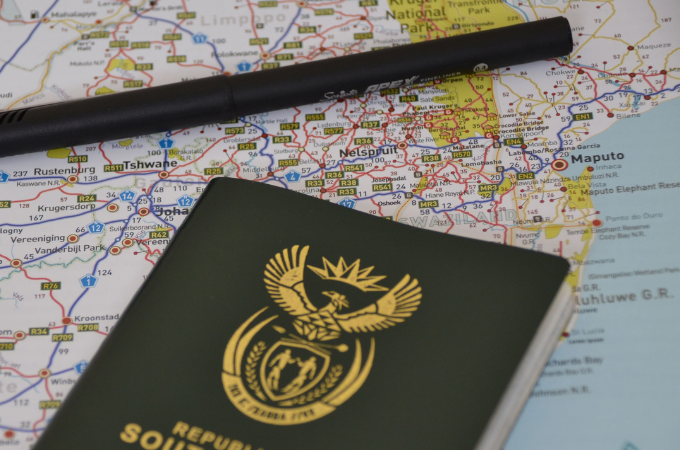
Gold letters over green. She holds it for a beat, then opens it. Her photograph. Her name.
A barcode. Thirteen digits. Eleven applications. Nine visas. Six passports. Countless border runs. Children growing older in queues, baked in the sun and soaked in the rain. None had counted. Until this.
She signs for the book and slips it into the red folder. It closes with a small plastic pop. The handover is so straightforward; less than ten minutes. After twenty-five years.
Outside, nothing has changed. Taxis pass. Vendors call. Inside the car, she places the red folder back on the passenger seat. The GPS asks if she wants to go home.
Even now, the answer is complicated.
Photo by Tyler Leigh Vivier from Pexels






COMMENTS -
Reader Interactions