

 Obese with grief, I discovered that ‘I love you’ was the best sentence ever. Nothing blunted pain as effectively as those three words.
When I met George in England, I knew I was standing at the crossroads of my past and future because I still had childhood memories to measure how far I had come. Each step forward felt like shedding old skin.
I still remembered my oversized school blazer, which fell below my knees. The headmistress could fit into my shirt, and I wore a wide-brimmed hat, vast as a marquee. If you were a teacher and bothered to lift my hat, you’d have found my eyes peering back, bright with surprise.
I had not forgotten that Jimson said you would be tagged if you couldn’t run fast. Then, you’d have to find someone else to tag. He was an old man made of sadza, sweet potatoes, groundnuts and black-eyed peas. My Babamukuru.
I am still the little girl who spent a chunk of her childhood trying to find her way out of capacious clothes that I
was expected to grow into. If my grasp of the world was behind everyone else’s, it’s because I saw it later than many.
You could say I was the last to see the blue sky. I could start the story there. But I will start here: Jimson at the borehole.
This is where people in Jimson’s village come to fetch water. He overhears Shadreck casually telling others that Jimson’s mother has developed a witching habit since she lost her husband. They say she walks naked into people’s houses in the dead of night, sits on men’s chests as they sleep, and pours potions in their mouths to put them under her spell.
Jimson takes offence, of course. Words are exchanged, and the sight of blood is demanded. He is a young man then. At the time, half of my father is still a twinkle in one of his father’s testicles, which at that point are flying behind a plough far away near the border with Mozambique.
At dawn on Friday, Jimson and Shadreck take their knobkerries to a granite hill where the first light is supposed to start what must conclude with one of them going down.
The air is dry, and Jimson is sure there will be no rains for several days. Whoever dies today will be buried in a season when the earth is parched, hard and unwilling to break.
He is confident that victory favours the wronged because they fight with intensity, courage and a magnanimous spirit that the ancestors lend the afflicted.
Jimson and Shadreck are familiar with the boys’ fist-fight matches, a rite of passage for goat or cattle-herding boys. Familiar with the burning moment and pumping adrenaline.
There is always a crowd of boys squealing with excitement. That rare spectacle is here: the technique of violence.
A self-appointed referee moulds two breasts from the sand – one for you and the other for your opponent. You kick your opponent’s mother’s breast up into the air. The back heel for contempt. Now he has only one choice: save face by kicking your mother’s breast or tuck his tail between his legs and slink away.
Jimson has seen many mothers’ breasts hoofed up into the sky with abandon or fearfully or with cold disdain. He has seen just as many balls kicked up rear orifices. But this fight is on another level: someone must die or back down in abject humiliation.
Shadreck brings a small crowd of brothers and cousins to the fight. Jimson arrives with only a puppy. Fear crosses his heart: he’s alone. They could all attack him. The puppy would not be spared.
The puppy has been named Mapenzi. Morons! It is custom to conduct sprawling, decades-long quarrels by giving your pets names that wind up the hated neighbours. Whenever anyone from Shadreck’s family comes to borrow one thing or another, Jimson’s mother never misses the opportunity to pretend to be calling Mapenzi at the top of her voice.
The fight is over in a flash. Someone bolts at the horror of the outcome. Another walks away and starts vomiting. Jimson stands there, shaken. Everyone here knows the gratification of smashing a watermelon with a knobkerrie. The satisfying crunch of the rind and flesh of a watermelon. But this is different; none of them can even imagine what it does to the head. But they know this has changed Jimson: he has taken a life. They are afraid of him.
Jimson’s mother does not wait to find out what happens next: Jimson is spirited to Chimanimani district in the Eastern Highlands, where his father’s brother settled.
He stays in Chimanimani for a year, waiting for his mother. She ought to have joined him by now. It’s already been agreed that his mother will be taken in as a second wife by his father’s brother.
But Jimson’s mother has changed her mind. She sends a message: she is too old to start touching the flesh of yet another body. She has no need for a man.
Jimson becomes jumpy, unsure if he is still welcome at his uncle’s home. The sound of a vehicle approaching the village throws him into acute anxiety. If it is a Land Rover, then it’s terrible news. He is not confident his father’s brother will not tip the police to spite his insolent mother.
Soon after, one evening Jimson sniffs the air and judges that rains are coming from Mozambique tomorrow morning. The downpour will wash his footprints away. So he vanishes.
Eleven years pass, during which Jimson travels through worlds in which you have to sleep very fast because somebody else needs the pillow. When he at last returns, my grandfather is dead. My father is ten and has not been the same since his father died. Someone made little father a box guitar from a 5-litre Olivine Cooking Oil tin can to cheer him up. It’s this guitar that, a few days after arrival, Jimson takes hold of. He wants to show his young cousin how to play it, how to tickle the devil’s ribs. So my father watches Jimson sat under the bloodwood tree, trying to pin the devil down for what seems like an eternity. When the devil starts to cackle, Jimson opens his mouth for the first time. His voice cracks with fervour; he is pulling a story out of his depths.
By afternoon half the village is crowded around this man, making the afternoon swarm with fierce locusts as if a famine is coming. They’re amused by tales of jail floors colder than a police hound’s nose. Jimson, who ran away, has returned as a masiganda, a troubadour. He flings songs like the red-hot copper slag he used to dump in Northern Rhodesia. He reels out his itinerant existence as a labourer in Mozambique when he was ready to be eaten alive by the feral dogs of Gaza Province.
Jimson is welcomed back to the village. He’s theirs, they say. He’s been further than any one of them will ever be.
—
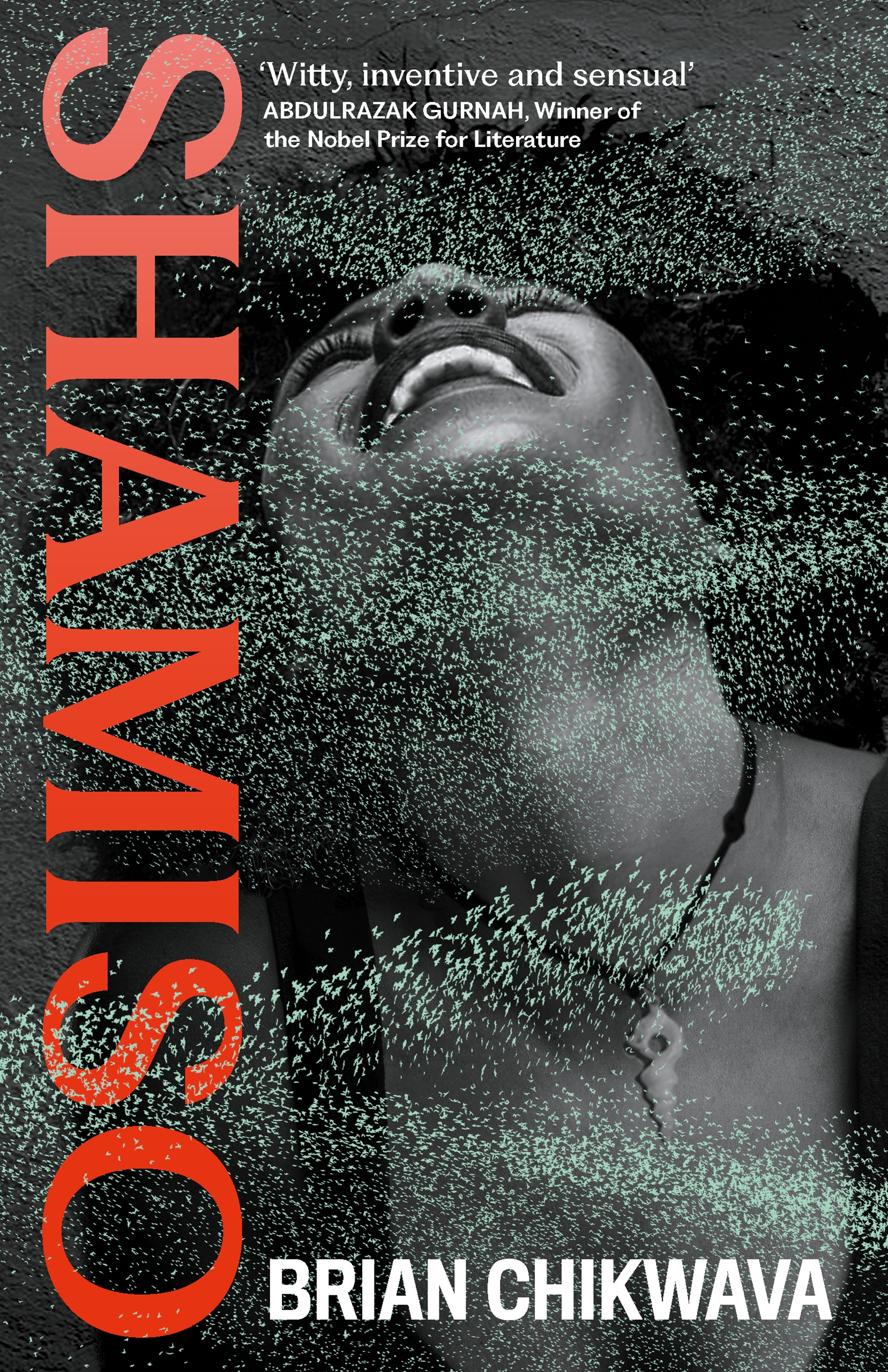
Excerpt from SHAMISO published by Canongate Books Ltd. Copyright © Brian Chikwava, 2025.
Pre-order a copy of the book here!



COMMENTS -
Reader Interactions