

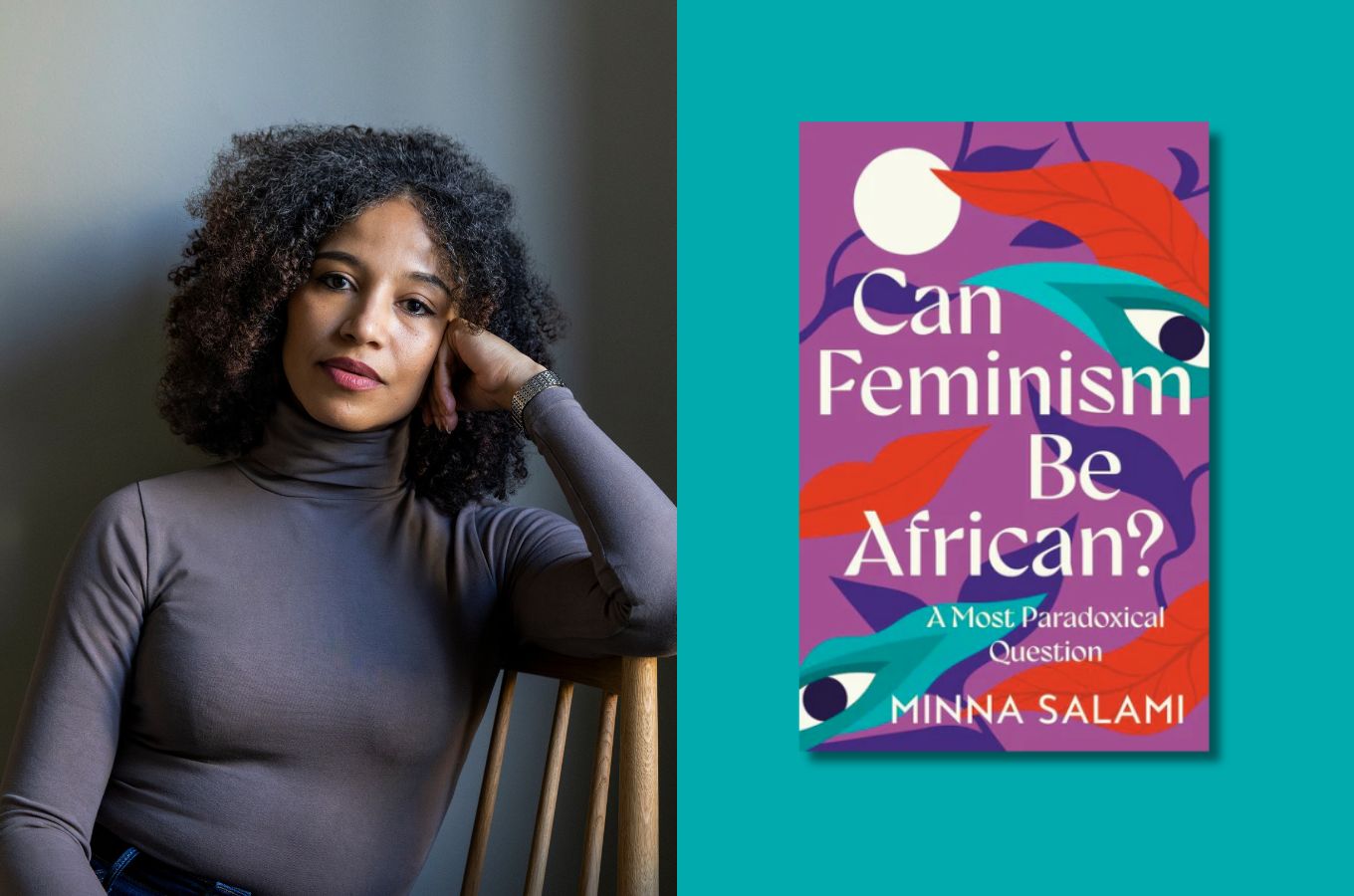
In the weeks before I began teaching my literature course The Art of African Feminist Writing, I picked up Minna Salami’s new book Can Feminism Be African? The timing couldn’t have been better. I was thinking about how African feminists have always asked what African feminism really is, and Salami’s book is a meditation on that question.
With this book, Salami enters that decades-long conversation. Buchi Emecheta once referred, in her writing, to “feminism with a small f,” grounded in everyday lived experience. Chimamanda Ngozi Adichie turned feminism into a global invitation with We Should All Be Feminists. Then came June Eric-Udorie’s Can We All Be Feminists?, centering intersectionality, and B. Camminga’s Feminism Is for Every Body, which brought in a queer and trans perspective. Each voice took the question of what African feminism is in diverse directions. Minna Salami takes her own path.
Her feminism is philosophical and emotional. She invites us to think of Africa as a place on the map with a long history, but also as an idea that lives in our imagination, our language, and our sense of possibility.
“Africa is not only a tangible place that we can map out,” she writes, “but also a non-material ‘place’ populated with beliefs, ideas, desires, emotions, and ideas that we have yet to articulate… In its totality, the Africa in African feminism is metaphysical. It is a metaphysical Africa.”
That might sound abstract, but her point is clear: Africa isn’t just geography. It is a living archive that informs how we see ourselves. And part of what it means for feminism to be African is embracing that imaginative, emotional space.
This informs Salami’s concern about discourses that reduce African feminism to policy language, viewing it through an “empowerment,” “capacity building,” and “development” lens. As she puts it:
“An African feminist political philosophy must unpack, deconstruct, dismantle, build and rebuild reality… Yet the structured understanding of empirical Africa encourages us to break down feminism into issues that can be ‘fixed,’ often through NGOs and development work. I am always left cold when policy-speak turns our struggles, dreams, and hopes into techno-bureaucratic jargon.”
Salami wants something different: a feminism alive with creativity and beauty. She argues that imagination is not frivolous. It’s revolutionary!
“The impulse to be inventive and creative may not seem apt for the serious nature of the issues African feminism addresses,” she writes, “however, rigid and dogmatic certainties lie at the root of domination and stagnation… To understand any topic deeply, we need to enliven the faculty of the imagination.”
This idea, that imagination itself can be a feminist act, runs through the whole book. Whether she’s analyzing the male-centered roots of Pan-Africanism, exploring how binaries like “Africa and Europe” or “male and female” structure power, or critiquing the blindspots in allyship practices, she keeps returning to the same question: what new worlds could we build if we allowed imagination to lead?
The final chapter, “The Pedagogy of Shakara,” brings that question home. It is the emotional heart of the book and, for me, one of its most beautiful moments. Shakara is that distinctly Nigerian idea of flair, confidence, and self-assuredness. It becomes, in Salami’s hands, a feminist philosophy. She makes it about joy as a form of resistance and the refusal to follow patriarchal rules.
Looking back, I realize that the whole book, despite its philosophical depth, is suffused with that same shakara spirit in the way it celebrates the questioning of received ideas.
By the time I finished the book, I felt the same energy I want my students to feel in my course: that feminism is a way of imagining life differently and working to bring that imagination to life, as opposed to adhering to a set of dogma.
If I have one hesitation, it is that the book’s title hints at a grand, sweeping redefinition of both “Africa” and “feminism.” What Salami gives us instead is less of a shake-up and more of a meditation. But that restraint is also its strength. Can Feminism Be African? resists easy answers. It is part essay, part philosophical reflection, and very timely. In a world obsessed with metrics and fixes, Salami reminds us that African feminism can also be about resistance and world-building.
****************
Buy Can Feminism Be African? Amazon | Bookshop.org

COMMENTS -
Reader Interactions