

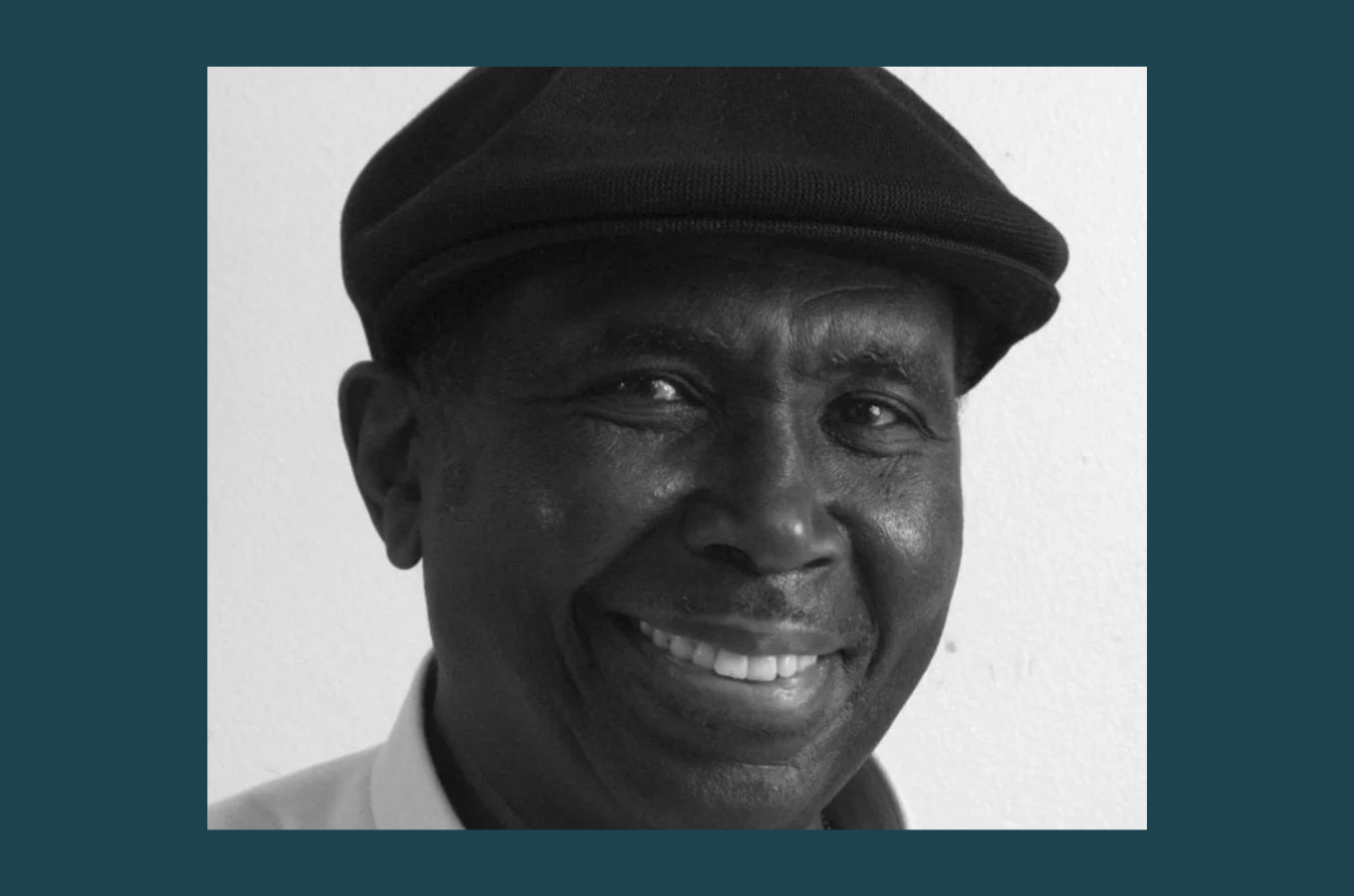
The death of Meja Mwangi, born David Dominic Mwangi, has closed the chapter on one of Kenya’s most distinctive literary voices. His vivid portrays of urban struggle, youthful aspiration and national memory placed him among the essential voices of post-independence African literature.
Where Ngũgĩ, his compatriot who also passed away early this year became globally known for his sweeping political vision and linguistic activism, Mwangi chose a different path. He did not frame the nation from the heights of ideology; he wrote from the street level. His novels were alive with the textures of Nairobi: the rhythms of casual labour, the urgency of survival, humour, and the energy of people trying to remake their lives in a city that rarely pauses long enough to let them breathe.
For many Kenyans, this made Mwangi their writer in a way no one else was. As the cultural critic Silas Nyanchwani has written, ‘Meja was ours. Kenyan to the core.’ His characters were recognisably the people one might meet on a matatu, at a construction site, or in a cramped single room in Kibera. He understood Nairobi not as a symbolic capital but as a living organism, a place where the promises of independence collided daily with the aftershocks of inequality.
This is why readers such as Lexa Lubanga have been writing on X (formerly Twitter), over and over: ‘You must read Meja Mwangi.’ For many younger Kenyans discovering his writings for the first time, this is not simply social media advice but a cultural directive: read Meja Mwangi if you want to understand the interior of this country.
Mwangi’s early novels, Kill Me Quick, Going Down River Road, Carcase for Hounds among others revealed a writer unafraid of the starkness of urban poverty or the ambiguous inheritance of the post-colony. But he did not write with bitterness. His prose carries neither the didacticism nor the overt philosophical weight that shaped the work of Ngũgĩ and other post-independence intellectuals. Instead, Mwangi’s style is crisp, cinematic, and wry. He wrote with an observational precision that made readers feel they were walking behind his characters, seeing Nairobi through their eyes.
This urban grounding made him incredibly influential to writers who wanted to explore the city as a site of contemporary Kenyan life and not merely a backdrop. There was even a young Nairobi collective who launched a literary magazine titled Down River Road, a direct homage to Mwangi’s novel Going Down River Road. The gesture affirmed how deeply his work seeded itself in new and contemporary artistic communities.
Yet for all this cultural resonance, Mwangi was also famously reclusive. He rarely appeared at literary festivals, avoided publicity, and granted few interviews. This distance was not arrogance but temperament. Mwangi seemed to believe that his service to the world was the writing itself and his stories honoured the people society often overlooked.
In this sense, his reticence became part of his legend. He was a writer who observed much and revealed little about himself; a chronicler of ordinary Kenyans who refused the trappings of fame. His perspective enriched Kenyan literature precisely because it resisted grandiosity. He focused on workers, hustlers, drifters, children navigating harsh landscapes, and lives that rarely take up space in national narratives.
As condolences and memories continue to flow online, what stands out most is how many readers speak of Mwangi in personal terms: ‘I saw myself in his pages.’ ‘This was the first writer who made Nairobi real to me.’ ‘His books taught me how to look at the city.’ These are not the usual tributes reserved for national icons. They are the tributes given to a writer whose work walked with people through their own daily lived struggles.
Mwangi’s passing comes at a moment when Kenya is wrestling with the meaning of economic belonging. In recent years, political rhetoric has popularised the idea of a ‘hustler nation,’ most prominently in President William Ruto’s campaign discourse. But long before ‘hustler nation’ became a slogan, Mwangi wrote about hustlers in the original, unvarnished sense: people for whom hustling was not a political identity but a daily condition of survival.
This is why his novels resonate so sharply now, in a Kenya where Gen Z activists have taken to the streets and digital platforms from time and again to challenge corruption, economic exclusion, police brutality, and the failures of political elites. Their struggle is part of the same continuum Mwangi wrote about: ordinary citizens fighting to claim space, dignity and a future in a nation that has not always returned their labour or loyalty.
Meja Mwangi’s passing invites us to return to his novels not as historical artefacts, but as living works that still speak to today’s Kenya, a nation still negotiating inequality, still reshaping its urban centres, still trying to hold onto hope amid hardship. His writing endures because it understands that ordinary lives contain extraordinary drama, humour and courage. In remembering Mwangi, we are reminded that African literature’s power does not lie only in the grand voices, but also in the voices that illuminate the ground beneath our feet. Kenya has lost a storyteller of rare empathy and insight, a writer who held up a mirror not to the nation-state, but to its citizens. His legacy is simple and profound: he paid attention.





Okache Odey December 20, 2025 06:49
I'm really sad to learn of the passing of Kenya's and one of Africa's early writers. At the University of Calabar in Nigeria, we read Kill Me Quick and Going Down River Road. Sleep well Meja Mwangi.