

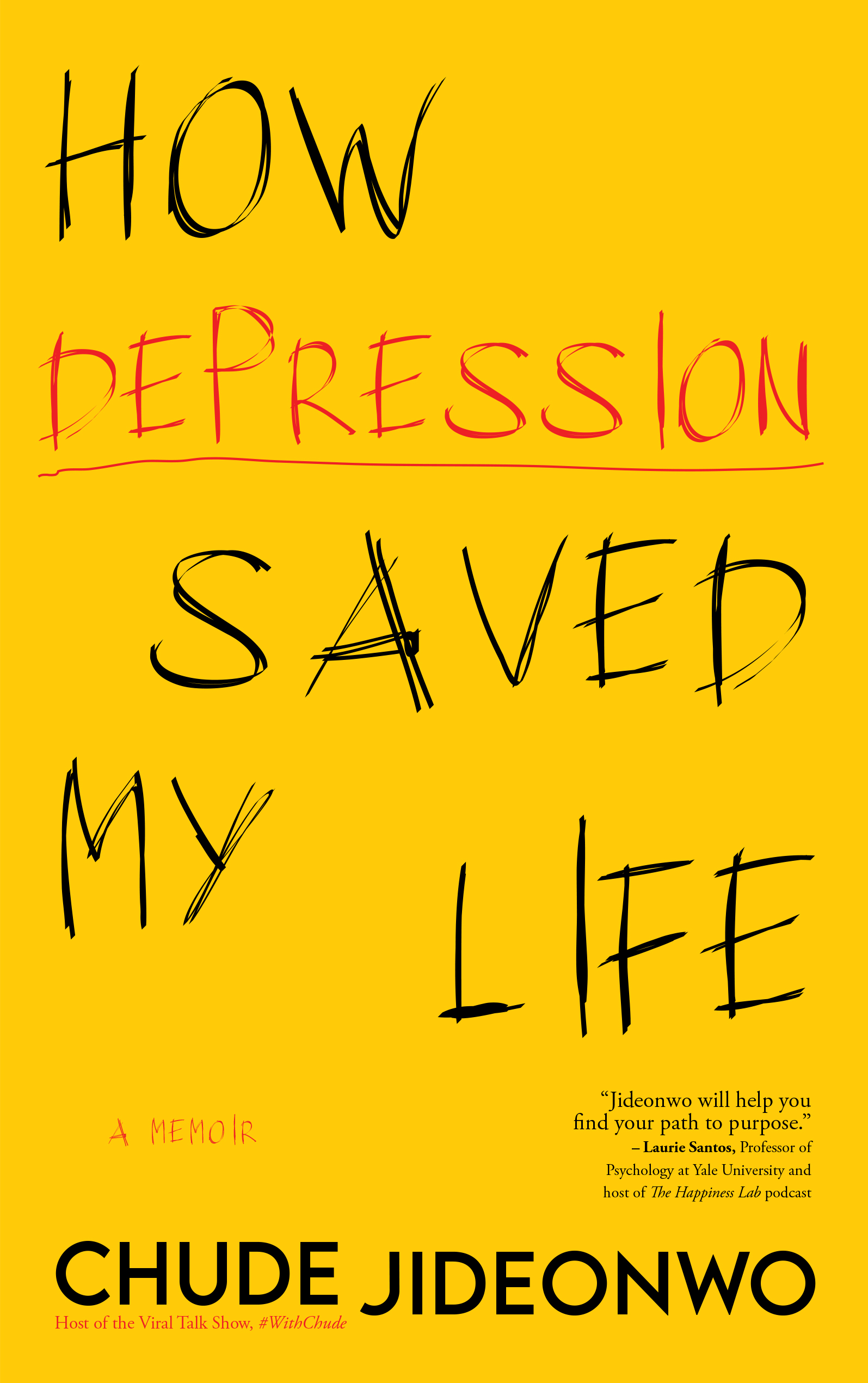
I started 2014 on a high, as I told you earlier. Then I took big risks, faced failure, kept going in the direction of what I believed, and somehow, I ended the year on a high.
So how was it that after all of this, despite all of this, all I felt was emptiness? Not happiness or excitement or sadness or even fear – just hollowness. How was it that achieving all my goals for the year led to the first real fight I had with my girlfriend?
She had said yes to me a year before. I had crushed on her for years prior, but I said nothing because I was certain she could not say yes. I didn’t consider myself attractive enough, and she was stunning, lighting up every room she walked into. I couldn’t imagine it happening, and so I didn’t even try.
And then, one day, she chatted me up and asked me out to lunch.
A few months later, after a trip out of Nigeria, we became a couple. I had fallen hopelessly in love with her before the trip. She also had, but she didn’t realise it until our dramatic flight back. I had suddenly fallen into a panic attack on the plane, struggling to breathe, heaving into a plastic bag, the air hostesses frenetic about me. As she would tell me later, it was while she ran around the plane coordinating help and then sat and held me to herself that she realised it – she was in love and she could not afford to lose me. It was a dream come true.
A week before the TEDx Euston talk, a friend, who is now one of Nigeria’s top film directors, had come to my house to help work on the script for The Future Awards Africa. As she watched my girlfriend and me in the throes of affection, deliriously happy with each other, she couldn’t help blurting, “Wow, you guys are really happy o.” Our love was that palpable.
But what my friend couldn’t have known was that, that evening, and every time my girlfriend was to leave for her house, I would feel a deep, overwhelming sadness. Textbook separation anxiety. I couldn’t bear to be alone. Scared stiff, I would beg her to stay. The light in my life stayed only as long as I was on the TEDx stage on a high, in front of a microphone on a high, on the presidential stage on a high and in the arms of my lover on a high. But as soon as I climbed off the highs, the darkness threatened to engulf me.
I was happy in the way you are happy when you have the things you want in life. When you possess the things you are supposed to want. When you get the things you thought you would never get. Those things that paint a compelling picture of success and achievement. Yes, it is real happiness. But it’s the kind that always wears off too soon. Like the high you get after a bar of chocolate. And then you need another bar. And then another.
And so when the high of that glorious weekend wore off, I sank to a depth that matched the high in steepness. I wasn’t just physically tired; I was emotionally exhausted. Hollow.
So I told my girlfriend I couldn’t go on our scheduled Christmas trip. I couldn’t bear to walk on another tarmac. All I wanted was for us to check into a hotel, switch off our phones, close the blinds, turn off the lights, and be alone. Nothing in the world could give me joy at that time. I wanted to be away from everything.
It was in that hotel room – I eventually checked into it alone – that I made the decision that changed my life. I wrote down in my diary: I want to begin a journey to joy.
We broke up a few weeks after, just after my presidential candidate had won a historic election. A professional high, an emotional low.
Solely because of her, fights were rare in our relationship, but we had another one after the Christmas fight that was particularly tough and didn’t make any sense to me at the time. In that moment, I told myself that this fight was irreconcilable and, amongst other things, it meant we were not compatible. But years later, I now know I was looking for an excuse to leave. I felt, foolishly and selfishly, that there was something even better out there. This relationship was not the one.
But the hollowness remained. In fact, on the morning of my birthday, just after we had broken up, I had spent time in the hotel begging someone else to love me and be with me.
And after the interlude of my birthday, I was back where my heart felt like it ached deeply, where I needed to be busy to feel connected to life and living. I was back to a familiar place where I didn’t feel complete, despite all the love and care that I was logically aware of in my life, from my family and from my friends, and all the success that surrounded me.
People often ask me how I connect so powerfully with the guests on my show, #WithChude, and why they trust me enough to share deep personal truths with me that they have never shared anywhere else. I struggled with the answer for a while, until I figured out two things. The first is that this is clearly a gift, something I uncovered when I conducted my first interview two decades ago.
The second, and the more important one, is that I have plumbed the depths of my own emotions. Being genetically prone to extreme emotion, which I will talk about later, there is barely any emotion I haven’t experienced intensely. So when a guest is speaking, I can often think of a time in my own life when I experienced that same emotion, if not the same event. And we both feel the energy of that connection.
When actor and producer Toyin Abraham, my first guest when my show launched officially, described the emotional anguish that pushed her to lodge in a hotel so she could take her own life, I remembered the many nights that I left my home for a hotel because it was easier to exist in the midst of noise and others. I remembered the many times I needed to escape my own life. I could see in Abraham’s eyes as she told her story; she wanted to see if I really understood, and I don’t know if she believed me when I said, “I totally get it,” or if she thought it was an interviewer’s attempt to make her feel at ease.
When it comes to emotions, there are no “first-world problems,” there are only problems. The intensity of sadness, the sense of being in a wasteland that a person can feel about their life has no respect for their accomplishments, reputation, or the logical state of affairs. The academic term, ‘subjective well-being’, could not be more accurate for describing the lack of objectivity that negative emotion can bring. And it can come from anywhere. Its origins don’t have to make sense. Sadness brings its own momentum.
On-air personality Simi Drey help me make sense of it recently. “I had a beautiful childhood,” she told me on the show. “My parents loved me. I was in good schools. We lived a comfortable life, but I can’t remember a time in my childhood when I was not depressed.” Hearing her, I finally stopped feeling that I was betraying the beauty of my childhood. My parents loved me, and for my sake, my mother sacrificed many opportunities, emotional and financial, to stay in a sometimes-difficult marriage. And despite the lack that attended the family when my father lost his job, they did their best to shield me. There was no abuse and no abandonment, and yet I don’tremember a time in my childhood when I didn’t feel some form of sadness.
—
Excerpt from How Depression Saved My Life published by Narrative Landscape Press. Copyright © 2026 by Chude Jideonwo.
Order a copy here




COMMENTS -
Reader Interactions