

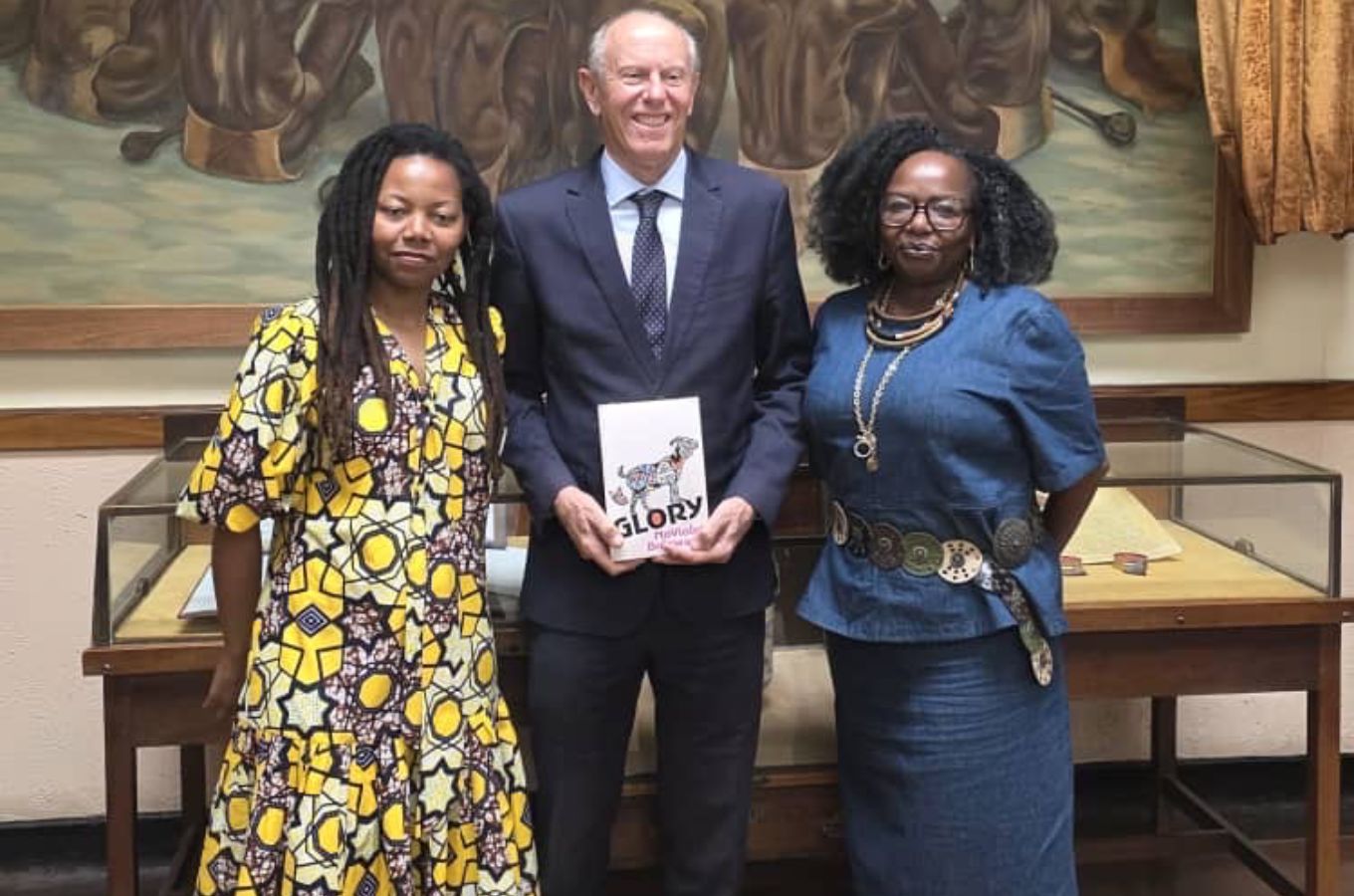
The Caine Prize for African Writing returned to Zimbabwe for a three-day anniversary programme in December 2025, placing NoViolet Bulawayo’s historic Best of Caine Award win at the center of celebrations marking the prize’s 25-year commitment to African literary excellence.
Bulawayo, who won the Caine Prize in 2011 for her short story “Hitting Budapest,” was selected from all past winners by a judging panel chaired by Nobel Laureate Abdulrazak Gurnah, alongside Jennifer Nansubuga Makumbi and Tony Tagoe, as the author of the most outstanding winning story in the prize’s quarter-century history. The Best of Caine distinction, created specifically for this milestone anniversary, recognizes both the enduring impact of Bulawayo’s work and the Caine Prize’s role in identifying writing of lasting global significance.
The anniversary programme opened December 15 in Bulawayo, where NoViolet Bulawayo and Caine Prize Chair Ellah Wakatama OBE FRSL were received by Mayor Senator David Coltart at the Mayor’s Parlour before proceeding to a public reading and conversation at Mzilikazi Library. In conversation with Wakatama, Bulawayo reflected on the universal humanity anchoring her work, observing that “death is death in Zimbabwe just as it is in Spain; the same is true of love and of childhood.” The evening concluded with Bulawayo receiving a gift of photography from writer, filmmaker, and photographer Elliot Moyo, before the programme moved to Harare for the central Best of Caine Award reception on December 16.
The Harare reception brought together writers, publishers, readers, and literary stakeholders for an evening featuring live musical performance by Zimbabwean singer-songwriter Raven Duchess. Wakatama, drawing on her experience as writer, editor, and cultural leader, emphasized the significance of celebrating this milestone in Zimbabwe and spoke to the prize’s responsibility not only to recognize excellence but to actively invest in the development and visibility of African writers. Bulawayo reflected on her writing journey, the lasting affirmation of her 2011 win, and the importance of ensuring Zimbabwean stories continue to travel across borders and media, before closing the evening with a reading from “Hitting Budapest.”
The programme concluded December 17 with an intimate writers’ workshop at the Friendship Bench Hub in Harare, hosted by Wakatama, Bulawayo, and author Petina Gappah. Responding to ongoing concerns around publication pathways for Zimbabwean writers, the session focused on craft, discipline, and persistence, offering practical guidance grounded in the facilitators’ combined literary experience. The workshop format reflected the Caine Prize’s evolution under Wakatama’s leadership beyond recognition ceremonies toward sustained investment in African literary infrastructure and writer development.
When Bulawayo’s Best of Caine win was announced in September 2025, Brittle Paper noted that “Hitting Budapest” had become “one of the most anthologized African short stories of the past two decades,” with the story’s examination of childhood, poverty, and survival in post-2000 Zimbabwe maintaining its resonance across contexts and generations. The Zimbabwe anniversary programme, supported by Carnegie Corporation of New York and Meikles Foundation, demonstrated how the Caine Prize continues positioning African writing as central to global literary conversations while ensuring that celebration translates into tangible support for writers navigating limited publication infrastructure. As the prize enters its next quarter-century, this convergence of legacy recognition and future investment signals its commitment to African storytelling as both art form and sustained institutional practice.




COMMENTS -
Reader Interactions