
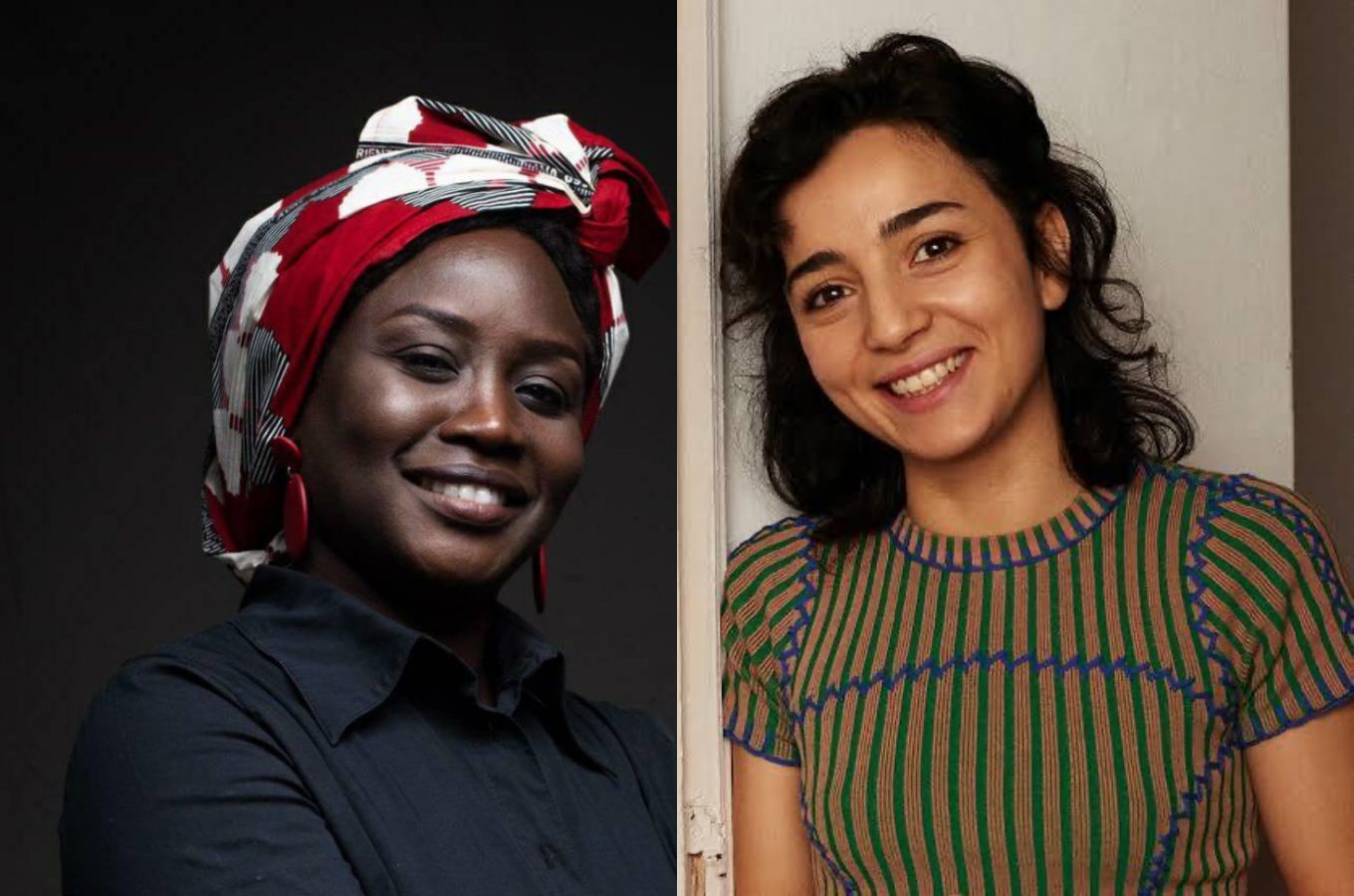
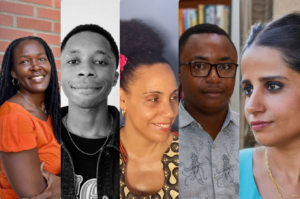
Two African writers are among the six finalists for the 2026 Internationaler Literaturpreis, the prestigious German prize for contemporary literature in translation awarded by the Haus der Kulturen der Welt (HKW) in Berlin. South Sudanese novelist Stella Gaitano and Moroccan-Dutch writer Safae el Khannoussi both appear on a shortlist that the prize’s jury, led by writer Senthuran Varatharajah, describes as six novels about states of emergency, about “people falling out of our species, because falling out of our species is the history of our species.
Gaitano’s shortlisted novel, Eddos Goldenes Lächeln, translated from Arabic into German by Larissa Bender and published by Kiepenheuer & Witsch, is her most recent work of fiction, set against the war in South Sudan. The jury describes its protagonist as reduced by war to her most elementary form, navigating survival through her sense of smell after language itself has been stripped away. Gaitano was born in 1979 in Khartoum to parents from South Sudan and has spent her career writing in Arabic about South Sudanese experience, a deliberate and politically charged choice in a country whose official language is English. She has said she chose Arabic so that northern Sudanese, who often knew nothing of how southern Sudanese were living and feeling, could finally hear those stories. Her debut novel Eddo’s Souls made history in 2020 as the first South Sudanese novel to win the PEN Translates Award. She has lived in Germany since 2022 as part of the Writers-in-Exile Programme of the German PEN Centre.
El Khannoussi’s shortlisted novel, Oroppa, translated from Dutch into German by Stefanie Ochel and published by Carl Hanser Verlag, is a multi-voiced, continent-spanning debut that the prize jury calls an exegesis of longing: a novel about those seeking protection, the disposable and the discarded, those already on the fringes of Europe and those still waiting on the coasts of North Africa. Born in Morocco and raised in Amsterdam, el Khannoussi studied political philosophy and worked for the literary magazine De Gids before publishing Oroppa, which won the 2025 Libris Literature Prize, the most prestigious award for Dutch-language fiction, with the jury saying they were overwhelmed by its quality. The Libris Prize had never in its thirty-year history been awarded to a debut novel before Oroppa. El Khannoussi is currently pursuing a PhD in political philosophy on abolishing prisons.
The full 2026 shortlist also includes Julia Cimafiejeva’s Blutkreislauf, translated from Belarusian by Tina Wünschmann (Edition.fotoTAPETA); V.V. Ganeshananthan’s Der brennende Garten, translated from English by Sophie Zeitz (Tropen Verlag); Bahram Moradi’s Das Gewicht der anderen, translated from Farsi by Sarah Rauchfuß (Wallstein Verlag); and András Visky’s Die Aussiedlung, translated from Hungarian by Timea Tankó (Suhrkamp Verlag). Notably, the prize recognises both the author and the translator, each pairing is celebrated as a collaboration, reflecting the HKW’s commitment to translation as a literary act in its own right.
The Internationaler Literaturpreis has since its founding been one of the few major European literary prizes that systematically centres writing from the Global South and from languages marginalised within European literary culture. The winner will be announced at the HKW in Berlin later this year.




COMMENTS -
Reader Interactions