
Every week I take the bus out of town and walk the last mile to the house where my father is dying by inches. It is why I moved to the nearest town in the first place — close enough to visit, far enough that I could still breathe.
Today he was calm. Too calm. He has been like that for some time now, Nurse Chioma tells me, wringing her hands the way she does when she’s decided to worry out loud. She thinks it might be depression.
I almost laughed. Not long ago she was the one complaining about him — how he barked orders, how he called her useless in three languages, how he threw his medication across the room like a king refusing tribute. Now she misses it. I told her as much, gently, the way you tease someone grieving. She didn’t find it funny.
I brought pineapple, pear, coconut — his favorites, back when he had favorites. I cut them into a fruit salad the way my mother used to, though I never got the ratios right, and set it beside him. He looked at it the way you’d look at a photograph of a stranger. Didn’t touch it. I talked anyway — told him about work, about a client who’d tried to negotiate my invoice down by complimenting my shirt, about the traffic on the expressway that had turned a forty-minute trip into ninety. He used to love hearing about traffic. Something about other people’s small suffering used to please him.
When I stood to leave, he whispered something.
It took me a moment to place it — not because it was unfamiliar, but because it had been so long since I’d heard it spoken that my ear had to go looking for the shape of it. Our language. The old one. The one my mother sang lullabies in before the world made her stop.
I know what you did.
Nurse Chioma’s head snapped up. “What language is that?” She’d noticed him speaking it more and more, she said, usually at night, usually to no one.
I looked at my father — really looked at him, at the collapsed architecture of a face that once made grown men weep into the dirt — and I smiled the way you smile at something you love and cannot fix.
“Gibberish,” I told her. “Dementia does strange things.”
There was a time I would have felt the lie curdle in my chest. A time I’d have knelt by his chair and tried to explain myself, tried to be good, tried to be forgiven. I don’t do that anymore. This — the fruit, the visits, the lie — this is the best I have to offer, and he will have to make do. Understanding that was, for him, always going to be like teaching a fish to live in the sky. Impossible. Beneath him.
Because my father was a god.
***
Our home did not exist on this side of things. Amaj’n — that was my father’s name, before it was filed down into something humans could pronounce — had been given a planet by the Creators, the way a parent might hand a child a terrarium and say don’t kill it.
My mother used to tell us, my siblings and I, about the contest they’d held to choose his mate — hundreds of women from noble bloodlines, and she’d won it anyway, arriving with dirt still under her fingernails from her father’s fields. She told it like a joke on the nobility. My father told it like a joke on fate. I think it was the only story either of them ever agreed on the ending to.
The Creators left instructions. Govern, but do not interfere. Watch, but do not touch. The planet was theirs to build — an experiment, though no one used that word to us as children. For a hundred years the people were peaceful, and my father wore his crown like a hat he’d forgotten he was wearing. Then, as people do, they progressed, and progress brought difference, and difference brought war.
They prayed to him. I remember that — the sound of a whole world praying, like wind moving through wheat you cannot see. He refused to answer. Not in my instructions, he’d say, and go back to whatever silence he kept for himself. I was young enough to believe logic could move a god. I told him the Creators had never explicitly forbidden intervention — only never granted it. A technicality. A loophole built from grammar.
For the first time in my life, my father listened to me.
Then he struck me across the face.
Blasphemy, he said. Rebellion. He said other words too, uglier ones, while the whip found my back in rhythms I still feel in certain weather. Afterward, when I lay shaking on the floor of his hall, he gathered me up like something precious he’d almost broken, and told me, softly, that we do not act without the Creators’ permission. Never. He said he had sent word. He said they would answer soon. I believed him the way children believe the sky won’t fall — not because it’s true, but because the alternative is unbearable.
They did not answer soon. They did not answer at all, not for a long time, and by the time they did, the world had already begun eating itself. The people, having exhausted war, turned to weapons that didn’t need armies — viruses built in rooms, released into air. It killed my mother without ceremony. It killed all my siblings but one. It came, at last, for the god himself, indifferent to bloodline or crown.
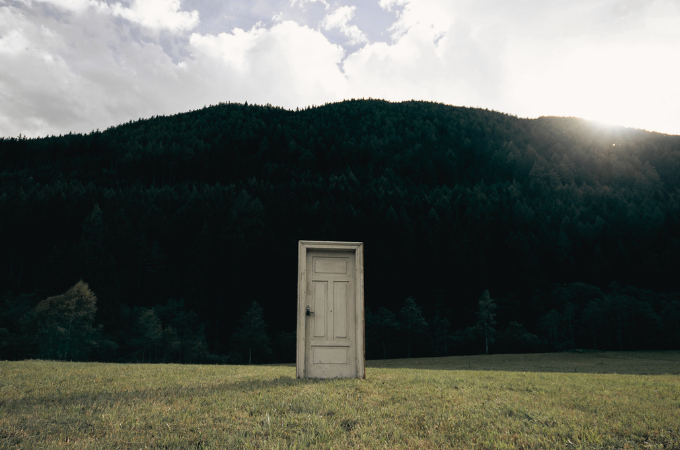
When the Creators finally spoke, it was not absolution. It was an address. A door. Go here, they said. Hide. Preserve what’s left. Earth.
We will wait, my father told my sister and me, the two of us all that remained of a royal house reduced to three suitcases and a language no one here would ever speak back to us. Once they give permission, we return. We fix it.
We are still waiting.
***
The years did what years do. Our powers thinned like a signal losing its tower, until they were gone, or nearly. I struggled through a business degree I never wanted, filling out forms in a language that had no word for what I used to be. My sister buried herself in science, chasing some private penance in labs and journals, trying to fix this world since she could no longer fix the one that mattered. Maybe next week I’ll convince her to visit him. I say that most weeks.
My father waited. That’s the whole of what dementia did to him, really — it didn’t take a mind so much as strand one, mid-vigil, still facing a door that was never going to open.
Then, one night, I heard the whispers.
Not sound exactly — more like the pressure change before rain. Prayer. Faint, threadbare, but ours, crossing whatever distance separates where we ended up from where our people had scattered to. Some had survived. Enough of them, still calling out into an empty sky, for the calls to reach me across universes. The more I listened, the more I found I could hold — until one night I found I could cross.
The world on the other side was a garden gone to rot, exactly as we’d left it, only worse, tended now by men who’d learned to call cruelty order. I did what my father never let himself do. I answered.
It was, if I am honest, magnificent. Fury has a shape when it’s earned, and I gave it one. I do not regret it, and I have stopped waiting to.
I expected the Creators to strike me down, or at least to speak — some verdict, some punishment to match my father’s whip. They said nothing. They have never said anything. I have started to wonder if silence was always the entire answer, and my father simply never had the nerve to hear it that way.
I didn’t stay long on the other side. Even with his mind unraveling, I couldn’t risk him knowing. Some part of him — the part still standing sentry at that door — would never forgive me for finishing what he refused to start.
These days I visit once a week, sometimes less, just to be sure the world is holding its shape without me. I bring the fruit. I make the salad he won’t eat. I tell him about traffic.
I knew, of course, that he would find out eventually. Gods remember what men forget last.
I hugged him goodbye today, the way I always do — carefully, like something already breaking — unable to explain myself, unable to explain the truth I’ve carried since the whispers first found me: that our people were never anything but an experiment, and, in the end, so were we. The only difference between my father and me is that I now governed myself.
He, I think, is still listening for the door.
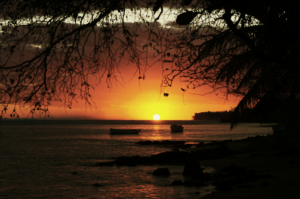
Photo by Francesco Sommacal from Pexels

COMMENTS -
Reader Interactions