

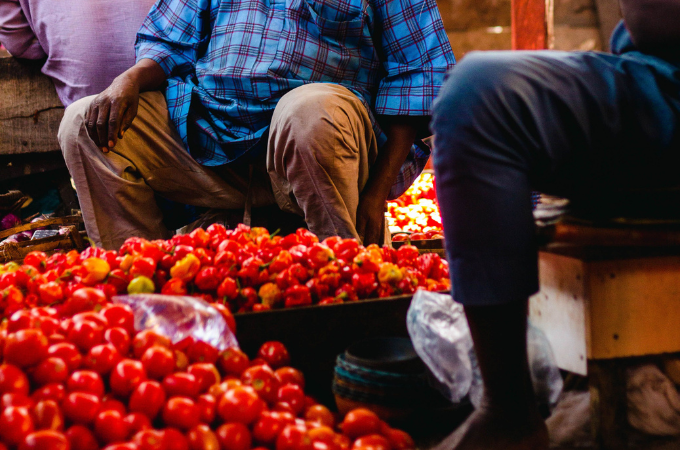
Mallam calls it dār. The elders call it ilé.
I measure the distance between the two words,
an imaginary tape widening between my teeth.
Outside, the rain hammers on the leaking roofs
flapping the iron sheets until they slap against the ceiling.
The red muddy paths wind through the compound,
narrowing until Nana and Aunty cannot pass
without brushing shoulders.
In the afternoon heat, the elders sit under the neem tree,
sorting dry peppers into woven baskets,
their thumbs stained orange, their red eyes fixed upon the mud.
No one turns when the tea goes cold in the glass.
I look into the long wall mirror in the corridor,
the glass spotted with mercury rot,
catching a stranger with my mother’s jawline.
In the yard, the roses have grown thick and dark,
their stems stout as thumbs, heavy with fat thorns
that catch on the hem of my skirt.
Near the well, a rabbit sits frozen in the high grass,
its wet, black eyes reflecting the sun,
its small mouth chewing a torn lizard.
I walk along the stalls where fresh meat is sold.
The shops exhale kerosene and wet dung.
My sandals sink into the black mud,
and my throat goes dry as dust.
I no longer ask the town for its blessing.
I unlace my shoes at the gate,
sit in the darkness of my inner room,
listening to the chaos gripping the house from outside.
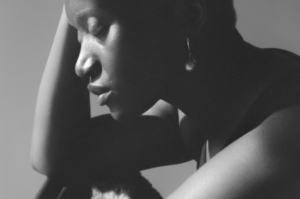
I count the ribs beneath my linen:
twelve on the left, twelve on the right,
a quiet cage built just wide enough to live in.
Photo by Jonathan Chukwudifu from Pexels


COMMENTS -
Reader Interactions