
I had braced myself for a difficult day, but even so, I had not expected my car battery to die. At the end of work, when I press the power button, there is a spluttering noise, followed by silence.
At first, I’m puzzled before I realize that I’d left a light on earlier.
Staring at my car with exhaustion, I recall when I first bought it. Chima, who drives a sleek, brand-new BMW SUV, had found my process amusing. I had researched extensively before settling on this one. I had been proud of the price I secured for my Toyota Highlander and the frugality of my purchase. But today, as I sit in the driver’s seat of my silent car, I feel no pride.
I call Chima, and he walks me through jump-starting the battery. His voice is steady, but there is something in his tone that suggests he is preoccupied. Perhaps he is having a difficult day of his own. With his help, the engine rumbles to life, and I am relieved.
The drive home feels endless, but I am looking forward to flopping down on the couch and putting my feet up, and this motivates me. When I arrive home, I find Chima in the living room. He is lying on the couch with a lightweight blanket draped over him. He appears worn out, his eyes darting behind me.
“Where are the kids?” he asks.
Is this a trick question?
“What do you mean? Aren’t you the one who usually gets them from school?”
His fingers tighten around the blanket at my words. He sits up, pushing them aside. My eyes trail the movement apprehensively.
“I called you this afternoon,” he says slowly, each word carefully measured. His teeth seem to be clenched around the words, and I search his face for anger. But it’s not there. At least not clearly.
“I called you before the thing with your car. I told you I wasn’t feeling well and that I was heading home. I asked you to pick the kids up.”
A cold sensation creeps into my chest. “I don’t remember that.”
Chima rubs his forehead, his gaze sharper, his anger now obvious. He swings his legs off the side of the couch but stays seated. “You don’t remember? I reminded you when you called about your battery. I even sent you a text.”
Hands shaking, I pull my phone out of my handbag, and there it is.
Obi m, don’t forget to pick up the kids.
A missed call and a voice message echoing the same reminder.
No no no no no!
I grab my keys, my heart pounding so loudly that I wonder if he can hear it.
“Drive safely!” he calls after me. “And get some Pepto-Bismol on your way back.”
“Okay.” I’m already halfway out the door. My phone is ringing, but I ignore it.
As I start the car, grateful to have no more battery drama, my phone rings again. The sound is distracting and annoying until I see the name flashing on the screen: Uzo.
I answer quickly.
“Mom, where are you?” Uzonna asks, his voice level but firm. At fourteen, he is the only one of our children with a cell phone.
“I’m on my way,” I say, easing out of the driveway as the call switches to hands-free. “Ten minutes, max. Just hang tight.”
“Okay. We’re all at Chidinma’s school,” he says. “We’re fine. And Mom?”
“Hmm.”
“Drive safe.”
I exhale, a small wave of relief settling in my chest. I thank God, for what must be the hundredth time, that my eldest is so responsible. It’s no small thing, the way he manages his siblings as often as he does.
“See you soon,” I say as I drive down the street.
Every stop sign feels like an obstacle. I remind myself to breathe, to be calm. When I finally pull into the parking lot, I see them by the elementary school basketball court. Uzonna is dribbling a ball with Chisom and Chidinma, their laughter carrying over to me easily. Toochi, however, sits apart, drawing patterns in the dirt with a stick.
Uzonna attends the high school down the street, Toochi is in middle school, and Chisom and Chidinma are at the elementary school. All their schools are within walking distance of each other. After dismissal, they usually meet up at the elementary school for pickup.
Chisom spots me first. “Mom’s here!” he calls out brightly.
The others turn toward me. Uzonna takes Chisom’s hand, smiling as they approach, his steps weary. Toochi’s fist is clenched around her backpack straps, her narrowed eyes boring into mine while Chidinma bites her lips.
“Ndo ñu,” I say. I’m sorry. “My car battery died, and I had to figure it out.”
It is not a lie. At least not fully.
Toochi huffs. “These things only happen on the days you’re supposed to pick us up. Isn’t that exactly why Dad does it all the time now?”
The words land as intended. For a moment, no one speaks.
Uzonna is the first to break the silence. “Toochi! Greet Mom properly!”
She doesn’t respond. Her fists clench tighter around her backpack.
“And we’ve talked about the tone you use with Mom,” he adds.
I blink. My eldest son now speaks with a quiet authority. It makes me feel a familiar tug of pride, surprise, and something darker. He shouldn’t have to defend me.
“Good afternoon, Mom,” Uzonna says, coming close for a hug. His arms are longer than I remember, and for a moment, his chin rests against my shoulders before he steps back.
The others echo him. Chisom and Chidinma wrap their arms around me, but Toochi merely mutters a greeting before slipping
into the car. My youngest fiddles with his booster seat as I take my place behind the wheel.
It’s okay. All I have to do is find a way to get through today. I start the engine, shift into drive, then abruptly back into park. Glancing over my shoulder, I check that everyone is buckled in. A small, involuntary tremor dances through my fingers as they tighten around the wheel. I exhale again.
“Mom, can we stop for ice cream?” Chisom asks.
My thoughts screech to a halt.
“Well, that’s the only thing that will save this day,” Toochi says.
“Yes, ice cream. I can do that.” I turn on the blinker.
Grateful for a second chance to improve their day, I stop by the ice-cream place closest to our house, and we all walk in. Given the time of the day, it’s mostly filled with young children and their parents, probably on their way back from school too.
“I’m going to get all the flavors,” Chisom says to Chidinma.
“You’ll get sick if you do that,” she replies.
“Nah, I wouldn’t. I’ve done it before.”
I smile as I watch them choose their options. The scent of different flavors swirls pleasantly together. Even Toochi is chatting with Uzonna, her face relaxed.
After everyone has chosen, we file back into the car. The whole way home, Chisom chatters about his friends and school. He describes everything vividly, including how someone fell over in class. That is a feat in itself, especially since he is still strapped into his booster seat. I laugh a few times.
For the first time all day, I am able to take deeper breaths.
“Good afternoon, Dad,” Chisom calls as soon as we step inside the house. “Mom got us ice cream!”
Chima pushes himself upright on the couch, and the blanket slips down his legs. There is something rigid about his movements. The children chorus their greetings to him, and he replies to each one, deliberately, before he turns to me. The irritation from earlier is gone, replaced by something flatter.
“You stopped for ice cream,” he says.
I nod, wondering if I’ve forgotten something.
“Did you get the Pepto-Bismol?”
That’s what I forgot.
The children are already heading upstairs, their voices fading down the staircase. Chima keeps watching me.
I open my mouth, but I don’t know what to say. The silence stretches.
After a moment, he exhales. “It’s fine.” He shifts, lying back down, and pulls the blanket up again.
You hurt everyone around you.
My chest throbs. I hurry upstairs, open the medicine cabinet, and scan the shelves too quickly. I search again, pushing things aside with shaky hands. When I’m about to give up, I find it. There is an unopened bottle tucked at the very end behind a box of Band-Aids. Unexpired.
I stand there for a second, holding it as if it isn’t real, then head downstairs and hand it to Chima.
“I found some Pepto-Bismol,” I say.
“Thanks, obi m.”
He reaches out, takes it from me, but does not sit up. His eyes stay on the ceiling.
—
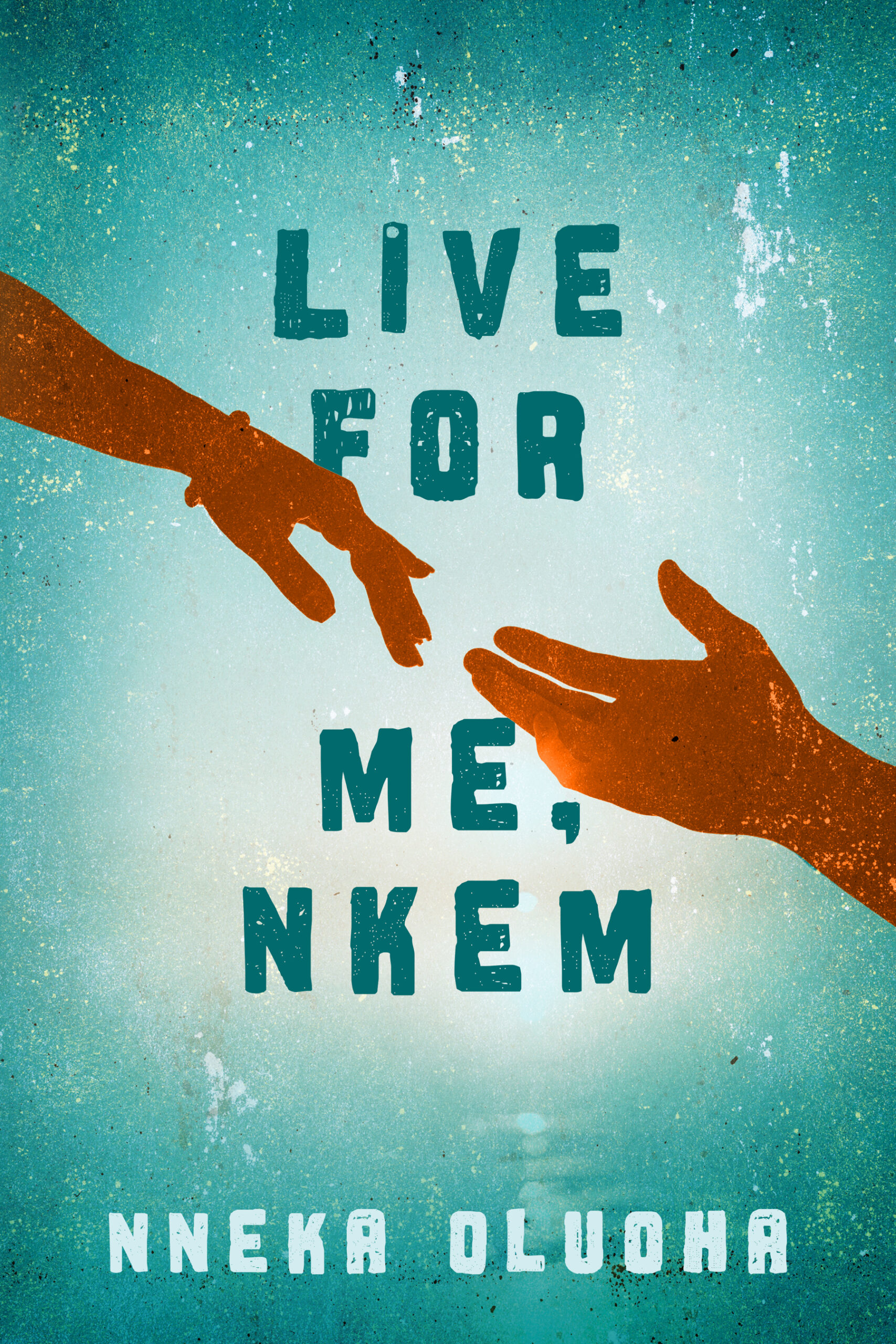
Excerpt from Live For Me, Nkem published by Köehler Books. Copyright © 2026 Nneka Oluoha.
Preorder a copy of the book here.


COMMENTS -
Reader Interactions