

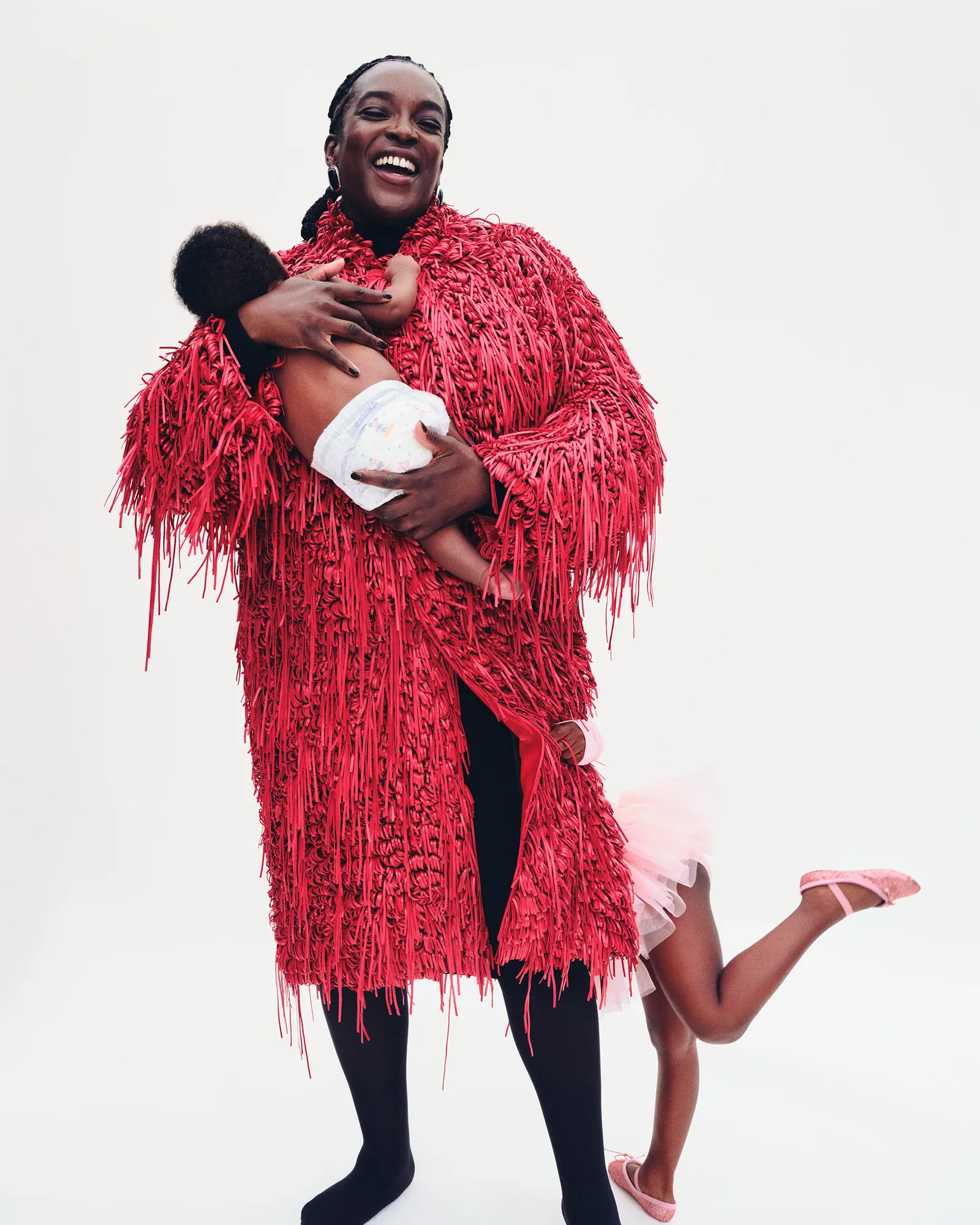
Novelist Oyinkan Braithwaite sits down with actor Wunmi Mosaku for the October 2026 issue of British Vogue, bringing together two Nigerian-British creatives for a conversation that moves between motherhood, Nigerian identity, Hollywood, fashion, and the pressures of being seen.
The interview also marks Mosaku’s first public confirmation that she has welcomed her second child. In the accompanying photoshoot, she appears with her 10-week-old son and her nearly three-year-old daughter. The actor had kept the birth largely private after announcing her pregnancy earlier this year.
Mosaku’s pregnancy became public in January, when she appeared at the 2026 Golden Globes in a custom yellow gown by Matthew Reisman. In a personal essay published by Vogue ahead of the ceremony, she explained that pregnancy is traditionally something to be protected rather than publicly announced in her Nigerian culture. She had initially wanted to keep the news private but decided to stop concealing her bump as awards season brought increasing public scrutiny.
The timing was significant. Mosaku was in the middle of an awards campaign for Ryan Coogler’s Sinners, in which she played Annie, a Hoodoo practitioner opposite Michael B. Jordan. Her performance earned her an Academy Award nomination for Best Supporting Actress and a BAFTA win.
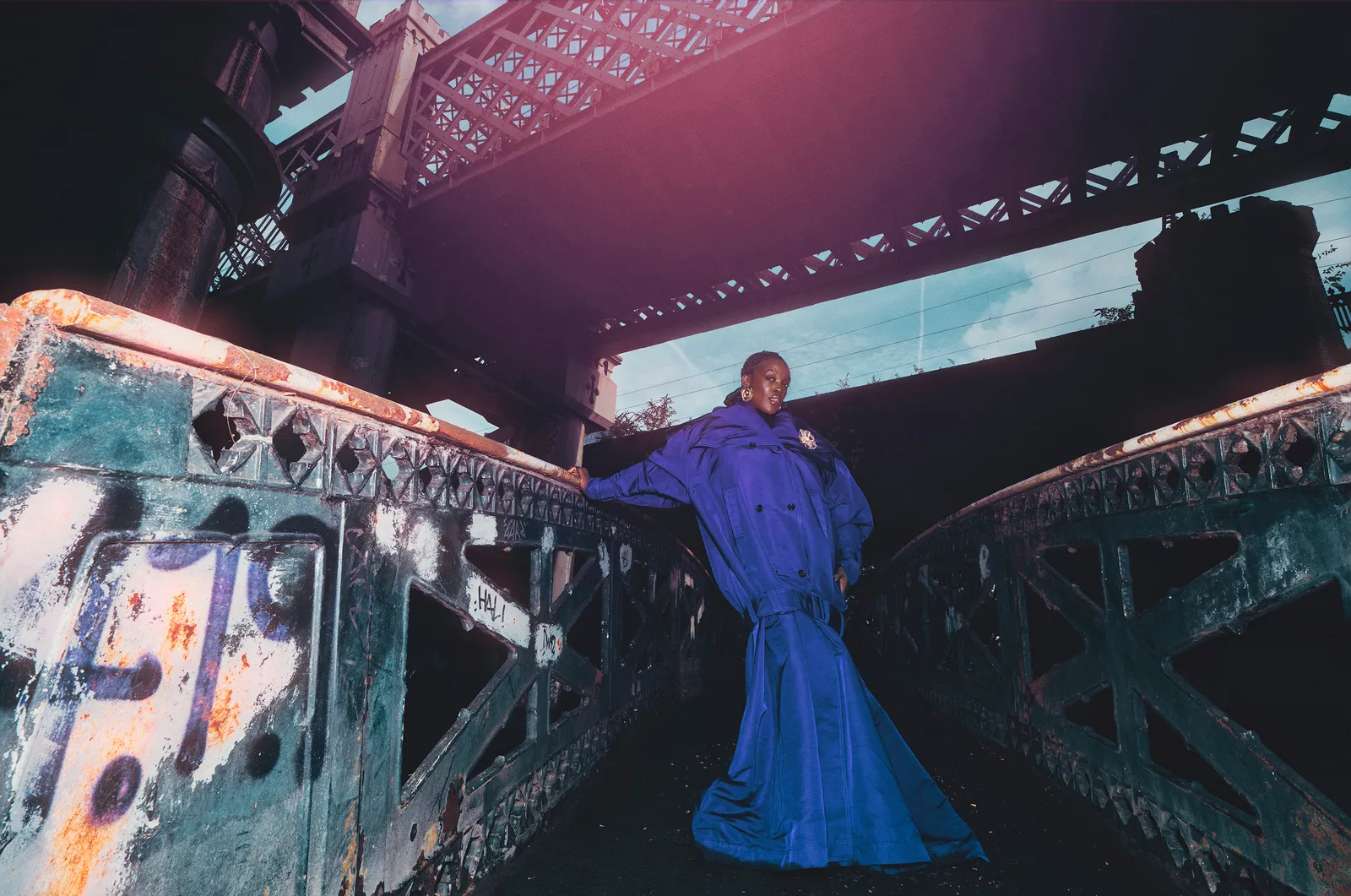
Pregnancy accompanied Mosaku throughout the awards season. In her conversation with Braithwaite, she recalls dealing with pain, stretching ligaments, and exhaustion while navigating the demands of the red carpet. Yet she also describes the experience as “the most inclusive red carpet run I’d ever had,” crediting designers for embracing her changing body without asking her to compromise.
That experience has fed directly into Mosaku’s next project. She is preparing to launch Iyadé, a maternity and nursing-wear line whose Yoruba name means “mother has arrived.” The idea grew from her own frustrations with maternity clothing and her desire for pieces that are practical without sacrificing style. Among the designs is a nursing-friendly jumpsuit that Mosaku says solves what she sees as a surprisingly persistent problem: being able to breastfeed without having to completely undress.
Motherhood is only one thread in Braithwaite’s conversation with Mosaku. The interview also returns to the actor’s childhood in Manchester, her Nigerian heritage, her relationship with Yoruba, and the experiences that have shaped her career. Mosaku’s parents moved from Zaria, Nigeria, to Manchester when she was one, and she later trained at the Royal Academy of Dramatic Art, graduating in 2007.
For Braithwaite, the interview represents a turn from novelist to interviewer. She is best known for My Sister, the Serial Killer, her 2018 debut novel, which became an international bestseller and has been translated into 30 languages. She has since expanded her work across fiction, screenwriting, and illustration.
Her British Vogue profile of Mosaku arrives at a particularly significant moment for the actor: a new child, a new clothing venture, a major film breakthrough, and another chapter in a career increasingly shaped by her Nigerian and British identities.
For Mosaku, however, the conversation seems to come back to something more intimate—the question of what it means to make room for all the different versions of herself at once: actor, mother, Nigerian woman, Mancunian, designer, and now, as she puts it, someone determined to create the things she wishes already existed.







COMMENTS -
Reader Interactions