

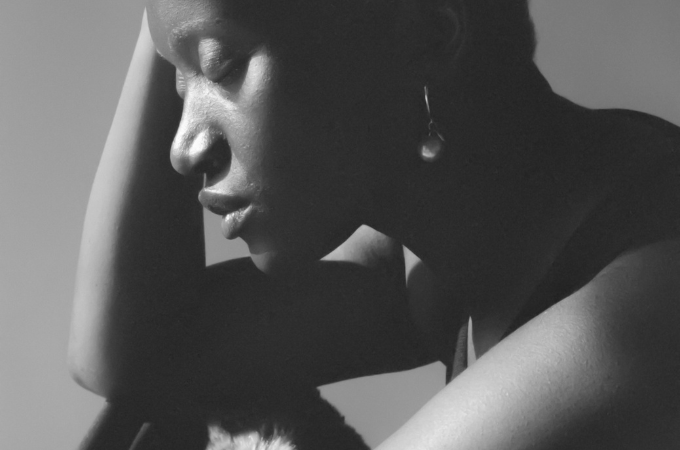
I held onto the collar of his shirt and bit wherever my teeth could find flesh — his neck, his jaw, the soft skin beneath his ear. My nails dug into him until I felt skin give way beneath them.
He did not fight me. Perhaps because he knew flesh was too small a price to pay. My anger was not that Daberechi had died. Children died. The gods took what they wanted and mothers learned to carry silence where laughter used to live. My anger was that he had become her pathway. Woe unto the man through whose hands my daughter had met death.
I had said those words long before I became a mother. Back when children were still things I imagined would arrive laughing into my arms. Before I knew that some women spent their lives giving birth only to become experts at burying hope. Perhaps I had always known, I was never meant to keep a child. My mother certainly believed so.
The day I announced, in the shrill voice Sikemi still mocks me for, that I would sooner spend the rest of my life with Meso, the nwa boy, than marry Alani, the young man she had spent years preparing for me, my mother looked at me as though I had invited death into our compound. Then she cursed me.
“You will never raise a child to adulthood.”
She did not stop there.
“And if the gods are merciful enough to place children in your womb, none of them will truly be yours.”
My mother never wasted curses. She spoke them the way priests offered sacrifices — with intention. But Olódùmarè, being Olódùmarè, has a habit of laughing at people who think they understand His plans.
He gave me Daberechi. Tiny fingers. Eyes too big for her face. A laugh that began in her stomach before escaping through the gap in her teeth. Every morning I looked at her and believed, just for a moment, that perhaps even curses could grow tired. Then this fool took that hope from me. And now they expect me not to chew through his flesh until only bone remains.
My mother often said she had been married to her greatest enemy. On nights when the moon was full, or when one of us children said the wrong thing at the wrong time, she would remind us. She spoke of my father as though he had been a punishment wrapped in human skin. According to her, every stubborn streak in us came from him, every sharp tongue, every act of defiance. If we laughed too loudly, she said we had inherited his arrogance. If we argued, she said his blood had found another way to embarrass her.
Then, just as suddenly, she would tell us how she had tamed him. Not with love, with sacrifice, with prayers whispered long after everyone else had gone to sleep. With meals prepared so carefully they could soften even a man the gods themselves seemed to have abandoned. Somewhere between the shrines she visited and the pots of efo riro she stirred, my father became gentler or, as she preferred to say, more manageable. Whether that transformation belonged to the gods or to her, nobody ever argued with Morewa.
In her youth, they said she was beautiful. I have no photographs to prove it, only her stories, the dreamy recollections of the man who eventually became my father, and the testimonies of women who had spent half their lives trying not to resent her. The loudest of them all was Iya Adunni. Every few months, she would gather us children around her and confess, laughing so hard tears gathered in the corners of her eyes, that there had been days she wanted to wring my mother’s neck.
“Tell me,” she would say, “what gave Morewa the right?”
What gave her the right to walk into the market and leave with the freshest vegetables before everyone else? What gave her the right to have traders lowering their prices before she even asked? What gave her the right to attract the attention of every young man worth looking at? What gave her the right to dance so well that weddings became incomplete if she stayed home?
“What gave her the right,” Iya Adunni would always conclude, “to make the rest of us look ordinary?” She would laugh after saying it, but envy has a way of surviving inside jokes.
After hearing that story more times than I can count, I almost understood her. Had I been born in Morewa’s generation, I, too, might have wished to humble the woman everyone else seemed determined to worship. Only later did I realise that beauty is a dangerous thing to own. It gathers admiration as easily as it gathers resentment. For all the people who adored Morewa, there was only one person whose approval she could never earn. Her father’s.
One morning, he simply announced that my mother would marry my father, just like that. Grandma told me, my grandfather believed my father was the finest husband any woman could hope for. The irony, of course, was that Morewa had already chosen for herself. His name was Kolawole. The son of the wealthiest trader in the village. The sort of man who carried himself with the quiet confidence of someone the world had never denied.
By the time their parents were meant to meet, they had already planned the rest of their lives. They had argued over the number of children they would have, laughed about where their compound would stand, and whispered dreams beneath trees that believed young lovers could never be separated. Then my grandfather spoke. And a future that had taken years to imagine, disappeared before sunset.
Kolawole married someone else. Iya Adunni. Whenever people teased them about it, they would laugh and say that was how enemies became sisters. Perhaps they were right. Or perhaps grief simply grows easier to carry when shared with someone who understands its weight.
Alani was Iya Adunni’s first son and her second child. He grew into the kind of man mothers prayed for and daughters were expected to marry. Handsome in the quiet way that did not demand attention. Soft-spoken to a fault. If kindness had a face, it would have borrowed his. Our mothers decided long before we understood what marriage meant that we belonged to each other. So, they raised us that way.
If Morewa sent me to the stream, Iya Adunni sent Alani after me. If there was a festival, we sat side by side. During moonlight games, if I wandered too far, one mother or the other would ask, “Where is Alani?” The village stopped calling our names separately. It was always Alani and… me.
As children, I did not mind. He was my safest place. We climbed mango trees together, stole roasted corn from neighbours’ fires, and spent long afternoons chasing dragonflies until the sun surrendered to evening. If I cried, Alani cried harder. If I disappeared for too long, he came looking.
Looking back now, I wonder whether he ever had the chance to become his own person. Or whether our mothers had already written his life before he learnt to write his own name.
By the time we turned nineteen, everyone behaved as though our wedding had already happened. The date was the only detail left to settle. Then, one evening, during a village celebration, he kissed me. We had slipped behind someone’s house to escape the noise. Firelight danced against the mud walls while distant talking drums swallowed the silence between us. He leaned in slowly, almost asking permission without words. Our lips met.
For a moment, I waited for the stories. The ones girls whispered after fetching water, the ones Felicia told with both hands flying through the air, the ones where the body forgot itself. Nothing happened.
His lips rested against mine like soft semo. Sticky. Warm. Completely without surprise. I pulled away before the kiss had properly begun. Alani looked at me as though he had broken something precious. Perhaps he had, but it was not my heart. It was the future everyone else had imagined for us.
After that night, I knew something I could never confess aloud. Affection was not enough. Friendship was not enough. I wanted the sort of love that rearranged a woman’s breathing. Felicia claimed Adekunle had kissed her until she forgot her own name.
“He is hard everywhere a man should be,” she once whispered, lowering her voice as though the trees themselves might blush.
I laughed then. But somewhere inside me, I wanted to know what she meant.
I found the answer the day I met Meso. It was nothing more than a handshake. Olódùmarè, that man’s hand. It was firm without trying to prove it, warm enough to quiet every sensible thought I had ever carried. When our fingers locked, something inside me shifted, as though my body had recognised him before my mind could. For one shameful heartbeat, I wanted him to pull me closer, to claim me before the whole village. It took the sound of my mother’s voice to make me let go. Even after our hands separated, my palm remembered him.
That was the day I understood people who spoke of destiny. Not because I believed the gods had chosen Meso for me, but because my body had, and bodies have started wars that wiser minds could never prevent.
Our love grew quickly. Too quickly for Morewa’s liking. To her, Meso was never simply Meso. He was the nwa boy. The son of people she refused to see as equals. She called them ẹrú — slaves — as though saying it often enough would make it true.
The first time she caught us kissing, she looked at me the way her father must have once looked at her. That frightened me more than her shouting. History, I realised, was not content with repeating itself. It wanted witnesses.
She refused to hear Meso’s name again. It was Alani or nobody. When pleading failed, she did what her own father had done years before. She chose a husband for me.
I did not run. People like to imagine women in my position fled into the night with the men they loved. I stayed. I stood through the measurements while women argued over wrappers and beads. I let them rub camwood into my skin. I smiled when they asked me to smile. I danced when everyone else danced. My mother had raised me to believe obedience was next to godliness. I would obey, only my lips would not. I promised myself I would never kiss Alani again.
Then night came. Alani entered the room with all the gentleness that had made everyone love him. He spoke softly, as though afraid I might break when he undressed. I looked away. Not because his body disgusted me, but because it was not Meso’s. Everything about that room reminded me that my life no longer belonged to me. The walls closed in.
Before he could touch me, I grabbed the small wooden box that held just about two dresses, and ran barefoot into the night. Alani called after me. He even followed me halfway home, half-dressed and confused, begging me to stop. I never looked back.
Morewa met me at the door with fury blazing in her eyes. Never before had I defied her so completely. Perhaps she saw then that forcing my body into Alani’s house would never persuade my heart to live there.
In the end, she relented. I went to Meso without songs, without prayers, without a marriage ceremony. But she did not let me leave empty-handed. She sent me with a curse. One I accepted gladly.
Better, I thought, to spend a lifetime beside the man I loved under a curse than beside the wrong man wrapped in blessings. I was too young to know that curses are patient. They do not always arrive immediately. Sometimes they wait until you have something worth losing.





COMMENTS -
Reader Interactions