

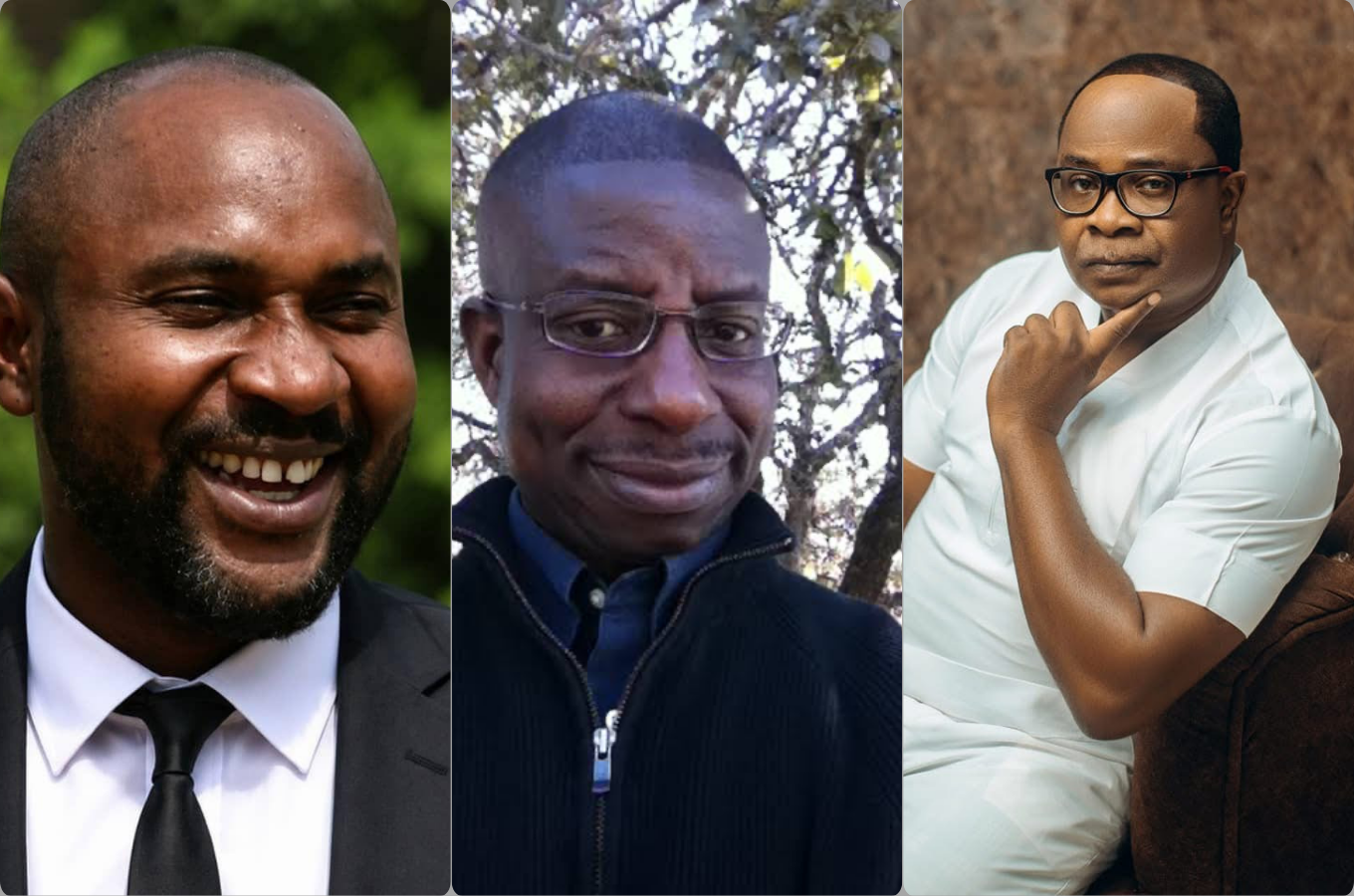
What can poetry hold when a country is carrying too much history? For Ogaga Ifowodo, James Ngwu Eze and Tares Oburumu, poetry becomes a way of looking closely at Nigeria: at the violence that has become ordinary, the histories that remain unresolved, and the private disappointments that are often inseparable from the political realities around them. Their collections approach these questions differently, but they share an insistence that the poem can do more than describe the country as it is. It can bear witness to it, interrogate it, remember what it would rather forget and imagine what it might yet become.
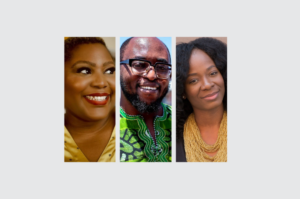
The three finalists for the 2026 Nigeria Prize for Literature, write from different positions. Ifowodo considers the writer’s responsibility to bear witness in a country where violence and political failure are increasingly difficult to ignore. Eze is interested in the power of language to turn private anguish into a collective demand, while Oburumu looks further back, tracing the fractures of the present to the histories and colonial continuities that shaped Nigeria long before now.
In this conversation, they reflect on Nigeria’s troubled relationship with its past, the consequences of living with violence, the uneasy boundary between the personal and the political, and poetry’s capacity to offer another way of seeing the country. Their responses suggest that the poem is not removed from the realities of Nigerian life. It is one of the places where those realities are remembered, questioned and, perhaps, reimagined.
Brittle Paper
Your collections respond to some of Nigeria’s most pressing realities. What does it mean to write poetry in a country that constantly gives its writers new reasons for alarm?
Ogaga Ifowodo
It means the Nigerian writer is required to be even truer to her calling: to pay closer attention to her immediate environment and bear witness to what she sees, feels, hears and harbours in her soul. The writer must show us both the flower in a well-tended garden and the forest on fire, the homes reduced to rubble by religious fanatics and terrorists, and the failure of government to improve the lives of the masses. The Nigerian writer cannot be silent when his heart is howling or turn a deaf ear to the sighs and wails in every street. This duty, however, is not peculiar to Nigerian writers. The world has never been free of atrocities, and writers everywhere have always had to respond to them.
James Ngwu Eze
A country that gives its writers new reasons for alarm also gives them new reasons to write. The serious writer never lacks motivation or weighty themes. Conflict, tragedy and catastrophe have always fuelled the literary imagination. Nigeria is certainly not short of raw material for great literature, though I don’t know whether to be happy or sad about that. We have witnessed horrors that are almost too painful to write about. When teachers, agents of light and civilisation, are beheaded by forces seeking to drag Nigeria back to the Stone Age, how can a writer tease out a story from it without shedding a tear? The scale of the savagery we witness makes it difficult for any writer to look away and equally painful to look on.
Tares Oburumu
I am actually more concerned with the past than the present. If you look closely at the gaps in our history, you can see what is wrong with the present. There is a subtle continuity we rarely acknowledge in our conversations about decolonisation. Much of what we suffer today stems from what we paid little attention to in the past, particularly the forces that shaped the country before and immediately after 1960. The election crises that prepared the ground for the Civil War, for instance, raise questions about what freedom really meant. If you pay attention, you see little difference between the now and the then. To write poetry here is an act of courage and uncommon faith. I do not fear open censorship as much as the clandestine kind. The right to write is a right to life, and this country is, in many ways, strangling that right.
Brittle Paper
All three collections engage with the past in different ways. Why does Nigeria remain so haunted by its history?
Ogaga Ifowodo
Because we have spent the decades since independence refusing to truly build a nation. The political elite, civilian and military, have largely treated Nigeria as a place to hunt for treasure and profit rather than as a nation to build. Successive rulers have been preoccupied with serving themselves while the people suffer. Meanwhile, the wounds of colonialism have been left to fester into a mortal threat to the body politic.
James Ngwu Eze
Every nation is haunted by its past. Nigeria is no exception. The West carries the horrors of the Holocaust and the World Wars; America still bears the legacy of slavery, segregation and the destruction of Native American communities; Britain has the atrocities of empire. Every nation has dark chapters beneath its narratives of greatness. The question is what nations choose to do with them. Human beings are flawed, so human history is flawed. My hope is that our awareness of Nigeria’s dark history will guide us toward the light.
Tares Oburumu
We look into the mirror and believe too much in the reflection, refusing to see ourselves for who we truly are. You cannot understand yourself by looking only at the surface. History is important because it allows us to examine the impact of the processes and institutions that have shaped us. Nigeria existed before British colonialism, yet colonial ideals have been perpetuated long after colonial rule. The naming of the country itself was a historical disruption. We have lived with the danger of being defined by what we do not know ourselves to be.
Brittle Paper
Violence takes different forms across your books. What happens to a society when violence becomes part of its everyday reality?
Ogaga Ifowodo
Such a society slowly but steadily loses its humanity. Society is where we cultivate tolerance, empathy, neighbourliness, respect for the humanity of others, solidarity, art and culture. Sustained violence destroys these qualities and makes us less worthy of our humanity. The greatest danger is becoming so accustomed to violence that we unconsciously slip back into the jungle from which we emerged. The writer must stand against the normalisation of violence.
James Ngwu Eze
One of the greatest tragedies that can befall a society is allowing violence to overwhelm it. Look at Haiti, Sudan and the Democratic Republic of Congo: they have lost their certainties and are reeling from prolonged conflict. But the greatest danger is exposing children to violence. Children can become conditioned by it, as we see with child soldiers who quickly adapt to the brutalities of war. Once children become accustomed to bloodshed, violence begins to poison a society from the cradle and uproot its foundations.
Tares Oburumu
I experienced this as a child in 1993, when a small war broke out between two communities along the Forcados River. Before then, I had friends from both communities. We swam together, played together and shared the freedom of belonging to one another’s lives. The war destroyed that bond. The playgrounds became spaces of fear, suspicion and hate. Although the war ended, a serial vendetta began, measured by the constant loss of the places and ideals that once held us together.
Brittle Paper
Your poems move between the personal and the political. How do you decide when a poem should speak to a collective experience and when it should remain intimate?
Ogaga Ifowodo
It is never a mechanical or conscious decision. I simply follow the impulse that stirred the poem wherever it leads. All art is political because it comes from human beings and is part of a historical process. As feminism showed so well, the personal is political. Each poem plots its own trajectory; it is enough for me that the impulse to write is worthy of and survives poetic treatment.
James Ngwu Eze
When poetry is done well, a poem is not merely personal but communal. No human experience is entirely personal. Love, grief, sadness, anger and hope are universal, and once a poem becomes communal, it becomes political. Politics affects us directly, so the line between the personal, communal and political is naturally blurred. I think Unbind Me Now follows this trajectory, turning my personal outrage over the decline of my country into a public anxiety.
Tares Oburumu
The politicisation of the things I hold dear is locked within the struggle for freedom that I have come to embody. As a young man, I wanted a job, financial independence and the chance to publish books. Instead, I found myself navigating institutions where merit did not always count. My story became the story of millions of young Nigerians who depend on the goodwill of people in government. I could not do much but become angry and turn those lived experiences into poetry. In telling one story, you uncover thousands of others that remain buried in people who cannot speak.
But I love writing about myself. There is something beautiful about autobiography and putting yourself into lines that touch the core of your being. One of my poems captures the surreal moment when I learned I had won the Sillerman First Book Prize for African Poetry. I was emotionally drained after a fight, and then, in the middle of the night, I woke to the news. The person I had fought with hugged me; we forgave each other and celebrated. That intimate moment became a poem.
Brittle Paper
Despite the despair in these books, there are also questions of faith, healing and hope. Do you still believe poetry can imagine a different Nigeria?
Ogaga Ifowodo
Absolutely. The very act of writing and bearing witness affirms existence, agency and the capacity to imagine and dream. When the poet affirms presence where power demands absence, subjectivity where there is subjection, and resistance where there is surrender, poetry is already imagining and perhaps enacting a different Nigeria.
James Eze
I have a great deal of hope that poetry can help us reimagine Nigeria in ways that have not occurred to us before. If politicians can turn an entire populace into a mass choir, why can’t good poetry speak healing truths to the people? Social media now offers an effective platform for social mobilisation, and poetry can articulate a vision in language that is clear and accessible. Other societies have been shaped by their poets, so there is no reason poetry cannot help reshape Nigeria.
Tares Oburumu
If you read poetry and give it the attention it deserves, you find worlds within worlds, each offering something restorative and inspiring. I have always believed in what I write because art is ultimately directed toward the beautification of life. We simply do not read poetry enough to believe in the past and use it to construct a livable future. That is unfortunate, because poetry can offer us a way of seeing that is both humane and necessary.
Brittle Paper
Your books tackle political and historical realities without becoming political commentary. How do you balance urgency with the demands of the poem itself?
Ogaga Ifowodo
The medium saves it. If one remains true to the demands of poetry and art, one avoids the pitfall of mere agitprop writing. There are literary forms for outright political commentary—the pamphlet, op-ed, sermon or speech. Art disciplines the poet’s message and shapes its form.
James Ngwu Eze
Unbind Me Now was written from personal hurt that grew into public grief. Once private sorrow becomes public mourning, the wailing becomes strident. The poet becomes a mirror through which society sees its own anguish. Even the title is a personal demand that becomes a collective anthem: Unbind Me Now is really Unbind Us Now. At the book’s first public reading, someone even suggested that I change the title because she could see herself in its plea.
Tares Oburumu
There are certain constructs and words I avoid when writing because I do not want to become overtly ridiculous. I tend to my art as a good gardener tends to a flower. Every line and sentence must survive the rewriting process and restrain itself from what I consider inadequate. My responsibility as a writer is to the self, and the self I embody is not political; it is historical. I am more interested in the past than the present or future. My influences—T.S. Eliot, Christopher Okigbo, Natasha Trethewey, Tomas Tranströmer and Seamus Heaney—have also shaped this approach.
Brittle Paper
What do you hope your poetry will tell future readers about Nigeria at this particular moment that they might not find elsewhere?
Ogaga Ifowodo
I hope my poetry bears witness, unforgettably, to the Nigerian experience of the present epoch—to my time on earth. The themes may be universal, but the poems offer a particular Nigerian experience of them.
James Ngwu Eze
My hope is not that my poetry will tell future readers something they have never heard, but that it will tell them truths they already know in a language they cannot resist. Language can amplify vision, build expectancy, restore self-belief or destroy self-worth. A nation can rise or fall on the altar of language. I want my poetry to tell future readers that I spoke my truths about Nigeria in a language that amplifies those truths beyond my time.
Tares Oburumu
Nigerian history is one great lie I cannot tell. Flora’s Love Colony is a transitional work of art; it will not end here. There is more to this country, more to its past and present. By writing the book, I have in some way documented the lies we tell ourselves as stories. As those lies continue, I will make it my obligation to say, in subtle forms, what the future should hear—not simply what the present is loud about.
Brittle Paper
Thanks for speaking to me.
Ogaga Ifowodo
My pleasure.
James Ngwu Eze
You are welcome.
Tares Oburumu
You are welcome.

Bello Elizabeth Ayomide September 12, 2026 06:59